Manaslu Circuit Trek- 19 Days

Manaslu Circuit Treks - 19 days, Summary

The Manaslu region is one of the areas in Nepal that was closed for tourism until the early 1990s. Since 1991, the Manaslu Circuit has been open for all types of trekkers. In 1922, the Manaslu Circuit welcomed more than 400 tourists, which marked the beginning of a trekking expedition in this part of Nepal.

Even after that, the region remained one of the least explored parts of the Himalayas because of its offbeat terrain and lack of trekking infrastructure. For a very long time, camping was the only way to do the Manaslu Circuit Treks.

In the recent 4-5 years, ample tea houses have been opened throughout the trail, making the Manaslu Circuit much more accessible. Nevertheless, the number of trekkers in the Manaslu region is still way less than that of the famous Annapurna and Everest.

On top of the offbeat terrain, the expensive restricted area permit has also made Manaslu Circuit an off limit for most travelers who are here on a tight budget.

As the Annapurna Circuit began to see many trekkers and road construction, its popularity decreased in the last few years. That resulted in making the Manaslu Circuit the next best circuit treks in Nepal.

At a Glance
Duration
Duration
19 Days
Country
Country
Nepal
Maximum Altitude
Maximum Altitude
5106m
Starts
Starts
Kathmandu
Ends
Ends
Kathmandu
Group Size
Group Size
Up to 07 Pax
Activities
Activities
Trekking
Best Time
Best Time
October - November , April - May

Overview - What is the 19 Day Manaslu Circuit Trek like?

The Manaslu region is one of the areas in Nepal that was closed to tourism until the early 1990s. Since 1991, the Manaslu Circuit has been open for all types of trekkers, and in 1922, the Manaslu Circuit welcomed more than 400 tourists, which marked the beginning of a trekking expedition in this part of Nepal.

However, even after seeing such an amount of tourists, the region remained one of the least explored parts of the Himalayas because of its offbeat terrain and lack of trekking infrastructure. For a very long time, camping was the only way to do the Manaslu Circuit Treks, which has now improved a lot.

In the recent 4-5 years, ample tea houses have been opened throughout the trail, making the Manaslu Circuit much more accessible. Nevertheless, the number of trekkers in the Manaslu region is still way less than that of the famous Annapurna and Everest regions partly because of its expensive restricted area permit, making this trek off-limits for most travelers who are here on a tight budget.

What is it like?

Mt. Manaslu is the world's eighth-tallest mountain. The  Manaslu Circuit trek takes you to its high pass, Larke la 5106 meter, and down to Bhimtang, Tilche, Tal, and Chyamche, ending in Besisahar for the drive back to Kathmandu along the Marsyangdi and Trisuli rivers.

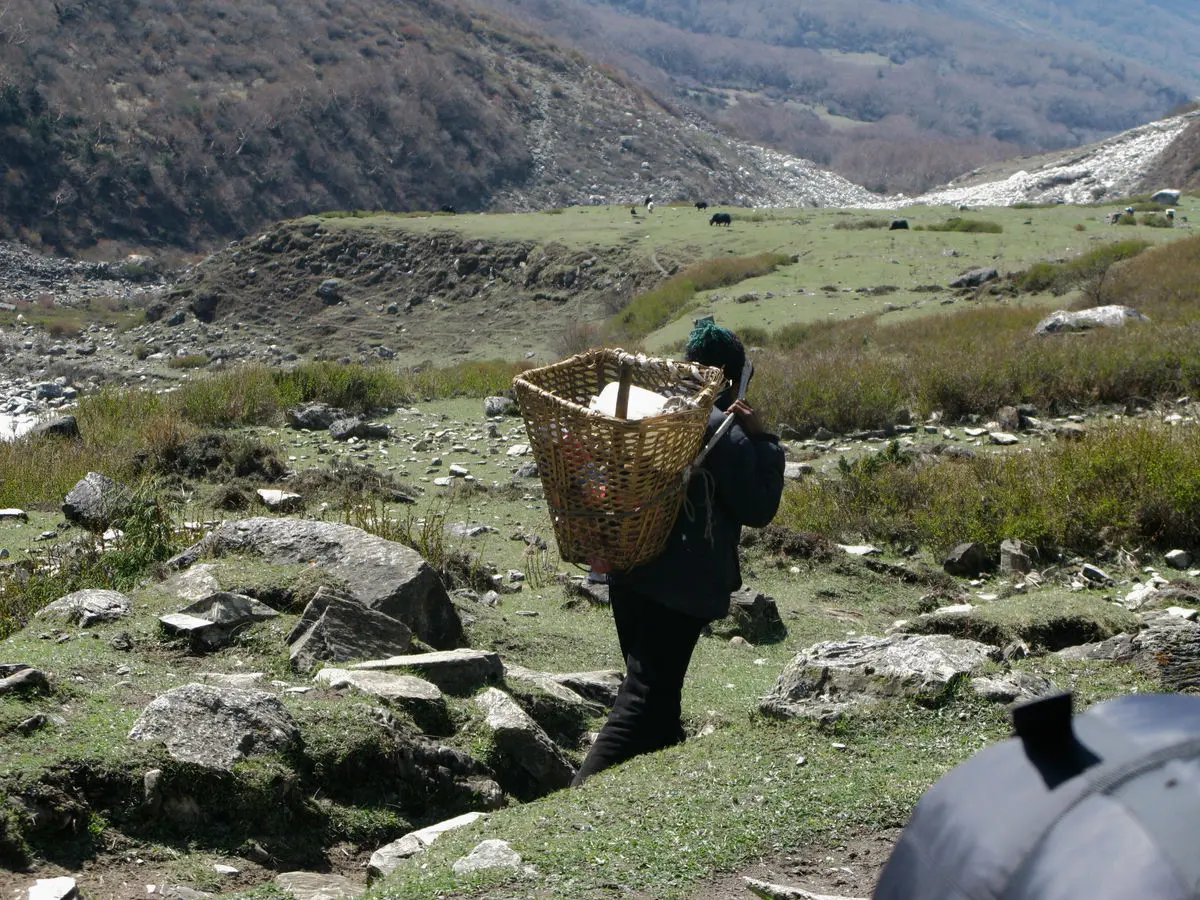
The trek starts with a long drive from Kathmandu to Machhakhola, but the ride doesn’t get boring due to the views you get from your bus window. From Machhakhola, you are officially on your feet, heading towards Yaru Bagar. Along the trail, you pass through Budhi Gandaki River, Gurung villages, suspension bridges, and terraced farmland up to Jagat, Sama Gaon, and Samdo. Along the way, side hikes to Manaslu Base Camp, Birendra Lake, and Pungyen Gompa are well worth the extra effort if you have the days, the energy, and willingness.

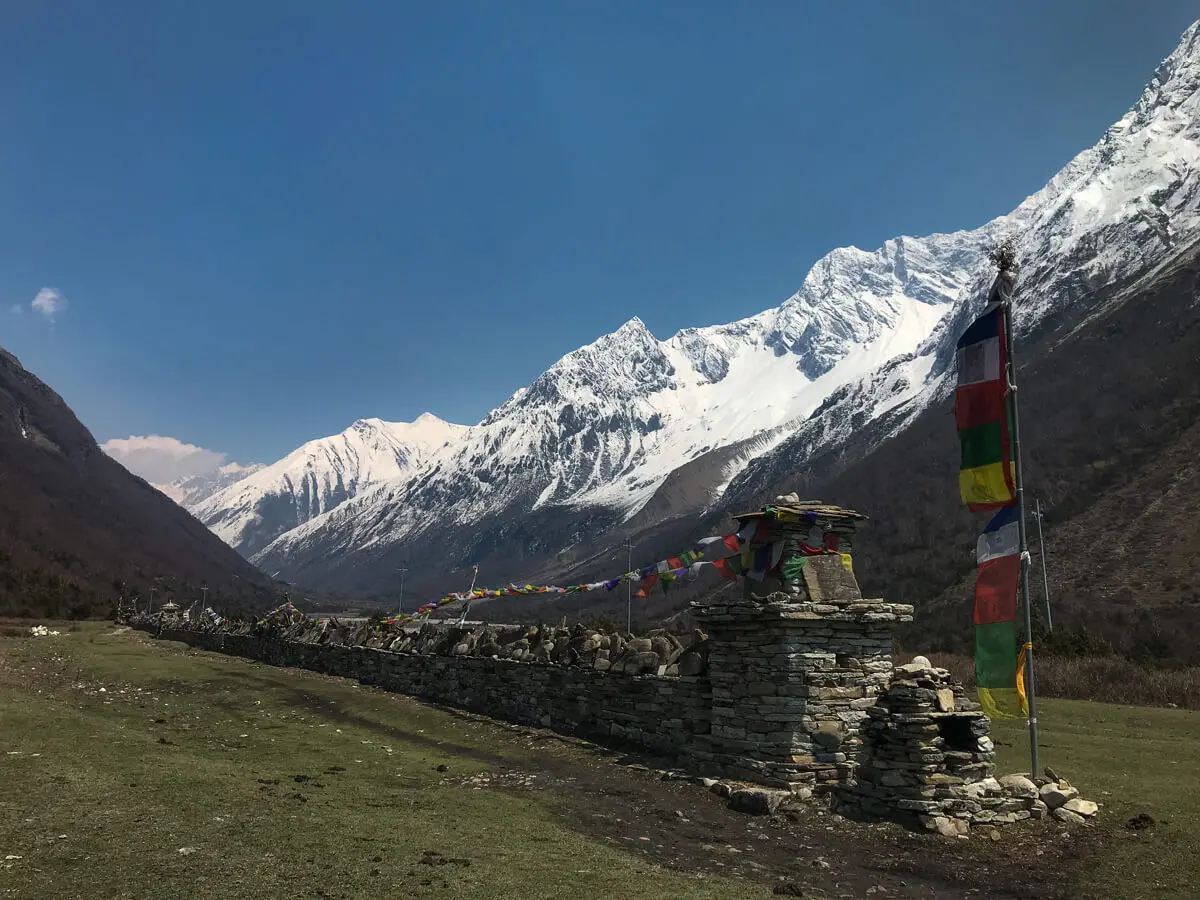
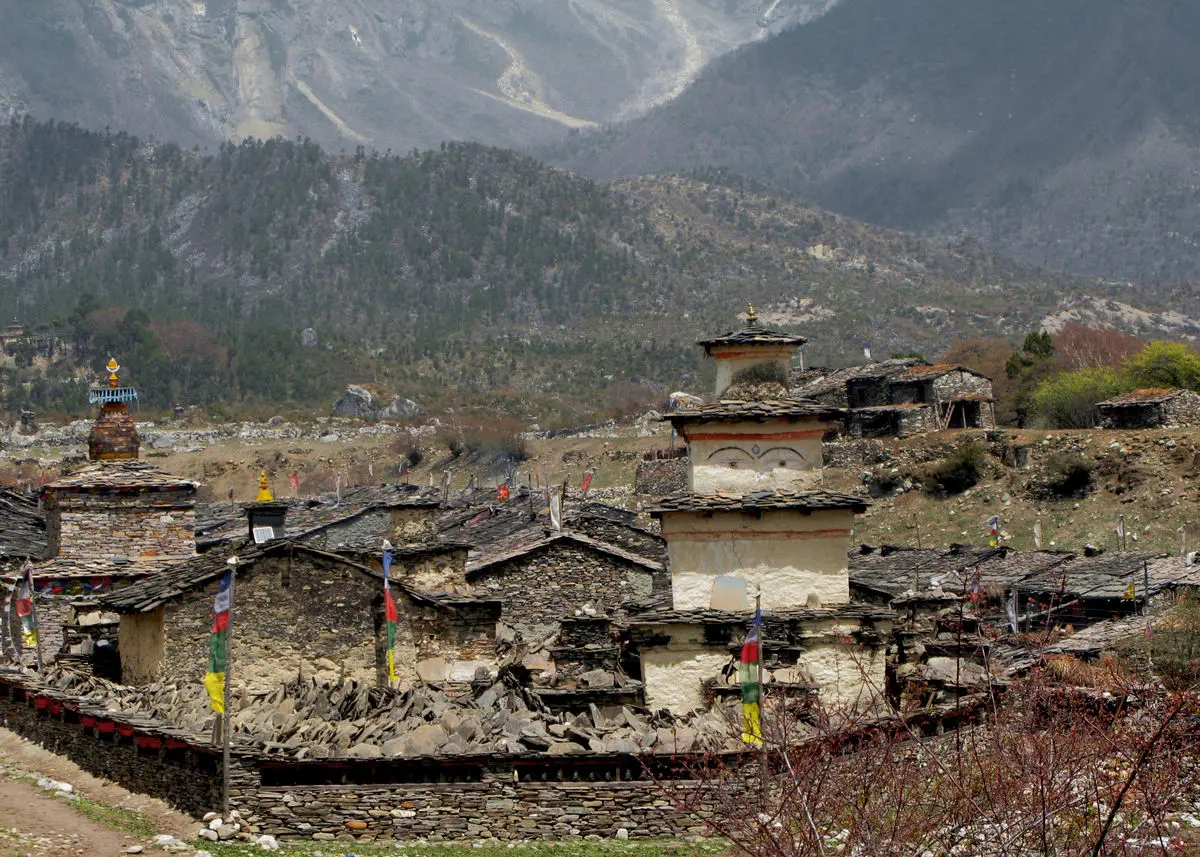
Because Manaslu borders Tibet, this region carries a strong Tibetan Buddhist influence. You will see stupas, chortens, prayer flags, and monasteries mark the trail the entire way. Trekkers with a few extra days in their schedule often extend into the Hidden Tsum Valley, a remote side trip branching off at Lokpa village that few travelers ever visit. This is truly a gem and you won’t regret it if you decide on this extension.

After crossing Larkya La, the trail descends toward Bimthang and eventually ends near Jagat, with a jeep ride to Besisahar and a bus back to Kathmandu.

This is not the easiest trek in Nepal, and the permit cost does put some people off, but if you're after Himalayan views without the crowds, Manaslu Circuit Trek is hard to beat. 

19 Day Manaslu Circuit Trek Highlights

  • Trek to the base of the 8th-tallest mountain in the world, Mt. Manaslu, 8163m
  • An Adventurous trek in one of the least explored region of the Himalayas
  • Enjoy tea house accommodation, a simple mountain lifestyle, and delicious food prepared by the locals
  • Explore Tibetan refugee villages and meet with the Nupri Community
  • Come across ancient stupas, chortens, prayer flags, and monasteries along the trail
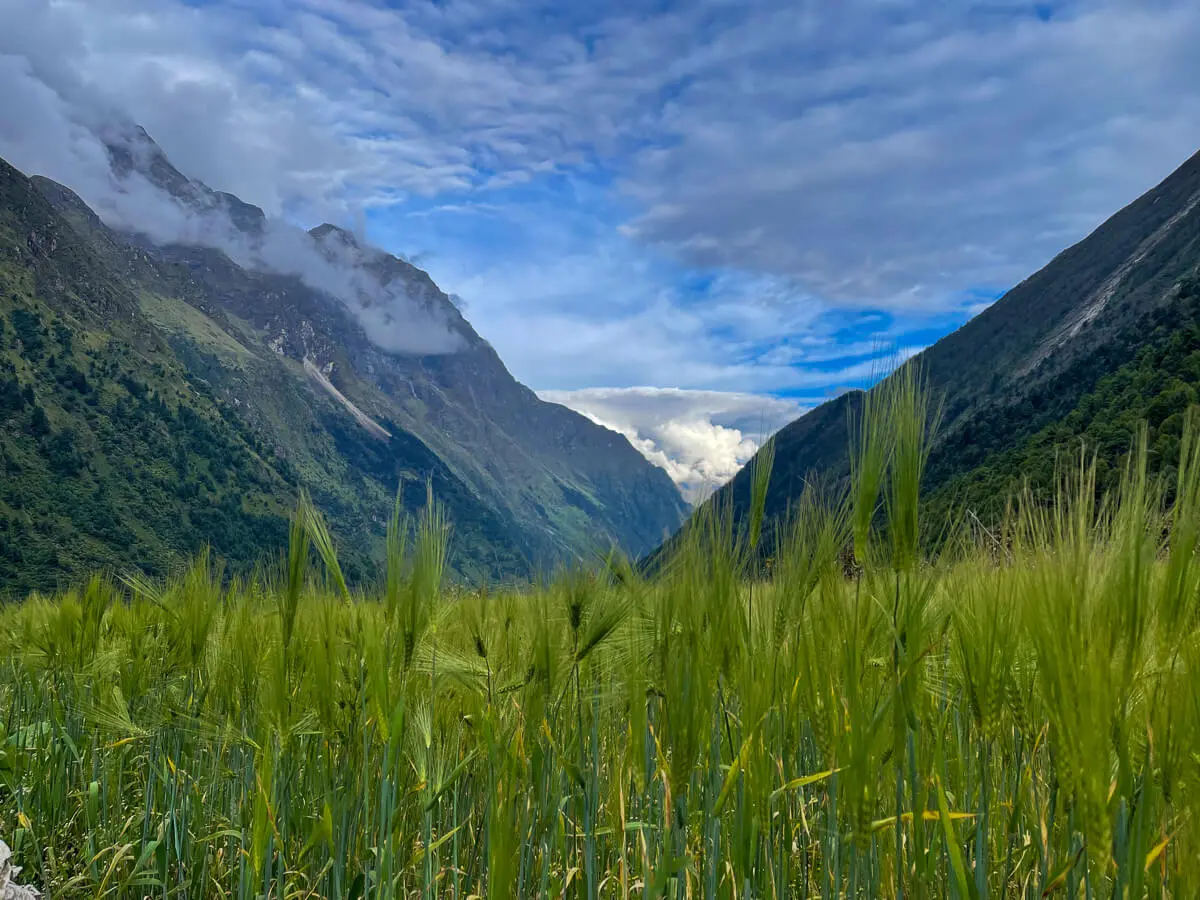
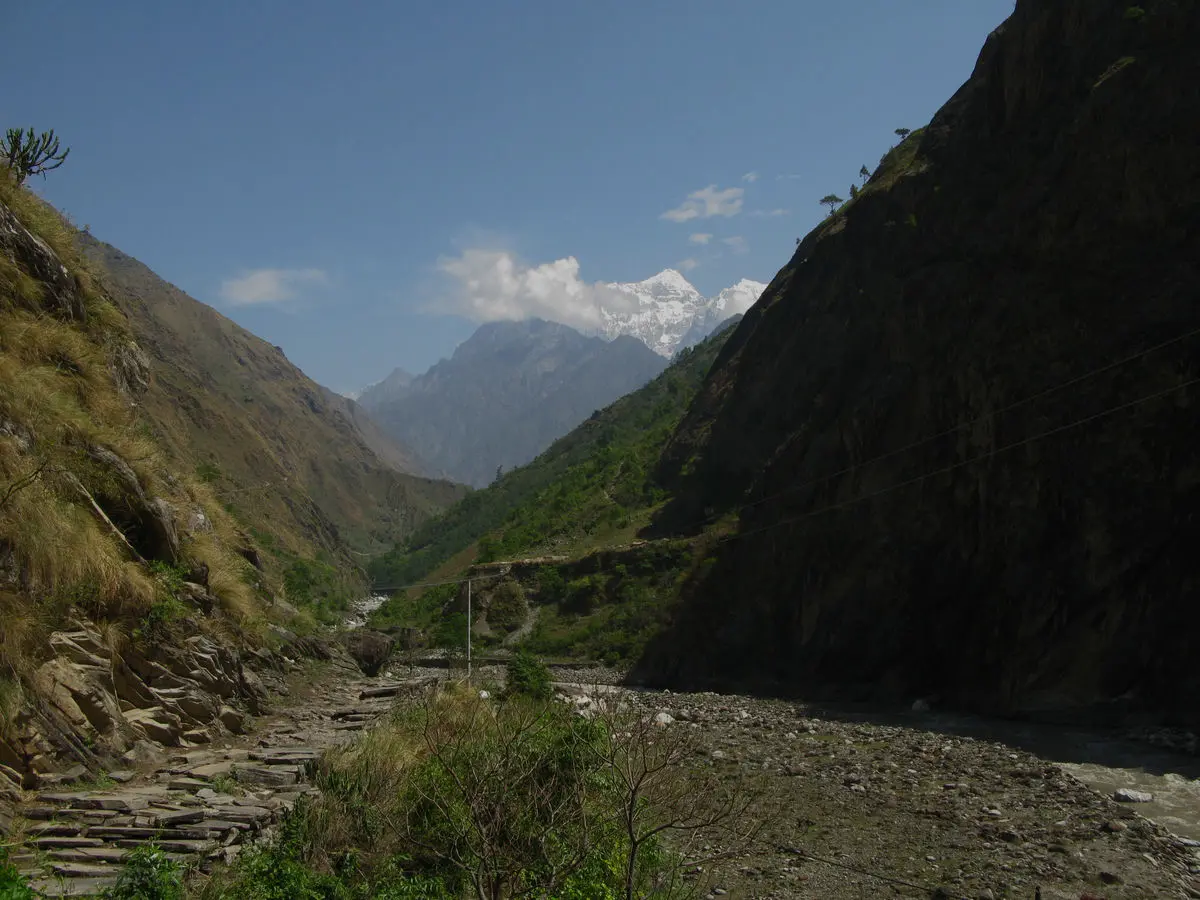
  • Follow the Budi Gandki River and trek deep into the valley, crossing lowlands with rice and millet terraces, lush forests, and glacier moraines
  • Cross the challenging snow-covered Larkya La
  • Witness stunning landscapes and mountain ranges throughout the trek
  • Waterfalls, blue-colored lakes, rivers, and high suspension bridges crossing


Difficulty - Who Can Do the Manaslu Circuit Trek/Age?

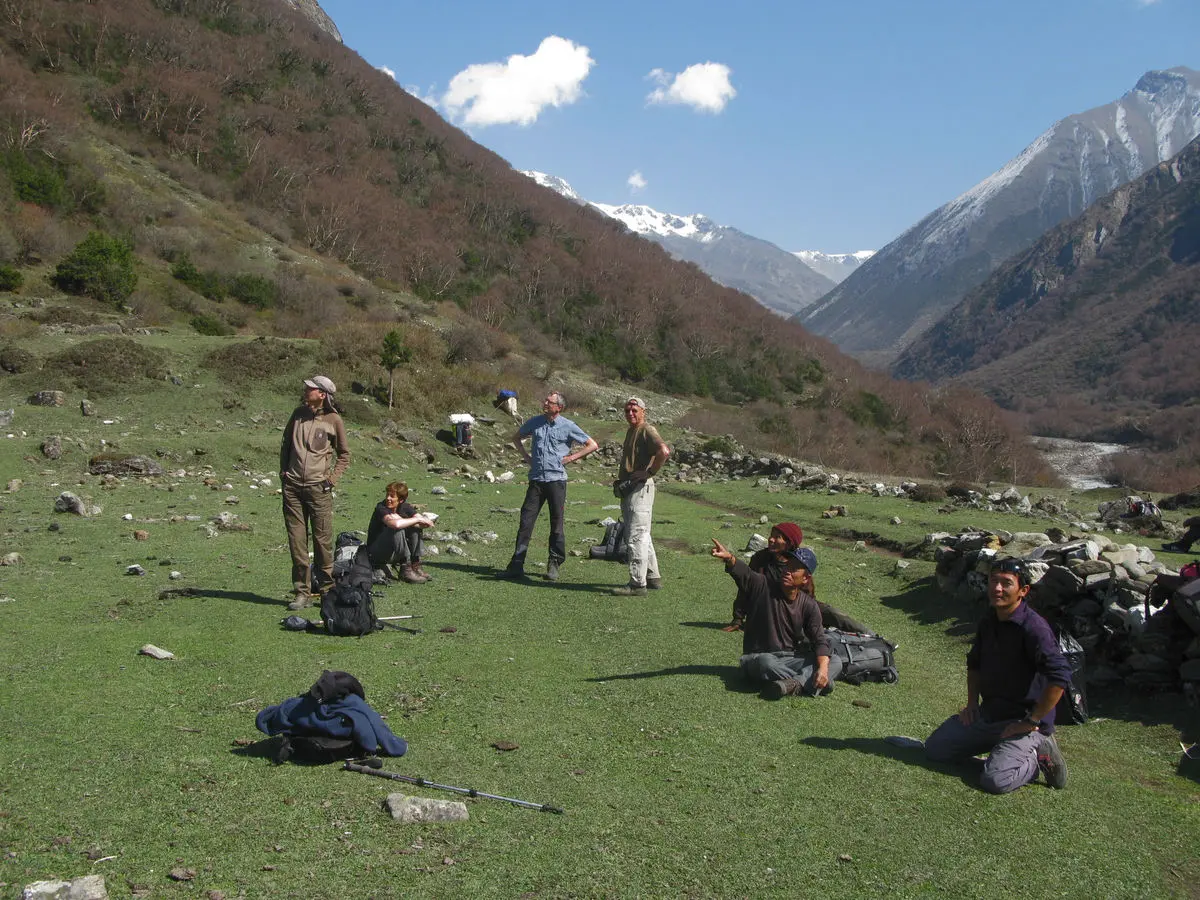
The 19-day Manaslu Circuit Trek is genuinely challenging. This one suits experienced trekkers with a decent fitness level. Our guides always say that this trek isn’t the one for beginners who are deciding on their first Himalayan experience, as walking 6+ hours a day on off-the-beaten-path at high elevation isn't easy, and you might find yourself struggling more than enjoying it. However, if you are quite fit and have the willingness, no one’s stopping you.

You'll need real strength, stamina, and endurance for this one. But honestly, the physical side is only half of it because this trek is just as mentally demanding as it is physical. If you are both mentally and physically prepared, this trek will be one of your best ones.

Age is just a number, and people from any age can do the Manaslu Circuit trek. As long as your health is with you and you have the willingness to do the trek, age is not a restricting factor. If the trek speaks with you, is calling you out, just go for it.

The 19-day Manaslu Circuit Trek is a good fit for:

  • Active travelers with solid cardiovascular fitness who can comfortably hike 5 to 7 hours a day across changing Himalayan terrain; think stone steps, forest trails, and steady climbs.
  • Seasoned trekkers and even ambitious first-timers, as long as you've got the mental resilience to push through the tougher, tiring days.
  • Anyone in good health with no major respiratory issues and a few weeks of pre-trek training (stairs, cardio, long walks with a loaded pack); this goes a long way here.

Manaslu Circuit Trek- 19 Days Itinerary

Day 1

Kathmandu arrival

It's Kathmandu arrival day as per your flight details, plan, and transfer to the hotel. Your accommodation would be at a three-star level in Kathmandu. Rooms would be provided on twin-sharing beds on a breakfast basis. For a single supplementary, a negotiation would be conducted. We manage all necessary transportation to the hotel. We also will brief you about the next day's preparations, including all the round-trip preparation.

Max Altitude: 1350m
Meals: Breakfast
Duration: 40min
Distance: 5-6km
Accommodation: Hotel
Mode of transportation: Car / Bus
Day 2

Kathmandu Sightseeing day

It's a Kathmandu valley sightseeing day. After an easy morning breakfast, your city guide picks you up from the hotel and leads you to Shyambhunath, Baudhanath, PasupatiNath, and Kathmandu Durbar Square. These sites are beautiful and historically and religiously famous. All these sites are listed on UNESCO.

Max Altitude: 1350m
Meals: Breakfast
Duration: 4-5hrs
Accommodation: Hotel
Mode of transportation: Car / Bus
Day 3

Kathmandu drive - Machhakhola

Manaslu Circuit Treks, It's the first day outside of the valley. It's approximately 160km to drive by Jeep. It takes 7- 8 hours, depending on the road conditions. It goes along the Prithivi Highway, which connects Kathmandu Naubise, Galchi, and then branches via the mild hill Dhading Besi, Arughat, and along the Budhi Gandaki river to Soti, Laphubesi, and then Machhakhola by Jeep. It's beautiful scenery around. Local people, their culture, villages, farms, and trades are nice.

Max Altitude: 930m
Meals: Breakfast - Lunch - Dinner
Duration: 7-8hrs
Distance: 160km
Accommodation: Tea House / Lodge
Mode of transportation: Drive by Jeep
Day 4

Machhakhola - Yaru Bagar

Manaslu Circuit Treks, It's the first day trek along the Budhigandaki River. It's a deep valley with low elevation, which creates humidity and hot temperatures, but it depends on the season. Khorala Besi, Tatopani, and Dovan are places where possible to get food, tea, coffee, and cold drinks during the trek. A beautiful waterfall where we get a live shower, which makes you really cool if we are there around early September and October. We can't see the waterfall if we arrive there during the dry season. Dovan is a good place to have lunch. Several hours more are needed to walk up to Yaru Bagar Top for the overnight. It's more or less 15km, which can take a 6 -7 hour walk due to the first.

Max Altitude: 1330m
Meals: Breakfast - Lunch - Dinner
Duration: 6-7hrs
Distance: 13km
Accommodation: Tea House / Lodge
Mode of transportation: Walk
Day 5

Yaru Bagar - Chisopani

Manaslu Circuit Treks, The Yaru Bagar (Khola) trek to Jagat, Salleri, Sirdhibas, Philim to Chisopani (Eklebhatti) is naturally and culturally good. Jagat is an old village that is popular as a small but good business center. It's also the main point to show trekking permits. Several times needs to cross the Budhi Gandaki River, which makes you feel so cool. Gurung people are in higher population in this valley, besides them, the lama and others too.

Max Altitude: 1600m
Meals: Breakfast - Lunch - Dinner
Duration: 5-6hrs
Distance: 14km
Accommodation: Tea House / Lodge
Mode of transportation: Walk
Day 6

Chisopani - Bhi Phedi

Manaslu Circuit Treks, The Chisopani to Nyak, Pewa, Dyang for Lunch, and Bhi Phedi 2130m for overnight. It's a narrow valley walk along the Budhi Gandaki river through the Bamdoo forest. Dyang is a little wide and has more teahouses/lodges. There are not many lodges around Bhi Phedi, but good enough for 10 to 15 trekkers. There are more lodges in Bhi village, which is not on the right way to Ghhap and Namrung the next day. It's nice to stop at Dyang for lunch and then continue to Bhi Phedi for the night. It's approximately 13km and takes a 5-6-hour walk.
Max Altitude: 2130m
Meals: Breakfast - Lunch - Dinner
Duration: 6-7hrs
Distance: 13km
Accommodation: Tea House / Lodge
Mode of transportation: Walk
Day 7

Bhi Phedi - Namrung

Manaslu Circuit Treks, The Bhi Phedi to Ghap and Namrung 2660m, are culturally and naturally nice. The villages above the Budhi Gandaki are called Prok. Kal Tal, several hours above Prok, is another side trip of the valley. Rejet village, a very remote village above Bhi, is more remarkable. Culturally very old, rare villages and monasteries are in the Manaslu valley. Ghap is a good place to have lunch. Namrung takes another several-hour walk via a big forest of oke, Rhododendrons, pine, etc. A similar culture with Tibetan starts around. They also call Gurung, Lama, etc. They believe in Buddhism and have many different monasteries around the valley. It's a little big day. It's approximately a 15km trek, which has more ascents. Nice lodges are in Namrung. The apple farms, Apple pie, and types of bakery you can enjoy around.
Max Altitude: 2660m
Meals: Breakfast - Lunch - Dinner
Duration: 6-7hrs
Distance: 15km
Accommodation: Tea House / Lodge
Mode of transportation: Walk
Day 8

Namrung to Syalagaon

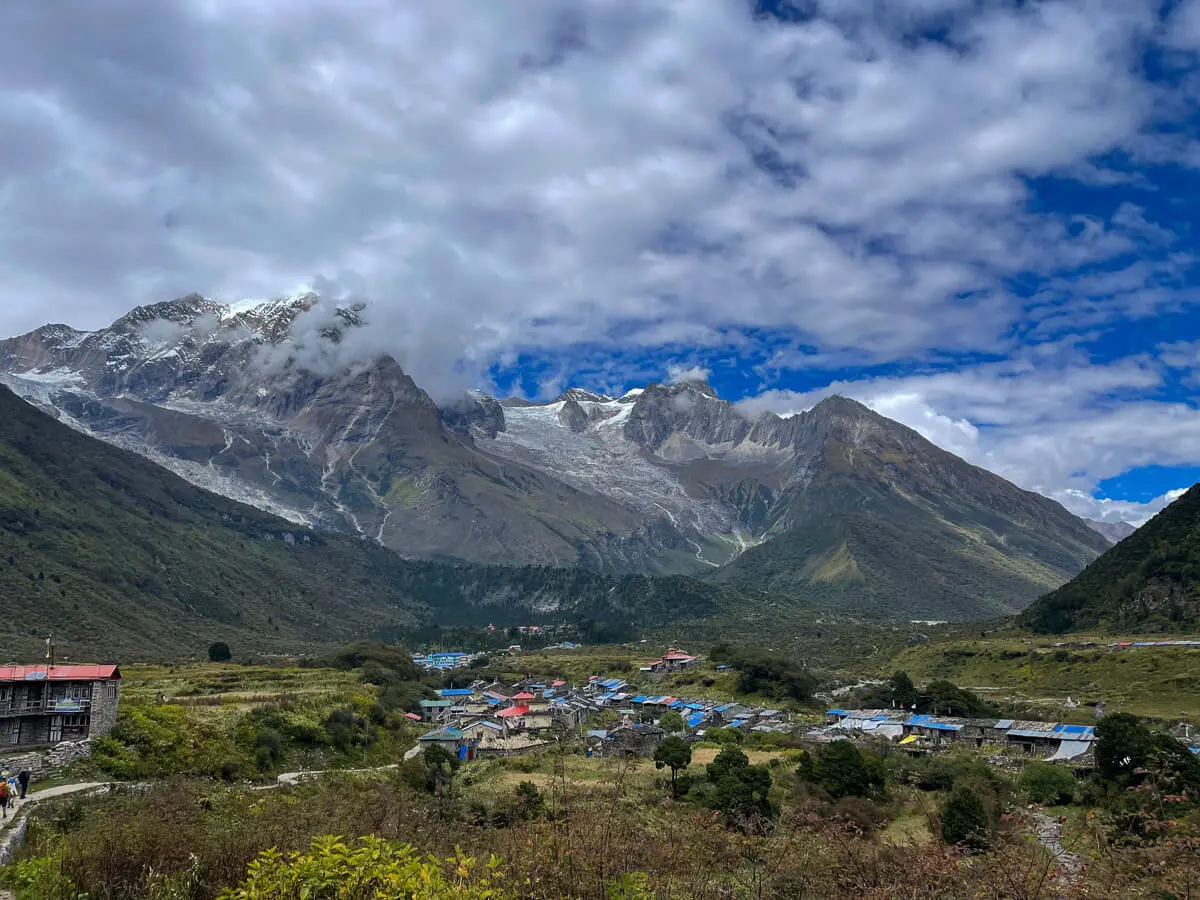
Manaslu Circuit Treks, The trek from Namrung to Syala via Ligaon, Syogaon, and Lhogaon is culturally and naturally very rich. Their culture is similar to Tibetan. Above Namrung is a wide valley. A side of a valley is a very steep Mountain. It's a day to see Mt. Manaslu and many other white peaks around. Lho has a beautiful monastery and many Maniwal, Stupas. Many people live around farms and tourism these days. Lho is a good place for lunch, and the trek continues to Syala for several hours ascend.
From Syala Gaon, a day hike to Punggen Gompa and onward to Samagaon is an excellent choice for acclimatization. The route offers spectacular views of Mt. Nadi Chuli, Himal Chuli, and the massive icefall descending from Mt. Manaslu. The valley ascent is gentle, making the climb easy, and the descent into Samagaon at the end of the hike is equally manageable. This side trip combines cultural immersion with breathtaking mountain scenery, helping trekkers adjust to the altitude while enjoying one of the most rewarding sections of the circuit.
Max Altitude: 3520m
Meals: Breakfast - Lunch - Dinner
Duration: 5-6hrs
Distance: 12km
Accommodation: Tea House / Lodge
Mode of transportation: Walk
Day 9

Syala - Punggan Gumpa - Samagaon

Manaslu Circuit Treks, from Syalagaon, a day hike to Punggen Gompa and onward to Samagaon, is an excellent choice for acclimatization. The route offers spectacular views of Mt. Nadi Chuli, Himal Chuli, and the massive icefall descending from Mt. Manaslu. The valley ascent is gentle, making the climb easy, and the descent into Samagaon at the end of the hike is equally manageable. This side trip combines cultural immersion with breathtaking mountain scenery, helping trekkers adjust to the altitude while enjoying one of the most rewarding sections of the Manaslu circuit treks. It is approximately 15km and takes 5to 6 hrs walk.

Max Altitude: 3530m
Meals: Breakfast - Lunch - Dinner
Duration: 5-6hrs
Distance: 15km
Accommodation: Tea House / Lodge
Mode of transportation: Walk
Day 10

Samagaon free day

Samagaon is one of the best places to acclimatize. Trekkers can walk around Birendra Lake, take a day hike up to Manaslu Base Camp, and visit the monastery and local cultural village. It’s also an ideal spot to rest and regain strength, helping to build the stamina which needed to successfully cross the high pass in the coming days.
Max Altitude: 3530m
Meals: Breakfast - Lunch - Dinner
Accommodation: Tea House / Lodge
Mode of transportation: Day walk
Day 11

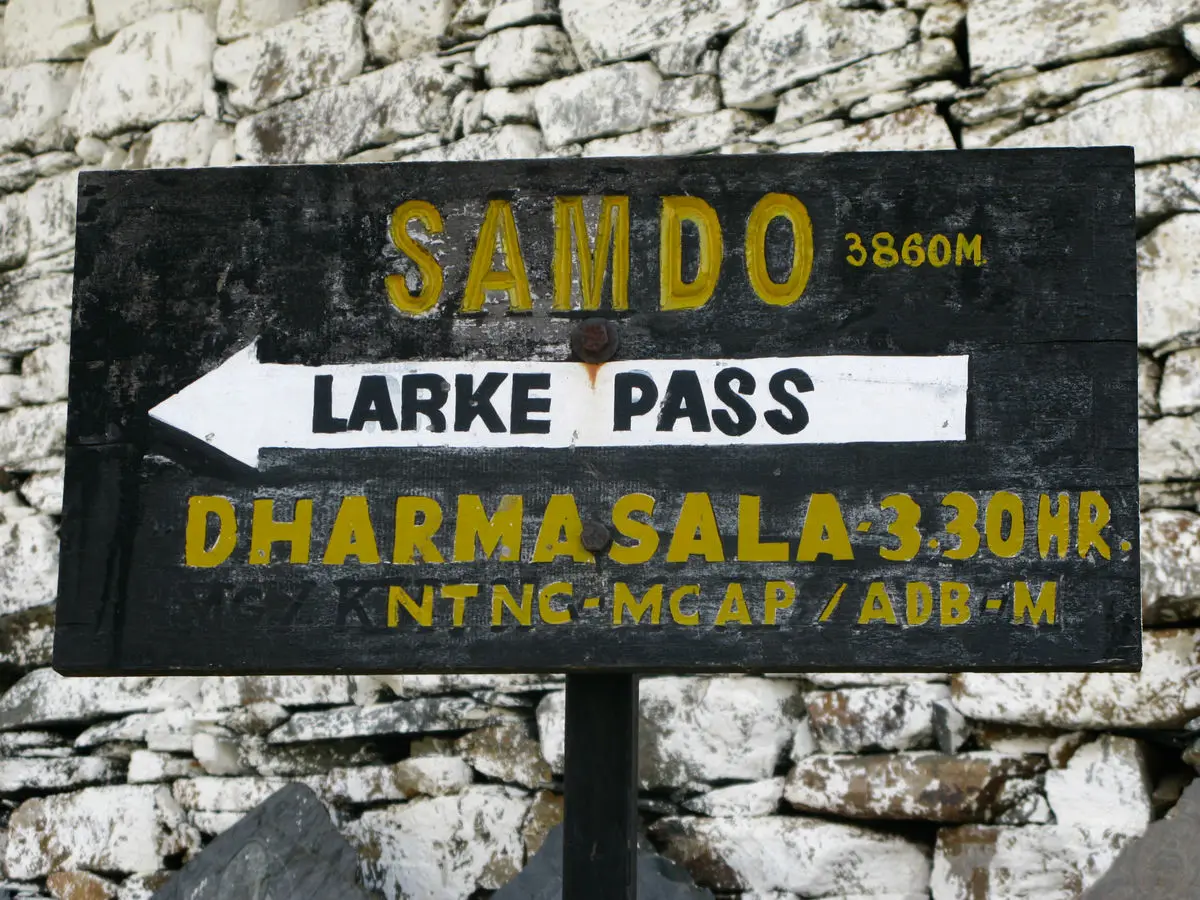
Samagaon - Samdo

The trek from Samagaon to Samdo is one of the best days of the circuit. It’s an easy walk along the valley, surrounded by stunning views. The area is rich in Tibetan cultural activities, with traditional trade and farming practices adding to its charm. Historically, locals engaged in trade with Tibet, and today many have embraced tourism. Samdo often hosts climbers as guests, drawn by the proximity to Mt. Manaslu. It's approxmetly 9km takes 4 hours, with one of the easiest days of the Manaslu Circuit Treks. 

Max Altitude: 3690m
Meals: Breakfast - Lunch - Dinner
Duration: 4hrs
Distance: 9km
Accommodation: Tea House / Lodge
Mode of transportation: Walking
Day 12

Samdo - Dharmasala

The trek from Samdo to Dharmasala is not a big day, but the trail ascends until the lunch stop, which is also a place for overnighting. There always nice to book a room in advance during high season. Accommodation is simple. A room with 4 beds that trekkers have to share. It's nice to have an early dinner and sleep for the next day's early trip start.
It is also nice to make a short hike up to higher planes than your stay overnight's elevation. It's good to walk higher and sleep lower around the Himalaya.
Max Altitude: 4470m
Meals: Breakfast - Lunch - Dinner
Duration: 3-4hrs
Distance: 6-8km
Accommodation: Tea House / Lodge
Mode of transportation: Walk
Day 13

Dharmasala - Larke la - Bimthang

Manaslu Circuit Treks' number one top day, the trek should begin early in the morning. It’s best to order breakfast the evening before and settle expenses, making it easier to have a light meal—tea, coffee, or a simple breakfast—and start quickly. The route involves a long, gradual ascent at high elevation, which requires a slow walk but continues to the final push. The pass reaches 5,106 m, followed by a 1386m long descent to Bhimtang. On the other side, at Phedi, trekkers can enjoy hot tea, coffee, or soup to refresh after the crossing.
Max Altitude: 1700m
Meals: Breakfast - Lunch - Dinner
Duration: 7 - 10hrs
Distance: 21km
Accommodation: Tea House / Lodge
Mode of transportation: Walk
Day 14

Bimthang - Tilche

The trek from Bimthang all the way is an easy descent to the Rhododendron Forest, Puktu Kharka, and a Karche. Karche is good place for a lunch stop. The trip continues to Gho and Tilche Gurung village for the overnight. It is a big village of Gurung people. They have their own culture, mother language, and their living lifestyle. There were into the whole valey no accommodation before start tourism but good enough teahouse, lodges around the valley today. It's all happening because of business powered by tourism. In winter, the High Pass is closed, but for most of the time, Larkela is open for trekkers; also, locals go to another valley and come back as a type of family visit or local trading activities. It's approximately a 16- 18 km walk, which can take 7- 8 hours. Larkela is a border line of Manaslu Conservation Aria Project (MCAP) and Aannapurna Conservation Area Project (ACAP).
Max Altitude: 2300mm
Meals: Lunch-Dinner -Breakfast
Duration: 6-7hrs
Distance: 16-18km
Accommodation: Teahouse / Lodge
Mode of transportation: Walk
Day 15

Tilche - Tal

The trek from Tilche to Tal via Nache Gaon and Karte is a wonderful section of the route. It’s mostly an easy descent, including the crossing of a very high suspension bridge. The natural beauty in this part is exceptional, though often overlooked by trekkers. Taking time to enjoy it makes the journey especially rewarding. It's approximately 15-16km which takes 5-6hrs walk. It's the second-to-last day of the Manaslu Circuit Treks.
Max Altitude: 1700m
Meals: B/B
Duration: 5-6hrs
Distance: 15-16km
Accommodation: Hotel
Mode of transportation: Walk
Day 16

Tal to Chyamche to Besisahar

It’s an easy day, starting with a relaxed breakfast before trekking to Chyamche along beautiful calcic trails. Chyamche is a lovely spot to pause for lunch with impressive waterfall views above the Marsyangdi River. It's approximately a 5 km walk and a 26 km drive to Besisahar, marking the end of the trek.
Max Altitude: 840m
Meals: Breakfast - Lunch - Dinner
Duration: 4hrs
Distance: 5mk / 26km
Accommodation: Hotel
Mode of transportation: Walk / Drive
Day 17

Besisahar to Kathmandu

Manaslu Circuit Treks' final day, the day drive return to Kathmandu by Car or Hice. It's 175km drives along the Dumre, Abukhaireni, Mugling, Kuringtar, Galchhi, Naubise and Kathmandu. There are nice places to stop for lunch, tea, coffee as refreshment. Yours accommodation at three start level hotel with breakfast basis.

Max Altitude: 1350m
Meals: Breakfast
Duration: 7-8 hrs
Distance: 175km
Accommodation: Hotel
Mode of transportation: Drive
Day 18

Kathmandu free day

It is a rest day after several weeks' trek. You can walk around Thamel, get a good body massage at a spa, and shop. There are many options for doing different activities. You can try the Mountain flight tour by helicopter or airplane in the morning. You can also visit Bhaktapur Durbar Square and Patan Durbar Square for sightseeing. It would all depend on your choices.

Max Altitude: 1350m
Meals: Breakfast
Accommodation: Hotel
Day 19

Departure to home

It's day departure to home. We arrange all necessary transportation according to your international flight time.

Max Altitude: 1350m
Meals: Breakfast
Duration: 40min
Distance: 5-6km
Accommodation: Hotel
Mode of transportation: Car / Bus
Are you still confuse from where to start? We have solutions for you.

Cost Details

Includes

  • All necessary Transportation
  • For 4 nights, 3-star level Hotel accommodation on a breakfast basis
  • Car or bus for Kathmandu Valley sightseeing
  • Kathmandu to Machhakhola and Jagat to Besisahar to Kathmandu private Jeep or Bus 
  • Hotel accommodation during the trek
  • Breakfast, Lunch, and Dinner with tea and coffee during the trek for the guest
  • Expenses for an experienced, English-speaking guide (salary, food, accommodation, and insurance)
  • One porter for two clients' backpacks (total load up to 22kilograms only)
  • Manaslu Restricted Area Project Fee (MRP)
  • Manaslu Conservation Area Project Fee (MCAP) 
  • Trekking permits (TIMS)
  • Annapurna Conservation (ACAP) fee
  • Welcome or farewell dinner in a Nepali cultural restaurant
  • Trekking map, Sun Hat, and duffle bag, each per person
  • Medical assistance
  • Service fee, staff insurance, and equipment

Excludes

  • Clients' International flight costs
  • Food during the stay in Kathmandu
  • City Guide and sightseeing entrance fees
  • Wi-Fi and battery charging fees during the trip
  • Luxury Hotel, if required on the trip, a Heli rescue, or a Charter flight
  • Guide and porter tips
  • Arrival visa: $30 for 15 days, $50 for 30 days, and $125 for 90 days

(Note: Bring exact change in USD cash for the arrival visa)

Dates & Availability

Your departure date is completely flexible and depends on your preferred schedule and preparation. We are happy to arrange the trek at a time that is most convenient for you. This is a private trip, and we can accommodate your preferred group size while ensuring a comfortable and enjoyable trekking experience.

Select your preferred date

Equipment List

Download List
Manaslu Circuit Trek Equipment Description
Prepare for safety and comfort during the Nepal Trek to tackle diverse climatic conditions and alpine terrain.

Upper Body

  • Moisture-wicking Base Layers
  • Fleece or Down Mid-Layers
  • Waterproof and Windproof Outer Layer Shell
  • Waterproof and Insulated Down Jacket
  • Thin Inner Gloves
  • Waterproof and Insulated Outer Glove
 

Lower Body

  • Wool or Synthetic Hiking Socks and Thicker Thermal Socks
  • Stiff-soled, waterproof trekking boots
  • Comfortable Shoes or Sandals for camp
 

Footwear & Accessories

  • Wool or Synthetic Hiking Socks and Thicker Thermal Socks
  • Stiff-soled, waterproof trekking boots
  • Comfortable Shoes or Sandals for camp
 

Head & Sun Protection

  • High SPF Sunscreen and Lip Balm with SPF
  • UV Protection Sunglasses
  • Sun Hat and Woolen Beanie
  • Buff or Neck Gaiter
 

Personal & Medical Kits

  • Large Duffel Bag (Company provides) and Good Daypack
  • Sleeping Bag rated to -10°C
  • Trekking Poles
  • Headlamp with extra batteries
  • Water Bottle or Hydration Bladder (1 to 2 liters) with purification tablets or filter
  • Personal First-Aid Kit (Diamox, blister bandages, pain relievers)
  • Toiletries (Toothbrush, toothpaste, biodegradable soap, quick-dry towel, toilet paper, sanitizer, wet wipes)
  • Power Bank and Portable Charger (Batteries drain much faster in the cold air at High Camp, so keep your power bank wrapped in a spare sock inside your pack)
  • Light spikes that attach to your boots to give traction on ice or hard-packed snow.

Travel Documents

  • Passport: Valid for at least 6 months beyond your travel dates.
  • Visa: Nepal entry visa (can be obtained on arrival at Tribhuvan International Airport or in advance from embassies).
  • Permits: Trekking permits such as the TIMS card (Trekkers’ Information Management System) and restricted area permits (for Mustang, Annapurna, etc.).
  • Insurance papers: Proof of travel insurance covering high-altitude trekking and emergency evacuation.
  • Flight tickets: International and domestic flight confirmations.
  • Other IDs: Sometimes a government-issued ID (like a driver’s license) is useful as backup.

Miscellaneous

  • Personal spending money for souvenirs, snacks, and beverages not included in the package
  • Optional donations at monasteries, temples, or local community projects along the route
  • Extra batteries or a power bank for electronic devices (charging facilities may be limited)
  • Lightweight reading material, journal, or cards for leisure during rest days
  • Small first aid kit for personal use (the company provides a group kit, but personal items are recommended)

NOTE: Sleeping bag, down jacket, and duffel bag can be provided by Advent Himalaya Treks if you do not have your own. Also, free excess luggage storage at the Advent Himalaya Treks store is available for the duration of the trek.

Essential Information

19 Day Manaslu Circuit Trek Cost 2026/2027

The total cost of the 19 Day Trek to the Manaslu Circuit starts from USD 1,799 and varies according to your group size. Variations in the price can also result when you customize your own itinerary, making changes such as hotel upgrades, add-ons, extra nights in Kathmandu, or no porter required for the trek, which can increase or decrease the overall cost.

Best Time for the Manaslu Circuit Trek

The best months to trek the Manaslu Circuit are late March to May (spring) and late September to November (autumn). These two seasons give you the most stable weather and the clearest mountain views, which is why these are the trekkers favourite time.

That said, if you're up for something different, less crowded time, we do organize Manaslu Circuit treks in the off-season too; June to August and December to February but only on special request, and only for trekkers who genuinely understand what off-season trekking on this trail involves.

Spring (March to May)

By early March, the snow at higher elevations starts melting, and the trail becomes clear and stable by mid-March. The weather becomes warmer and the whole region comes alive, filling the lower parts of the trail with wildflowers, which honestly makes the walk much better.

The temperatures ranges between 20°C and 0°C depending on elevation, which is just right for comfortable trekking.

Autumn (Late September to November)

Autumn brings another reliable and stable weather, with temperatures ranging between about 25°C and 0°C. You'll start feeling a hint of winter in the air, since it's the transition period between monsoon and winter.

Mountain views are just as clear as spring, and this season has its own charm as it lines up with several Nepali festivals and the local agricultural harvest activities, so you'll often catch villages in the middle of festivities or harvest work along the trail.

Travel Insurance for the Manaslu Circuit Trek

Travel insurance is non-negotiable. Your policy must explicitly cover:

  • Trip cancellations, delays, and lost baggage.
  • Medical insurance, high-altitude trekking coverage up to 6,000m. Standard travel insurance often excludes trekking above certain elevations.
  • Emergency Evacuation. In case of altitude sickness or injury, evacuation from remote areas can be extremely costly without good insurance.
  • Accident & injury, protect against trekking - related accidents, includes hospitalization and treatment costs in Nepal or abroad.
  • Repatriation. Ensure safe return home in case of serious medical emergencies.

Key tips:

  • Check the Policy altitude limit for what it covers
  • Verify that the helicopter evacuation is included
  • Keep the insurance with you, and carry a printed copy of your insurance policy as well
  • Buy insurance before flying to Nepal

Logistics - Manaslu Circuit Trek Permits 2026/27

The Manaslu Circuit Trek needs three separate permits, and you can't buy them on your own. A registered trekking agency has to arrange at least one of them for you. 

Here's what you're looking at:

Manaslu Restricted Area Permit (MRAP) is the big one, and the one that changes with the season:

  • September-November: USD 100 for the first week per person, then USD 15 per person per day after that
  • December-August: USD 75 per person for the first week, then USD 7 per person per day after that

Manaslu Conservation Area Project (MCAP) permit : USD 30 per person

Annapurna Conservation Area Project (ACAP) permit : USD 30 per person, since part of the route crosses into Annapurna's conservation zone

Local Village Development Committee fee : Rs 2,000, paid to the local government

NOTE: One thing you should know is that the MRAP can only be issued through a registered trekking agency, and you'll need a minimum of two trekkers in your group, implying that solo trekking isn't permitted in this restricted region. 

This logistics part is why going with a licensed local operator rather than trying to do it yourself makes the whole process a lot smoother.

Altitude Sickness - What to Know for Manaslu Circuit Trek

This is the part trekkers underestimate. The Manaslu Circuit carries a real risk of altitude sickness, since you're climbing from Machhakhola at just 930m all the way up to Larke La Pass at 5,106m. This is a big elevation gain within a short period of time, and since most people aren't used to the high altitude, altitude sickness catches so many trekkers off guard.

The golden rule here is to ascend gradually and descend immediately in case of AMS. Don't rush the days, and don’t linger around if your altitude sickness shows no sign of recovery even after rest or medication. Stay hydrated, rest properly, and eat enough, even when your appetite drops at altitude, which it often does. 

Our guides always carry a pulse oximeter with them and check every trekker. This is to identify any altitude sickness symptoms and prevent it from getting worse. Also, if your guide says to descend, we descend immediately. We tell this to every trekker on Day 1, and it's non-negotiable.

Some trekkers use Diamox to prevent altitude sickness, and it is highly recommended to talk to your doctor about this before you travel, not on the trail. In a genuine emergency, helicopter evacuation is available from multiple points on the route. This is exactly why proper travel insurance covering high-altitude trekking and evacuation isn't something to skip.

Accommodation on the Manaslu Circuit Trek

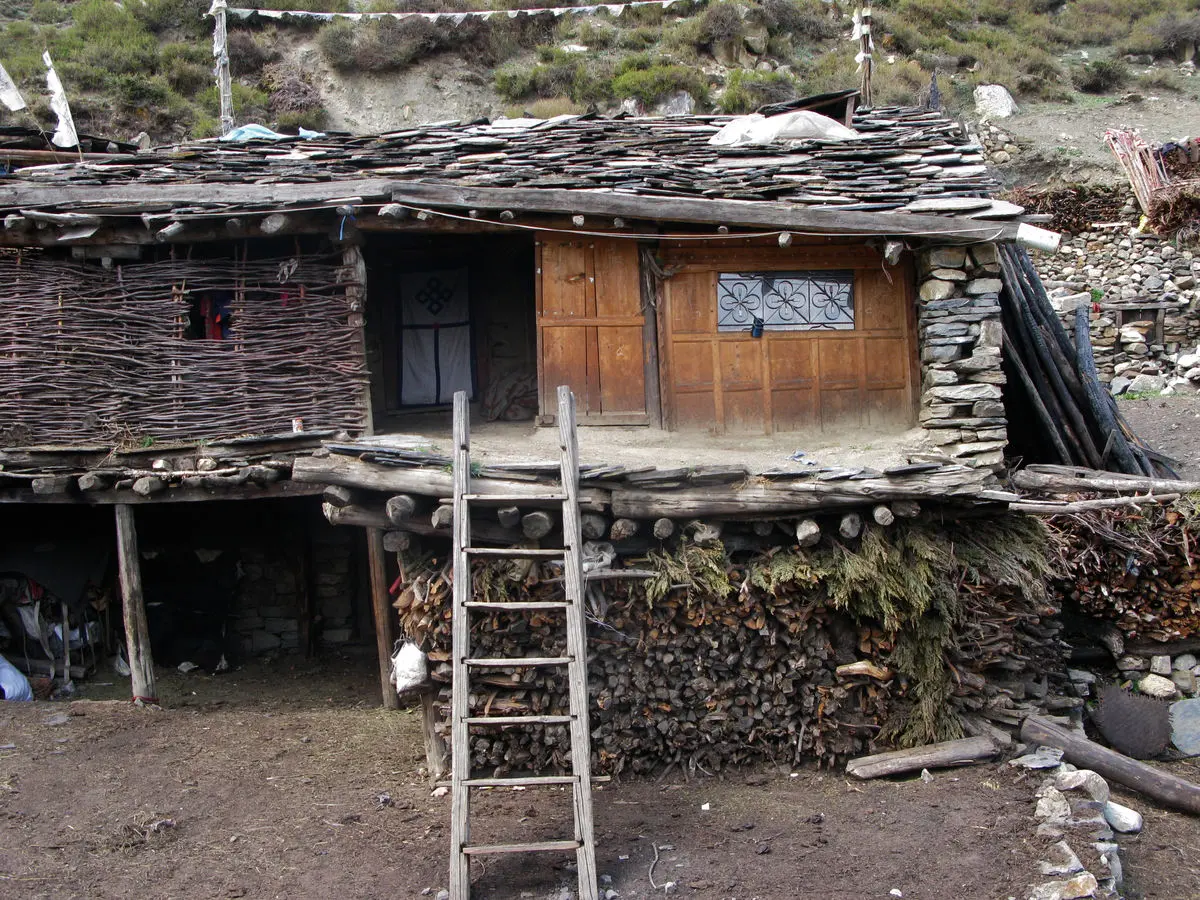
Don't expect luxury services on the Manaslu Circuit Trek. The teahouses along the Manaslu Circuit are simple, and that's what makes it feel more real. Rooms are basic, usually just twin beds and a shared bathroom down the hall, and you're sharing the space with whoever else is on the trail that night. Most teahouses have a communal dining hall where you'll actually spend your evenings talking about your day and discussing the plan with your guide for the next day. This is honestly the best part of most nights on this trek; getting to know about your guide, porters and other fellow trekkers in a warm room.

Electricity for charging and WiFi are available at most stops now for a small cost of USD$2-5, though don't expect fast or reliable connections the higher up you go and pack a power bank with you as it saves your expense as well as comes in hand in case there is no electricity in your stop. 

Also, hot showers are available at the lower trails for a small fee of around USD$2-5 and almost get scarce as you climb higher. Our guides always recommend not to take much shower the higher you climb, especially on the day before your pass crossing. 

Remember that the tea houses don't really accept cards or USD$. So, it is always the best to exchange Nepali currency in Kathmandu enough for your expense in the trail as you won’t find an ATM on the remote trails, and even if you find one, it doesn’t really work.

One thing to be ready for: rooms get cold at night, especially the higher you climb. A good sleeping bag isn't optional up here - it's essential. Though the teahouses do provide you with a blanket, it’s always recommended to carry your own sleeping bag as well. 

Food and Meals on the Manaslu Circuit Trek

The food along the Manaslu Circuit is simple yet filling, and honestly better than what most people expect from teahouses. Dal bhat; rice, lentil soup, and a couple of curries is the trail staple, and it's the classic meal eaten by all your guides and porters in Nepal. It is genuinely the best fuel for long trekking days as “Dal Bhat Power, 24 Hour” is a famous saying in Nepal. Beyond that, you'll find noodles, pasta, soups, breads, pancakes, eggs, and potatoes cooked pretty much every way possible, along with snacks to keep you going between meals.

For drinks, tea, coffee, hot lemon, and soft drinks are available at most stops. Hot lemon is especially a trail favorite for a lot of trekkers, as it tastes really good, and is the best thing to have to stay warm and hydrated at the high altitude.

Why Trek Manaslu Circuit with Advent Himalaya Treks?

Anyone can get you to Manasalu Circuit. What we think actually matters is who you're doing it with, and what happens around, before and after the trek.

  • We're a family-run business, not a franchise. Advent Himalaya Treks was started by Babu with his family by his side and is still run day-to-day by the same family. When you email us or message on WhatsApp before you book, you're talking to Babu who actually knows about the trek you are asking about, not a chatbot or AI.
  • Your guide has more than a decade of experience. The guide from our team who you will trek with will be an experienced guide who has completed this specific trek at least 9-10 times, and has been the main guide for at least 5 times. Also, an assistant guide with 2-3 years of experience will be on the trek with you if you have a large group.
  • Come learn to make momo with our family. Before or after your trek, you're invited into our family's kitchen for a hands-on momo-making session either for lunch or dinner; anything that works with you. You will get to learn the recipe that has been in our family for decades, taste the actual local and authentic momo; the one we actually cook at our home. It's a small thing, but it's the experience our guests bring up for a long time. Also, if you want to learn to make any other dishes, our family is ready to share the recipe and cook it together with you.
  • Our guides and porters are basically part of the family. Many of our guides and porters have been with us since the beginning, climbing each step alongside. Dawa has been with us for 19 years, and is there on almost every trek.
  • Private airport pickup/dropoff. Either Babu, Meera or both of them will be there with a private vehicle to welcome you at the airport as well as to drop you off for your flight back home.
  • Tailor made itineraries. This package you see is a standard structure of how the journey looks like. Each and everything seen in this package can be changed and accommodated as per your or your groups’ preference. 
  • We handle the behind the scene stuff so you don't have to worry about it. Permits, flight rerouting, weather delays, gear rental if you need it; we sort it in the background so your energy goes toward the trek, not logistics. 
  • A real, in-person briefing before you hop into the trail. You'll sit down with Babu or your assigned guide at our office or in the hotel you are staying at, walk through the route, the altitude plan, a gear check, and ask anything that's on your mind. Most of our guests tell us that the trip starts feeling real to them after this briefing.
  • No gear? We've got you covered. Advent Himalaya Treks can provide you with a sleeping bag and down jacket if you don’t have one. And if you require any other gears such as poles, gloves, a headlamp, crampons our team will help you purchase it at Thamel or take you to a rental place if you just want to rent it.
  • Personalized support. You will be provided with personalized support throughout your time in Nepal. If you or your group are sensitive to new food or have specific allergies, a cook guide will be assigned to you and your team during the trek to ensure that your meal is properly taken care of.

Price Per Person
US$1999
  • 2 - 4 Pax US$1999
  • 5 - 7 Pax US$1799
Speak to an Expert
Our Packages specialists are here to assist you with booking and customization.
Babu Gurung
Babu Gurung +977 9851191662