18 Day Lumba Sumba La circuit Trek Cost 2026/2027
The total cost of the 18 Day Trek to the Lumba Sumba La Circuit starts from USD $2100 and varies according to your group size. Variation in the price can also result when you customize your own itinerary, making changes such as hotel upgrades, add-ons, extra nights at Kathmandu, or no porter required for the trek, which can increase or decrease the overall cost.
Best Time for the Lumba Sumba La circuit Trek
To get the absolute most out of this diverse trail, spring (March to May) and autumn (September to November) offer the most reliable conditions.
Spring transforms the lower sections around Olangchung valley into vibrant shades of red and pink rhododendrons. The weather is pleasantly warm, though late afternoon clouds can roll in. Starting your daily hikes early ensures you get the crispest morning mountain views, avoiding any chances of afternoon showers.
Autumn is the ultimate trekking season. You will find crystal clear skies and unparalleled visibility of the Mt. Kanchanjanga and Mt. Makalu range. During this season, the trails are dry, and the temperatures are comfortable for steady ascents.
Winter treks are possible, but the heavy snow near the high sections can make the steep ridges slippery and challenging.
Travel Insurance for the Lumba Sumba La circuit Trek
- Travel insurance is non-negotiable. Your policy must explicitly cover:
- Trip cancellations, delays, and lost baggage.
- Medical insurance, high-altitude trekking coverage up to 6,000m. Standard travel insurance often excludes trekking above certain elevations.
- Emergency Evacuation. In case of altitude sickness or injury, evacuation from remote areas can be extremely costly without good insurance.
- Accident & injury, protect against trekking - related accidents, includes hospitalization and treatment costs in Nepal or abroad.
- Repatriation. Ensure safe return home in case of serious medical emergencies.
Key tips:
- Check the Policy altitude limit for what it covers
- Verify that the helicopter evacuation is included
- Keep the insurance with you, and carry a printed copy of your insurance policy as well
- Buy insurance before flying to Nepal
Logistics - Getting to Lumba Sumba La circuit Trek and Permits 2026/27
By air (faster, more comfortable):
- Kathmandu to Bhadrapur by domestic flight
- Bhadrapur to Taplejung by jeep - this is your trailhead hub
- Hatiya/Gola to Chichila-Tumlingtar by jeep once the trek wraps up
- Tumlingtar to Kathmandu by flight
By road (cheaper, longer):
- Kathmandu to Taplejung by direct bus
- Return via Khadbari, Tumlingtar, Hile, Dharan, and back to Kathmandu
- Flying costs more but saves you days; the bus route is budget-friendly but can take multiple extra days depending on road conditions. Which one makes sense really depends on how much time and budget you've got.
Permits you'll need for this trek:
- Kanchenjunga Restricted Area Permit - required since the route passes through restricted eastern border areas. Costs $20 USD per person per week for the first four weeks, then $25 USD per week after.
- Upper Arun Valley Restricted Area Permit - USD 20 per person per week for the first four weeks, and USD 25 per person per week
- Kanchenjunga Conservation Area Project (KCAP) fee- Costs NPR 3,000 (approx. $23 USD)
- Makalu Barun National Park entry fee- costs NPR 3,000 (approx. $23 USD) for foreigners and NPR 1,500 for SAARC nationals.
NOTE: A licensed guide is mandatory for restricted areas and this isn't optional paperwork, it's the law for this region.
Altitude Sickness - What to Know for Lumba Sumba La circuit Trek
Altitude sickness is a real concern on this trek, and it doesn't matter how fit you are as it can affect first-timers and experienced trekkers alike. The Lumba Sumba La Pass sits at 5,160m, well into the range where acute mountain sickness (AMS) becomes a genuine risk, so knowing your body's warning signs matters more than any piece of gear you pack.
What increases your risk:
- Ascending too quickly, especially in the days leading up to the pass
- Sleeping more than 500m higher than the night before
- A previous history of altitude sickness
- Alcohol or sedative use at altitude
- Pushing above 3,500m without proper acclimatization days built in
If symptoms show up:
- Stop ascending immediately if you notice a headache, nausea, or unusual fatigue
- Rest at your current altitude until symptoms improve
- Descend 300-1000m if symptoms worsen or don't improve within 24 hours
- Seek medical help urgently for severe signs: confusion, breathlessness at rest, coughing blood, or blue lips
Descent remains the most effective treatment as oxygen and medication like acetazolamide or dexamethasone can help, but they don't replace going down. This is where a guide who actually knows the route matters. On a trek this remote, with the nearest help potentially a day or more away, the call to turn back has to be made early, not after symptoms get serious. We tell every trekker on Day 1 that if the guide says descend, we descend - no negotiating that on the trail.
A number of trekkers carry Diamox as a preventive measure, but it is always best to consult with your doctor regarding your health situation and prescriptions you can take before you leave home; it’s not something to figure out mid-trek. Since this is a remote camping trek with limited access points, proper travel insurance covering high-altitude trekking and evacuation isn't something to skip.
If you've had altitude sickness before or have any relevant health history, tell us when you book it changes how we'd pace your itinerary.
Accommodation on the Lumba Sumba La circuit Trek
Accommodation here in Lumba Sumba La Trek runs in two distinct stages.
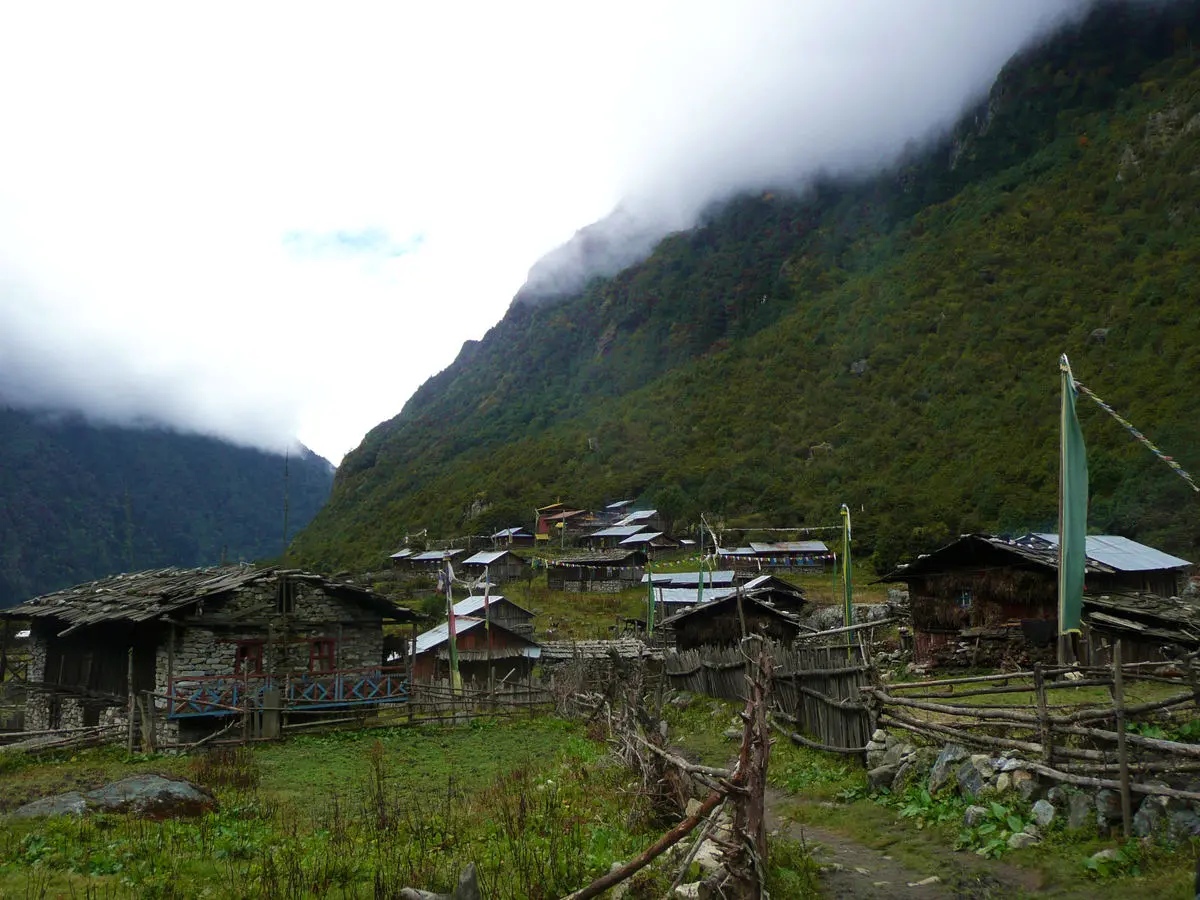
From Taplejung through villages like Olangchung Gola, you'll find basic teahouses with twin rooms, shared bathrooms, and a dining hall that doubles as the evening gathering spot. Simple, but warm and reliable.
Once you head deeper into the remote stretch towards Thudam, Chepuwa, Chyamtang, and the sections around the pass itself, teahouses become scarce or disappear entirely, and the trek shifts to organized camping. Tents, a support crew, and a kitchen team carrying everything in.
Hot showers, where available in teahouse villages, usually cost a small fee of USD 2-4 since gas has to be carried in by hand. Wi-Fi is patchy at best in the lower villages and non-existent higher up, so bring a power bank; charging isn't guaranteed and paying per device adds up fast.
Food and Meals on the Lumba Sumba La circuit Trek
Food follows the same two-stage pattern as accommodation. In the teahouse villages, expect dal bhat, local grains like millet, maize, and buckwheat, seasonal vegetables such as potatoes and leafy greens, and occasionally chicken or goat.
Once you're in the camping sections, meals are prepared by the trekking crew's kitchen team and tend to be simpler but hearty, warming food built around whatever can be carried in rather than a full menu.
Don't skip trying Tongba, the Limbu community's traditional warm millet beer, served in a bamboo or wooden container. This is a genuinely local experience you won't find on the more touristy routes. In the higher Sherpa-influenced areas, you'll also come across yak butter tea, made with salt, butter, tea, and milk.
If you have dietary restrictions or allergies, let us know when booking so we can flag it to teahouses in advance. In the camping sections, your crew can prepare meals to your requirements directly, so worth mentioning early since options are far more limited out here than on the busier trekking routes.
Also, it is always a best option to bring snacks from Kathmandu if you can. Chocolate, nuts, energy bars are cheaper there, and very useful to grab a bite during your trek.
Why Trek Lumba Sumba La circuit Trek with Advent Himalaya Treks?
Anyone can get you to Lumba Sumba La Circuit. What we think actually matters is who you're doing it with, and what happens around, before and after the trek.
- We're a family-run business, not a franchise. Advent Himalaya Treks was started by Babu with his family by his side and is still run day-to-day by the same family. When you email us or message on WhatsApp before you book, you're talking to Babu who actually knows about the trek you are asking about, not a chatbot or AI.
- Your guide has more than a decade of experience. The guide from our team who you will trek with will be an experienced guide who has completed this specific trek at least 9-10 times, and has been the main guide for at least 3 times. Also, an assistant guide with 2-3 years of experience will be on the trek with you if you have a large group.
- Come learn to make momo with our family. Before or after your trek, you're invited into our family's kitchen for a hands-on momo-making session either for lunch or dinner; anything that works with you. You will get to learn the recipe that has been in our family for decades, taste the actual local and authentic momo; the one we actually cook at our home. It's a small thing, but it's the experience our guests bring up for a long time. Also, if you want to learn to make any other dishes, our family is ready to share the recipe and cook it together with you.
- Our guides and porters are basically part of the family. Many of our guides and porters have been with us since the beginning, climbing each step alongside. Dawa has been with us for 19 years, and is there on almost every trek.
- Private airport pickup/dropoff. Either Babu, Meera or both of them will be there with a private vehicle to welcome you at the airport as well as to drop you off for your flight back home.
- Tailor made itineraries. This package you see is a standard structure of how the journey looks like. Each and everything seen in this package can be changed and accommodated as per your or your groups’ preference.
- We handle the behind the scene stuff so you don't have to worry about it. Permits, flight rerouting, weather delays, gear rental if you need it; we sort it in the background so your energy goes toward the trek, not logistics.
- A real, in-person briefing before you hop into your trail. You'll sit down with Babu or your assigned guide at our office or in the hotel you are staying at, walk through the route, the altitude plan, a gear check, and ask anything that's on your mind. Most of our guests tell us that the trip starts feeling real to them after this briefing.
- No gear? We've got you covered. Advent Himalaya Treks can provide you with a sleeping bag and down jacket if you don’t have one. And if you require any other gears such as poles, gloves, a headlamp, crampons our team will help you purchase it at Thamel or take you to a rental place if you just want to rent it.
- Personalized support. You will be provided with personalized support throughout your time in Nepal. If you or your group are sensitive to new food or have specific allergies, a cook guide will be assigned to you and your team during the trek to ensure that your meal is properly taken care of.