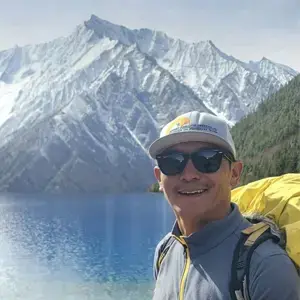
Island Peak Summit-3N/4D

We warmly welcome you to join our Island Peak Summit adventure. This 3N/4D package is carefully designed to cover all essentials, including food, accommodation, a professional climbing guide, and all necessary equipment (available for rent in Chhukhung). Three nights of food and lodging in Chhukhung, plus one overnight stay at Base Camp with tented accommodation and freshly prepared camping meals. Our experienced guide will provide training, technical support, and summit planning to ensure a safe and successful climb. All required climbing gear is available on rent from Chhukhung, making preparation convenient and hassle-free. Island Peak (Imja Tse) stands at 6,189 meters and offers breathtaking views of Lhotse, Makalu, and Ama Dablam. It is one of Nepal’s most popular trekking peaks, ideal for climbers seeking both adventure and Himalayan panoramas.
This package balances acclimatization, comfort, and expert guidance, making it a perfect choice for those aiming to summit Island Peak with confidence.
At a Glance
Duration
Duration
4 Days
Country
Country
Nepal
Maximum Altitude
Maximum Altitude
6189m
Starts
Starts
Chhukhung
Ends
Ends
Chhukhung
Group Size
Group Size
02 - 08
Activities
Activities
Peak Climbing
Best Time
Best Time
October-November , April - May

Overview - What is the 3N/4D Island Peak Summit like?

Island Peak, locally known as Imja Tse is one of the peaks where trekkers make their first real attempt at climbing above 6,000 meters, and this 3N/4D package is built around getting you to the summit safely without overcomplicating it.

You'll spend three nights in Chhukhung, the last village before the mountain, with proper food and a warm bed each night. On summit day, you push up to Base Camp and spend one night there in tented accommodation, with hot meals cooked fresh even at altitude. Then it's an early start for the climb.

You don't need a full mountaineering kit; crampons, harnesses, ice axes, ropes as it can all be rented in Chhukhung, which takes the pressure off first-time climbers. At 6,189 meters, Island Peak isn't a technical climb compared to Ama Dablam, but since you are actually climbing to the top with fixed ropes and a glacier crossing near the top, proper acclimatization beforehand matters the most. Most people pair this climb with the Everest Base Camp trek or Three Passes trek to acclimatize first, which is one of the best ways to get your body and mind used to the high altitude. 

From the summit of Island Peak, Lhotse, Makalu, and Ama Dablam feel close enough to touch, making your summit push more worthwhile.

If you're deciding whether Island Peak is the right first climb for you, or want details on the guide's pre-summit training, just reach out.

3N/4D Island Peak Summit Highlights

  • Summit Island Peak (Imja Tse) at 6,189m; one of Nepal's most accessible 6,000m peaks for first-time climbers
  • Stand close enough to Lhotse, Makalu, and Ama Dablam that they stop looking like postcard shots
  • Cross a genuine glacier and tackle a fixed-rope summit push near the top; a real taste of technical climbing without needing prior mountaineering experience
  • Train under an experienced guide in Chhukhung before the climb; crampon use, ice axe technique, and rope management covered hands-on
  • Combine the climb with the Everest Base Camp trek or Three Passes trek for a longer, well-acclimatized Himalayan journey 
  • Rent all technical gear locally in Chhukhung; no need to buy or ship equipment for a one-time climb


Difficulty - Who Can Do the Island Peak Summit/Age?

Island Peak is often called a "beginner's peak," but it’s not as easy as labelled. Though it’s not a technical climb requiring prior mountaineering certification, it does demand solid physical fitness and some prior exposure to altitude, making it quite strenuous. 

Age-wise, above 16 is considered an ideal age by most (the government restricts climbing permits for minors under the age of 16). What matters more than age is one's trekking experience. Anyone who's done a demanding high-altitude trek like Everest Base Camp or Annapurna Circuit and handled the altitude well is suitable as they have some base and connection built with the altitude. 

If you're unsure whether your fitness level or experience is enough for Island Peak, it's worth a quick conversation with us before booking rather than guessing.

Island Peak Summit-3N/4D Itinerary

Day 1

Chhukhung Arrival

Climbers can join after completing any trek in the Everest (Khumbu) Valley. This day is dedicated to meeting with your climbing guide, receiving detailed information about the upcoming climb, and preparing for the summit. Food and accommodation are provided, ensuring a comfortable stay while you get ready for the next stage of your adventure.

Max Altitude: 4730m
Meals: Breakfast-Lunch-Dinner
Accommodation: Lodge - Hotel
Day 2

Chhukhung - Island Peak Base Camp

It's a day trek to base camp from Chhukung. It takes approximately 4-5 hours. It's good to get some rest and acclimatize. Your guide will help you organize climbing gear. A short session on rope techniques, use of ascenders, and safety protocols is often conducted. You will head to bed very early (around 7-8 pm) since the summit push begins before dawn.
Max Altitude: 5200m
Meals: Breakfast-Lunch-Dinner
Duration: 4-5hrs
Accommodation: Camping
Mode of transportation: Walk
Day 3

Summit day

It's the summit day. You need to wake up around 1 am and have a quick breakfast(tea, porridge, or hot soup). The trail is rocky and steep, leading to Crampon Point where you gear up. Roped up, you will cross the ice wall (about 100 -200m), which requires fixed rope climbing. The ridge is a short but exposed walk to the summit, 6189 m. Climbers usually reach between 7-9 am, depending on pace and conditions. They retrace the route carefully, returning to base camp by late afternoon and continuing to descend to Chhukung for good food and a good night's sleep with comfortable accommodation.
Max Altitude: 4700
Meals: Breakfast, Lunch, Dinner
Duration: 11-12hrs
Distance: 18km
Accommodation: Hotel
Mode of transportation: Walk
Day 4

Chhukhung out of package

It's day to out of package after breakfast.

Are you still confuse from where to start? We have solutions for you.

Cost Details

Includes

  • 3 Nights, 4 Days food and accommodation at Chhukhong - Island Peak Base - Summit - Chhukhung
  • Climbing guide according to the number of Pax
  • Basic training at Chhukhung
  • Necessary climbing equipment
  • Peak permits
  • Summitted cirtificetas
  • Service fee, climbers' insurance, and necessary equipment

Excludes

  • Wi-Fi and battery charging during the stay at Chhukhung
  • Heli rescue or a Charter flight
  • Climber Guide and porter tips
  • Personal climbing equipment
  • Trekking activities to Chhukhung and after Simmit to Chhukhung

Dates & Availability

Island Peak Summit Departure Information
The departure time for the Island Peak summit will depend on your trekking schedule, acclimatization process, and activities arranged with either your organizing company or our trekking guides and staff.
Your climbing guide, along with all necessary permits and climbing equipment, will be ready and on standby at Chhukung. Before starting your solo trip or joining an organized trek, you are required to provide a copy of your passport and all necessary documents, as well as pay the Island Peak Expedition package fee.
We have been organizing trekking and peak-climbing trips for many years, with a strong focus on safety, proper acclimatization, and reliable support. Therefore, we kindly request that you arrange and secure all your trekking and climbing activities through Advent Himalaya Treks Pvt. Ltd. This will help us coordinate your itinerary, permits, climbing guide, equipment, and other necessary arrangements smoothly and safely.
Select your preferred date

Equipment List

Download List
For a 3N-4 day climb of Island Peak Summit (6,189m), you’ll need a compact but complete set of technical climbing gear, layered clothing for extreme weather changes, and essential sleeping equipment. The focus should be on safety gear (boots, crampons, ice axe, harness, helmet) and high-altitude clothing layers, including enough acclimatization.

Upper Body

  • Base layer top
  • Mid layer fleece
  • Down jacket
  • Shell jacket
  • Softshell jacket
  • Climbing harness
  • Carabiners
  • Ascender/Jumar
  • Descender device

Lower Body

  • Mid layer pants
  • Shell pants
  • Down pants
  • Mountaineering boots
  • Trekking boots
  • Camp shoes
  • Trekking socks
  • Expedition socks
  • Gaiters
  • Crampons
  • Climbing harness
  • Carabiners

Footwear & Accessories

  • Mountaineering boots
  • Trekking boots
  • Camp shoes
  • Trekking socks
  • Expedition socks
  • Gaiters
  • Crampons
  • Climbing harness
  • Carabiners

Head & Sun Protection

  • Climbing helmet
  • Warm hat
  • Balaclava
  • Neck gaiter or scarf
  • Sun hat
  • Glacier glasses
  • Sunscreen
  • Lip balm

Personal & Medical Kits

  • Pain relief: Ibuprofen or paracetamol for headaches and muscle aches.
  • Anti-inflammatory: For swelling or joint pain.
  • Antibiotics: Broad-spectrum, prescribed by a doctor for infections.
  • Anti-diarrheal: Loperamide for stomach issues.
  • Rehydration salts: To replace electrolytes lost through sweat or illness.
Altitude & Respiratory
  • AMS medication: Acetazolamide (Diamox) for altitude sickness prevention.
  • Nasal spray: For congestion in dry, cold air.
  • Cough lozenges: To soothe throat irritation from cold air.
First Aid Essntials
  • Bandages: Assorted sizes for cuts and blisters.
  • Blister pads: Comped or moleskin for foot protection.
  • Antiseptic cream: For minor wounds.
  • Medical tape: For securing dressings or gear.
  • Tweezers: For splinters or ticks.
Skin & Eye Protection
  • Sunscreen: SPF 50+, broad-spectrum.
  • Lip balm: SPF-rated to prevent cracking.
  • Eye drops: For dryness caused by wind and snow glare.
Emergency Items
  • Personal medications: Any prescribed drugs you normally take.
  • Sterile gloves: For handling wounds.
  • Small scissors: For cutting tape or bandages.
  • Emergency blanket: Lightweight foil blanket for hypothermia.

Travel Documents

  • Passport: Valid for at least 6 months beyond your travel dates.
  • Visa: Tourist visa for Nepal, obtainable on arrival or in advance.
Trekking & Climbing Permits
  • Sagarmatha National Park permit: Required for entry into the Everest region.
  • TIMS card (Trekkers’ Information Management System): Mandatory for trekkers in Nepal.
  • Lobuche Peak climbing permit: Issued by the Nepal Mountaineering Association (NMA).
Expedition & Insurance Papers
  • Travel insurance: Must cover high-altitude trekking and helicopter evacuation.
  • Medical clearance: Recommended, especially for climbers over 40 or with health conditions.
  • Emergency contact list: Printed and shared with your guide/team.
Financial & Logistical
  • Cash: Nepalese rupees for lodges, food, and local purchases (ATMs are unreliable in the Khumbu).
  • Credit/debit cards: Backup, though acceptance is limited in remote areas.
  • Flight tickets: Kathmandu–Lukla round trip, plus any international flights.
Lighting & Power
  • Headlamp with spare batteries.
  • Power bank for charging devices.
  • Solar charger (optional, useful in remote areas).
Hydration & Nutrition
  • Water bottles or hydration bladder.
  • Thermos flask for hot drinks at altitude.
  • Energy snacks: protein bars, nuts, dried fruit.

Miscellaneous

  • Camera or smartphone for photos.
  • Notebook & pen for journaling or recording details.
  • Maps or trekking guidebook.
Hygiene & Comfort
  • Wet wipes for quick cleaning.
  • Hand sanitizer.
  • Toilet paper (not always available in lodges).
  • Small towel, quick-dry.
Safety & Extras
  • Multi-tool or Swiss Army knife.
  • Whistle for emergencies.
  • Duct tape for quick gear repairs.
  • Ziploc bags for waterproof storage.
  • Cash in small denominations.
Key Tips
  • Keep miscellaneous items lightweight and multipurpose.
  • Store them in easy-access pockets of your backpack.
  • Always carry spares of critical items (batteries, tape, sanitizer).

NOTE: Sleeping bag, down jacket, and duffel bag can be provided by Advent Himalaya Treks if you do not have your own. Also, free excess luggage storage at the Advent Himalaya Treks store is available for the duration of the trek.

Essential Information

3N/4D Island Peak Summit Cost 2026/2027

The total cost of the 3N/4D Island Peak Summit starts from USD $799 and varies according to your group size. Variations in the price can also result when you customize your own itinerary, making changes such as extra nights in High Camp or a porter required for High Camp, which can increase the overall cost.


Why is Chhukhung the Start and End Point for the Island summit?

The Island Peak summit push begins and ends at Chhukhung, since it's the very last settlement in the valley and serves as the main base before the summit push. Everything below Chhukhung (the trekking portion) is organized with a guide and the necessary porters, just like any standard trek. The summit section above Chhukhung is a separate arrangement or an add-on to your prior trek package such as EBC Trek, thus requiring an additional climbing team and a separate fee, since summiting involves technical gear, climbing permits, and a specialized guide beyond what a regular trekking guide covers.

This setup gives you some flexibility. If you'd rather trek independently down to Chhukhung on your own schedule, that's possible since you simply join our guided summit package once you arrive. Solo trekkers can do the same: walk in alone, then connect with us in Chhukhung for the actual summit attempt. 

If you're planning to trek in independently and just need the summit portion, let us know your dates in advance so we can have the climbing team ready in Chhukhung when you arrive. 

Best Time for the Island Peak Summit 

Spring (March-May) and autumn (September-November) are the best period to attempt Island Peak as these two seasons give you the most stable weather and clearest skies in the Khumbu, which directly results in higher summit success rates.

Autumn tends to follow right after the monsoon clears, so the mountains are washed clean and visibility toward Lhotse, Makalu, and Ama Dablam is usually at its best. Spring brings warmer days for trekking in but can have less predictable snow conditions higher up

Winter and monsoon climbs are technically possible, but they come with real trade-offs. Winter means decreased temperature and shorter daylight windows, while monsoon brings heavy rainfall, poor visibility, and higher avalanche risk on the glacier. Therefore, these seasons are not recommended unless you specifically want to reach the top during these periods and know the risk as well as have knowledge on what you are getting into.  


Travel Insurance for the Island Peak Summit

Travel insurance is non-negotiable. Your policy must explicitly cover:

  • Trip cancellations, delays, and lost baggage.
  • Medical insurance, high-altitude trekking coverage up to 6,500m. Standard travel insurance often excludes trekking above certain elevations.
  • Emergency Evacuation. In case of altitude sickness or injury, evacuation from remote areas can be extremely costly without good insurance.
  • Accident & injury, protect against trekking - related accidents, includes hospitalization and treatment costs in Nepal or abroad.
  • Repatriation. Ensure safe return home in case of serious medical emergencies.

Key tips:

  • Check the Policy altitude limit for what it covers
  • Verify that the helicopter evacuation is included
  • Keep the insurance with you, and carry a printed copy of your insurance policy as well
  • Buy insurance before flying to Nepal
 

Logistics - Island Peak Summit Permits 2026/27

Climbing Island Peak requires a few official permits, which all must be arranged through a registered trekking agency rather than picked up independently at the trailhead.

Permits you'll need:

  • Island Peak Climbing Permit; issued by the Nepal Mountaineering Association (NMA), the price varies by season, with spring and autumn costing more than winter and monsoon. 
  • Sagarmatha National Park Entry Permit: around NPR 3,000 per person
  • Khumbu Pasang Lhamu Rural Municipality Permit:  around NPR 2,000 per person

We handle all three permits as part of your booking, so there's no separate paperwork to chase in Kathmandu. You just provide us with a scanned passport copy so that we can take care of the paperwork.


Altitude Sickness - What to Know for Island Peak Summit

Altitude sickness isn't something to take lightly on Island Peak, and it doesn't care how fit you are as it can hit seasoned trekkers just as easily as first-timers. Knowing what raises your risk, and what to do the moment symptoms show up, matters more than any piece of gear you'll carry.

What increases your risk:

  • Rapid ascent, especially flying directly into high altitude
  • Sleeping more than 500m higher than the previous night
  • A previous history of altitude sickness
  • Alcohol or sedative use at altitude
  • Climbing above 3,500m without proper acclimatization

If symptoms appear:

  • Stop ascending immediately if you notice a headache, nausea, or fatigue
  • Rest at the same altitude until symptoms improve
  • Descend 300-1000m if symptoms worsen or don't improve within 24 hours
  • Seek medical help urgently if severe signs appear; confusion, breathlessness at rest, coughing blood, or blue lips
  • Supplemental oxygen or medication like acetazolamide or dexamethasone can help, but descent remains the most effective treatment

This is also where having an experienced guide on the ground makes a real difference; knowing when to push through mild discomfort versus when to turn back isn't something you want to be deciding alone. Our guides always carry a pulse oximeter with them and check every trekker. This is to identify any altitude sickness symptoms and prevent it from getting worse. Also, if your guide says to descend, we descend immediately. We tell this to every trekker on Day1, and it's non-negotiable.

Some trekkers use Diamox to prevent altitude sickness, and it is highly recommended to talk to your doctor about this before you travel, not on the trail. In a genuine emergency, helicopter evacuation is available from multiple points on the route. This is exactly why proper travel insurance covering high-altitude trekking, summit and evacuation isn't something to skip.

If you have a history of altitude sickness or any health concerns, it's worth mentioning before you book so we can plan the trip accordingly. 

This information is for general guidance and isn't a substitute for professional medical advice, so if you have pre-existing conditions, please consult a doctor experienced in high-altitude travel before your trip.


Accommodation and Food on the Island Peak Summit

Accommodation on the trail to the summit of Island Peak varies as the altitude rises. In Chhukhung, you're in a proper teahouse with a warm room, a real bed, and hot meals cooked in the lodge kitchen. It's basic by city standards but comfortable enough.

Once you move up toward Base Camp, that changes completely. There are no teahouses this high, so you'll be in a tented camp for the one night before the summit push with sleeping bag, insulated mat, and a dining tent where your crew prepares hot food despite the cold and altitude. 

It's not luxury, but it's not frugal either as the accommodation is designed comfortably enough to get you properly rested before the final summit push. 


Why do Island Peak Summit with Advent Himalaya Treks?

Anyone can get you to the summit of Island Peak. What we think actually matters is who you're doing it with, and what happens around, before and after the trek.

  • We're a family-run business, not a franchise. Advent Himalaya Treks was started by Babu with his family by his side and is still run day-to-day by the same family. When you email us or message on WhatsApp before you book, you're talking to Babu who actually knows about the trek you are asking about, not a chatbot or AI.
  • Your guide has more than a decade of experience. The guide from our team who you will trek with will be an experienced guide who has completed this specific trek at least 9-10 times, and has been the main guide for at least 3 times. Also, an assistant guide with 2-3 years of experience will be on the trek with you if you have a large group.
  • Come learn to make momo with our family. Before or after your trek, you're invited into our family's kitchen for a hands-on momo-making session either for lunch or dinner; anything that works with you. You will get to learn the recipe that has been in our family for decades, taste the actual local and authentic momo; the one we actually cook at our home. It's a small thing, but it's the experience our guests bring up for a long time. Also, if you want to learn to make any other dishes, our family is ready to share the recipe and cook it together with you.
  • Our guides and porters are basically part of the family. Many of our guides and porters have been with us since the beginning, climbing each step alongside. Dawa has been with us for 19 years, and is there on almost every trek.
  • Private airport pickup/dropoff. Either Babu, Meera or both of them will be there with a private vehicle to welcome you at the airport as well as to drop you off for your flight back home.
  • Tailor made itineraries. This package you see is a standard structure of how the journey looks like. Each and everything seen in this package can be changed and accommodated as per your or your groups’ preference. 
  • We handle the behind the scene stuff so you don't have to worry about it. Permits, flight rerouting, weather delays, gear rental if you need it; we sort it in the background so your energy goes toward the trek, not logistics. 
  • A real, in-person briefing before you hop into your trail. You'll sit down with Babu or your assigned guide at our office or in the hotel you are staying at, walk through the route, the altitude plan, a gear check, and ask anything that's on your mind. Most of our guests tell us that the trip starts feeling real to them after this briefing.
  • No gear? We've got you covered. Advent Himalaya Treks can provide you with a sleeping bag and down jacket if you don’t have one. And if you require any other gears such as poles, gloves, a headlamp, crampons our team will help you purchase it at Thamel or take you to a rental place if you just want to rent it.
  • Personalized support. You will be provided with personalized support throughout your time in Nepal. If you or your group are sensitive to new food or have specific allergies, a cook guide will be assigned to you and your team during the trek to ensure that your meal is properly taken care of.
Price Per Person
US$799
Speak to an Expert
Our Packages specialists are here to assist you with booking and customization.
Babu Gurung
Babu Gurung +977 9851191662