







Annapurna Circuit Trek-20Days

The Annapurna Circuit is a legendary trekking route in Nepal. On this 20-day journey, you will trek through varied landscapes, from subtropical forests to high-altitude deserts. Enjoy  spectacular views of the Annapurna range, Manaslu, and Dhaulagiri, visit the sacred pilgrimage site of Muktinath, and walk through the deepest gorge in the world, the Kali Gandaki. Crossing the 5,416-meter Thorong La Pass is the ultimate highlight of this unforgettable adventure.
At a Glance
Duration
Duration
20 Days
Country
Country
Nepal
Maximum Altitude
Maximum Altitude
5,416 meters (17,769 feet)
Starts
Starts
Kathmandu
Ends
Ends
Kathmandu
Group Size
Group Size
02-10 Pax
Activities
Activities
Trekking
Best Time
Best Time
Spring (March to May) and Autumn (September to November)

Annapurna Circuit Trek Overview 2026/2027

The Annapurna Circuit Trek is a journey that takes you away from the standard guidebooks. Our 20-day Annapurna Circuit itinerary takes you off the rushed, standard routes. Walking this full circuit lets you see exactly how the landscape, people, and architecture change as you climb higher into the Himalayas.

Your 20-day trek starts in the lush, humid subtropical forests of the Marsyangdi valley and slowly ascends into the high-altitude deserts of Manang. As you approach Manang, the massive glaciers of Gangapurna dominate the skyline right above the trail.

This Himalayan trek, suitable for experienced trekkers, takes on high-altitude challenges, including the dry air. Keeping a buff over your mouth is a smart move to successfully overcome the challenges. For better safety and well-being, Advent Himalaya Treks ensures you acclimatize properly with strategic stops in villages like Nawal. These active
recovery days give your body time to adjust to the elevation before tackling the massive elevation, including the 5,416-meter Thorong La Pass.

Why Go on the Annapurna Circuit Trek in Nepal?

Taking 20 days to complete the circuit means you don't have to rush the altitude. You get the time to properly acclimatize while seeing the remote villages that fast-track trekkers miss

Here are the top reasons why this 20-day adventure deserves a spot on your bucket list.

Ultimate High-Altitude Challenge: Crossing Thorong La Pass (5,416m) is tough. You will start the climb long before sunrise, so you reach the summit just as the sun hits the peaks. The early start gives you the chance to reach the prayer-flag-draped summit just as the first light hits the surrounding peaks. As you take on this ascent, we recommend keeping your water bottle inside your jacket so it does not freeze.

Diverse Cultural Immersion: The cultural shift is as dramatic as the elevation. You start in the lush lower valleys surrounded by Hindu farming communities, and finish up in the high Manang region, which is deeply rooted in Tibetan Buddhism.

The World's Deepest Gorge: Trekking through the Kali Gandaki Gorge is absolutely surreal. With Dhaulagiri and Annapurna I towering on either side, the dramatic wind tunnels created by the gorge are legendary. Start your walks early here, as the canyon winds pick up fierce speeds after midday, sweeping dust along the valley.

Soaking in the Tatopani Hot Springs: After crossing the freezing high passes, the descent into Tatopani feels like a reward. The natural hot springs here are rich in minerals and perfect for soothing tired muscles. Bring a quick-dry towel and soak in the warm waters while enjoying a cold drink right next to the roaring river.

A Typical Day During the Nepal Annapurna Circuit Trek

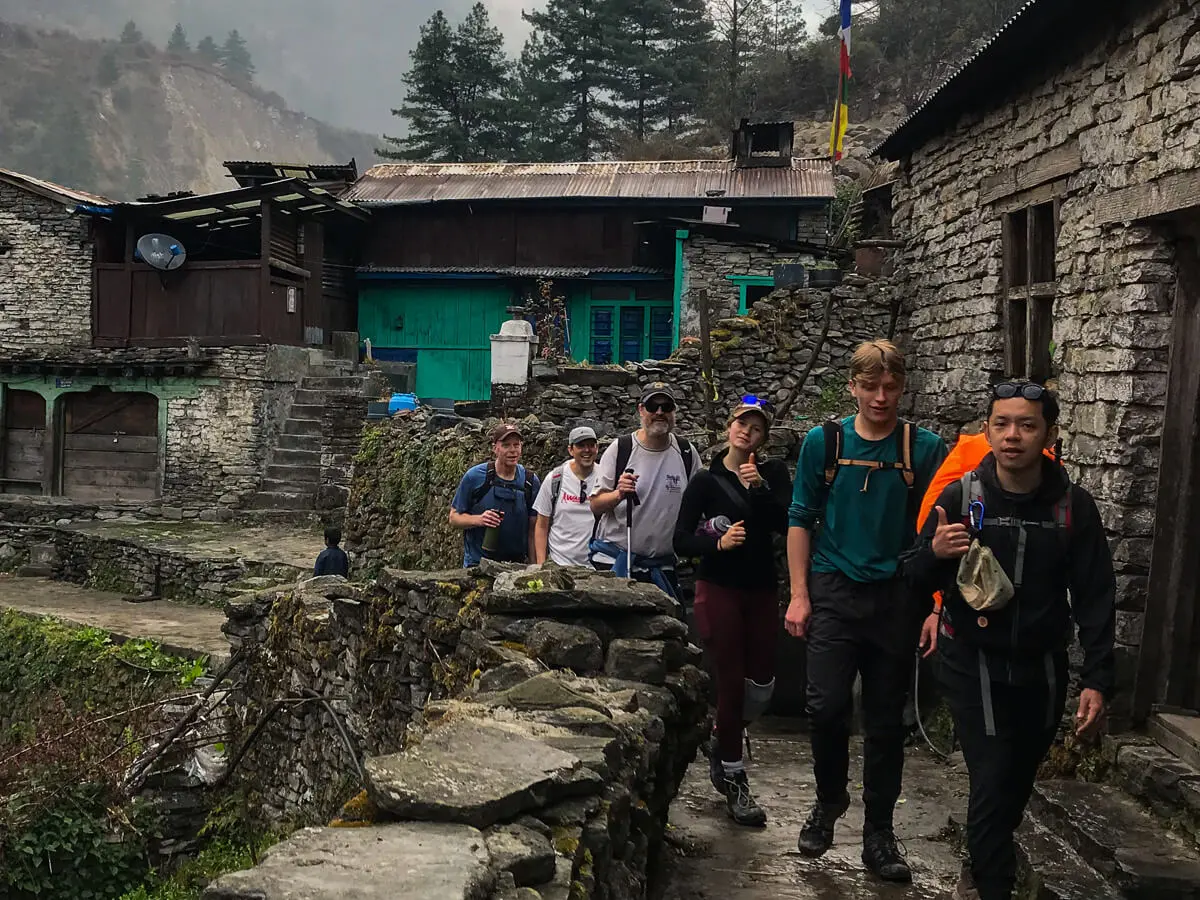
Mornings up high are cold, usually starting around 6:30 AM with a hot mug of Tibetan tea in the dining room before you hit the trail by 7:30 AM. The early hours offer the crispest views of peaks like Mt. Manaslu and Himlung Himal before the mid-day clouds build up. While on the trail, our guides will remind you to maintain a steady but comfortable pace. Take in the shifting landscapes "Bistarai, Bistarai" (slowly, slowly) as you cross swaying suspension bridges over the roaring Marsyangdi River.

You usually stop for lunch around midday at a local teahouse. Expect big, unlimited portions of the local staple. Along the trails, there’s a popular saying that goes, "Dal Bhat Power, 24 Hour". After a brief rest, prepare for the afternoon stretch.

You will arrive at your teahouse by 3:00 PM. It is crucial to get to your destination on time to avoid the bitter cold winds of the Himalayas, especially in the higher regions. After reaching your teahouse, you can change into comfortable, dry clothes and embrace the views of the surrounding mountains.

By evening, the temperature drops fast. Everyone gathers in the teahouse dining room around the yak-dung stove to stay warm, charge devices, and eat dinner before turning in early.

Annapurna Circuit Trek Highlights 2026/2027

  • Cross Thorong La Pass (5,416m), the highest point of the trek.
  • Walk through the Kali Gandaki Gorge, the deepest canyon in the world.
  • See Annapurna I, Dhaulagiri, and Mt. Manaslu up close.
  • Visit remote Tibetan Buddhist monasteries in the high-altitude Manang Valley.
  • Stop at the sacred pilgrimage site of Muktinath.
  • Soak tired muscles in the natural hot springs at Tatopani.
  • Hike through three distinct climate zones, from humid jungle to high alpine desert.

How Difficult is the Annapurna Circuit Trek? Who can go on this Trek?

The Annapurna Circuit is a physically demanding trek. You do not need technical climbing skills, but you do need stamina. You will be walking 5 to 8 hours a day with significant elevation gains. The biggest challenge isn't the walking, but the altitude.

The Annapurna Circuit Trek is especially suitable for:

  • Active travelers with a solid level of cardiovascular fitness who are comfortable hiking between five and eight hours daily over varied terrain and significant elevation changes.
  • Seasoned mountain enthusiasts and ambitious beginners who possess strong mental resilience to handle potential altitude sickness symptoms like headaches or fatigue.
  • Adventure seekers with good health and no major respiratory issues, with a few months of pre-trip training, like walking on inclines, strength conditioning, and resistance training to build endurance.

Annapurna Circuit Trek-20Days Itinerary

Day 1

Kathmandu Arrival

Your 20-day Annapurna Circuit adventure begins the moment you land in Nepal. At the airport, our representatives will welcome you and transfer you to your hotel in the heart of the capital. Use the rest of the day to rest, double-check your gear, and explore the vibrant streets of Kathmandu.
Max Altitude: 1,400 meters
Meals: Breakfast
Duration: 1 hour transfer
Accommodation: Hotel
Mode of transportation: Private Transport
Day 2

Drive from Kathmandu to Besishar and Nagdi

You will leave Kathmandu early for a long drive along the Trishuli River to Besisahar, and then continue on to Nadi. It’s a small town near a hydropower station. Walking around the dam site is beautiful, with the river flowing back and creating colorful views. Many local buses travel from Kathmandu to Nadi via Besisahar, but it’s always more comfortable to take a car, jeep, or bus as a group.
Max Altitude: 930 meters
Meals: Breakfast - Lunch - Dinner
Duration: 7-8 hours’ drive
Accommodation: Tea House / Lodge
Day 3

Nagdi to Jagat

Day one on the trail is a steady warm-up walk along the Marsyangdi River to Jagat. This lower section of the trail is lush and humid, with local farms, villages, and welcoming people around Bahundanda, Ghermu, and Shyane. Ghermu is the best place to stop for lunch, offering a beautiful waterfall view, before continuing the trek through Shrichaur and finally reaching Jagat.
Max Altitude: 1,300 meters
Meals: Breakfast-Lunch- Dinner
Duration: 5-6 hours
Accommodation: Tea house / Lodge
Day 4

Jagat to Dharapani

As you leave Jagat, the trail ascends through rocky paths and dense forests. Around noon, a steep gorge climb suddenly opens into Tal, a wide, flat river valley where you can stop for lunch and enjoy the waterfall views. You will finish the day in Dharapani, a busy checkpoint where the Manaslu and Annapurna routes meet.
 
Many trekkers mistakenly follow the jeep road, which is slightly shorter than the original trail. However, it’s always better to stick to the trekking path before joining the jeep road. The trekking trail offers more variety and is far more enjoyable than walking along the road.
Max Altitude: 1,860 meters
Meals: Breakfast - Lunch - Dinner
Duration: 6-7 hours
Accommodation: Tea House / Lodge
Day 5

Dharapani to Chame

Today’s trail takes you through pine forests with excellent views of Lamjung Himal and Annapurna II. You will spend the night in Chame, the district headquarters of Manang. Part of the walk follows the jeep road, but there is a well-marked trekking trail that avoids most of it, making the day’s journey much more enjoyable. Timang is the best place to stop for lunch before continuing through Thanchok, Lata Manang, and Koto, eventually reaching Chame.
Max Altitude: 2,670 meters
Meals: Breakfast - Lunch - Dinner
Duration: 5-6 hours
Accommodation: Tea House / Lodge
Day 6

Lower Pisang - Nawal Chame to Lower Pisang

The scenery changes quickly today as you enter the high alpine forests. Your journey passes by the Paungda Danda rock face, a massive curved slab of rock rising thousands of feet above the river. Along the way, you’ll reach the village of Bhratang, which is famous for its apple orchards. Grabbing a slice of fresh apple pie here is practically a trekking tradition.
 
Dhikur Pokhari is a pleasant place to stop for lunch, offering good accommodation, food, and hospitality. After lunch, the trail continues along the Marsyangdi River valley and climbs toward Upper Pisang after crossing a wooden bridge. Upper Pisang is a nice place to stay overnight and explore, with cultural sites, a monastery, and stunning sunset views. However, we recommend visiting Upper Pisang during the day and then
returning to Lower Pisang for the night. Following the principle of “hike high, sleep low” above 3,000 meters helps significantly with acclimatization.
Max Altitude: 3,200 meters
Meals: Breakfast - Lunch - Dinner
Duration: 5-6 hours
Accommodation: Tea House / Lodge
Day 7

Lower Pisang to Nawal

Today, you have the option of choosing between two trails to Nawal. Our guides almost always recommend taking the upper route through Ghyaru. Although it is a steeper climb, the mountain views are far superior. Instead of staying in busy Manang tonight, you will sleep in Nawal, a quiet, traditional stone village that is perfect for acclimatization.
Max Altitude: 3,660 meters
Meals: Breakfast - Lunch - Dinner
Duration: 6-7 hours
Accommodation: Teahouse/Lodge
Day 8

Nawal to Manang

Today is a shorter trekking day. You will descend slightly toward Julu, Mugje, and Bhraka, villages famous for their ancient monasteries tucked into the cliffs. Continuing onward, you reach the main village of Manang. The arid, desert-like landscape here feels remarkably similar to the Tibetan plateau.
 
It’s a great day to enjoy comfortable accommodation, sample fresh bakery treats, explore cultural sites, visit the hospital, and more after lunch.
 
Max Altitude: 3540m
Meals: Breakfast - Lunch - Dinner
Duration: 4-5 hours
Accommodation: Teahouse/Lodge
Day 9

Acclimatization Day in Manang

To acclimatize properly, you should follow the “climb high, sleep low” strategy. Following this rule, you can take a steep acclimatization hike up to Gangapurna Lake or Ice Lake. After returning, spend the afternoon relaxing in Manang. Don’t miss the chance to enjoy the “real” bakery and an espresso before tackling the high passes.
 
Max Altitude: 3,540 meters
Meals: Breakfast - Lunch - Dinner
Duration: 4-5 hours
Accommodation: Teahouse/Lodge
Day 10

Manang to Ledar

Leaving Manang, the trail ascends past Tenki village. Ghusang and Ghyanchang are excellent viewpoints of Mt. Gangapurna and Annapurna II and IV. Keep an eye out for blue sheep on the cliffs near Yak Kharka. The air becomes noticeably thinner here, so it’s important to maintain a slow pace all the way to Yak Kharka for lunch and then continue to Ledar for the night.
 
There is also an option to take a side trail that climbs several hundred meters higher before descending to the overnight stops. This follows the principle of “climb high, sleep low,” which helps with acclimatization.
Max Altitude: 4,200 meters
Meals: Breakfast-Lunch-Dinner
Duration: 4-5hrs
Accommodation: Teahouse/Lodge
Day 11

Ledar to Thorong Phedi or High Camp

The Thorong Phedi has two different trails. The lower left trail is easier and slightly shorter, but it is covered with dirt and loose rocks. For safety  reasons, it’s not recommended to choose the easier, shorter option. The upper right trail is a bit longer, but it offers better security and stability. It’s wise to carry portable crampons in case of snow or ice, especially in shaded areas during the cold season.
 
You will cross a suspension bridge just below the hotels and lodges of Phedi. Thorong Phedi is a good place to spend the night because its elevation is slightly lower compared to High Camp. Depending on how you feel with the altitude, you may decide to stop at Thorong Phedi for the day. If you still feel strong, you can continue for about an hour further to High Camp, which will make tomorrow’s pass crossing a little shorter.
 
Max Altitude: 4,450 meters (Phedi) or 4,833 meters (High Camp)
Meals: Breakfast - Lunch - Dinner
Duration: 3-4 hours
Accommodation: Teahouse/Lodge
Day 12

Cross Thorong La Pass and Trek to Muktinath

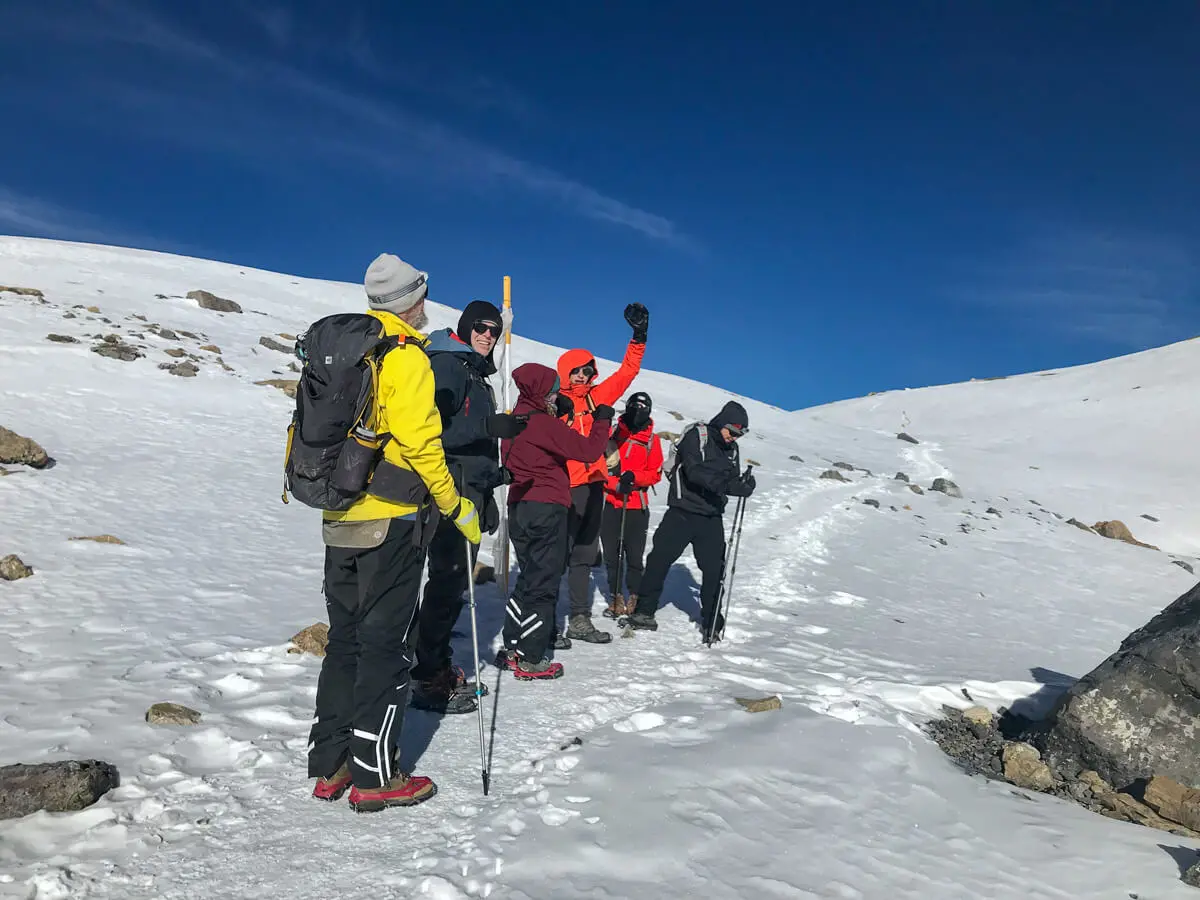
Pass day! You will wake up well before dawn, put on your headlamp, and start the slow, freezing climb up to Thorong La (5,416m). Reaching the prayer flags at the top just as the sun rises is a huge payoff. Don't linger too long at the summit; the wind picks up fast. The descent from the pass is a massive, knee-crunching downhill hike all the way down to Muktinath. Take it easy and watch your step as you make your way to the temple town of Muktinath.
Max Altitude: 5,416 meters (Pass), 3,760 meters (Muktinath)
Meals: Breakfast, Lunch, and Dinner
Duration: 8-10 hours
Accommodation: Teahouse/Lodge
Day 13

Muktinath to Tatopani via Lupra

Instead of walking along the dusty motor road, you will take a quieter trail down toward the Bon village of Lupra. After lunch, you’ll board a local jeep to drive down the Kali Gandaki Gorge, with Tatopani as the destination. It is also possible to take a local bus, but services are infrequent and may bypass Lupra village.
 
The road is generally good, with highlights such as the beautiful Rupse Chhahara waterfall and Dana village, known as the deepest gorge in the world. You can also stop the jeep at Kalopani or Lete for a tea break, both of which are excellent viewpoints for Mt. Annapurna I. Tatopani offers comfortable accommodation and the chance to soak your tired legs in natural hot springs right beside the river—a perfect way to end the day.
 
Max Altitude: 1,190 meters
Meals: Breakfast - Lunch - Dinner
Duration: 3-4 hours trek, 4-5 hours’ drive
Accommodation: Teahouse/Lodge
Mode of transportation: Walk
Day 14

Tatopani to Chitre

Leaving the river valley, it’s time for another ascent. The trail winds back up through terraced farming fields and into mixed Brahmin and Magar villages. You will trade the dry Himalayan desert for lush green hills. Tonight, you will stay in Chitre, a quiet village with excellent views.
Max Altitude: 2,390 meters
Meals: Breakfast - Lunch - Dinner
Duration: 6-7 hours
Accommodation: Teahouse/Lodge
Mode of transportation: Walk
Day 15

Chitre to Ghorepani and Ulleri

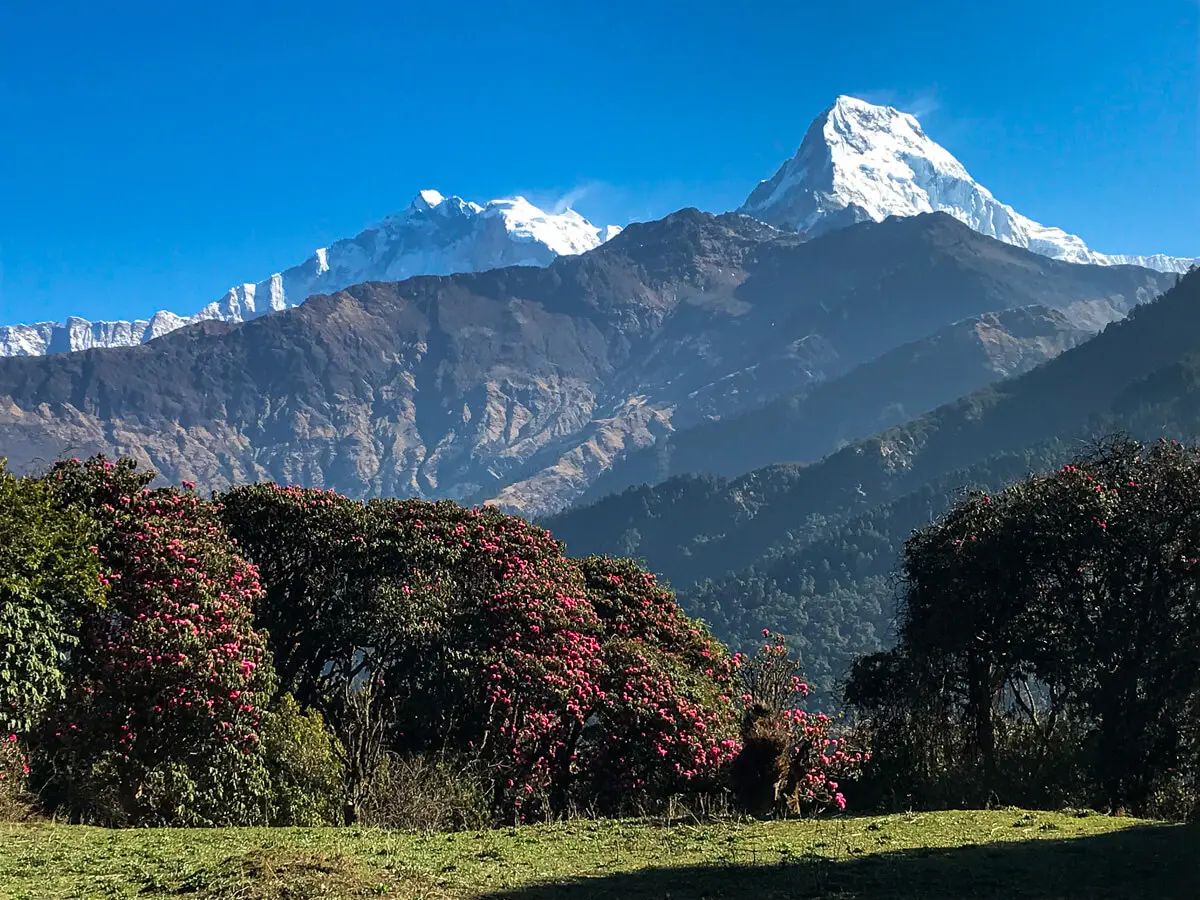
Today’s hike takes you through thick rhododendron forests up to Ghorepani. If the weather is clear, you’ll enjoy massive, up-close views of Dhaulagiri, towering over 8,000 meters, as well as Annapurna South, Baraha Shikhar, Hiunchuli, and Machhapuchhre. After Ghorepani, the trail descends thousands of steep stone steps to Ulleri. It’s a tough downhill day, so trekking poles are highly recommended.
 
Max Altitude: 1,960 meters
Meals: Breakfast, Lunch, and Dinner
Duration: 6-7 hours
Accommodation: Teahouse/Lodge
Mode of transportation: Walk/Drive
Day 16

Ulleri to Birethanti and Drive to Pokhara

Your final few hours of trekking take you downhill through Tikhedhunga to the checkpoint at Birethanti. You will sign out of the Annapurna Conservation Area and hop into a car to Pokhara, where a real hot shower, laundry, and a soft bed are waiting for you.
Max Altitude: 800 meters
Meals: Breakfast and Lunch
Duration: 4-5 hours trek, 2 hours drive
Accommodation: Hotel
Day 17

Pokhara Sightseeing

Today is a full rest day in Pokhara. You can wake up late, get a good breakfast, and explore the city of lakes at your own pace.
Exploring Phewa Lake is popular among tourists in Pokhara, and we highly recommend the experience. You can also hike up to the World Peace Pagoda, or just sit at a lakeside cafe with a cold drink and celebrate finishing the circuit.
Max Altitude: 800 meters
Meals: Breakfast
Duration: Full Day
Accommodation: Hotel
Day 18

Fly from Pokhara to Kathmandu

You will enjoy a relaxed morning breakfast, finish any last-minute shopping in Pokhara Lakeside, and then drive to Pokhara Domestic Airport for your return flight to Kathmandu. Upon arrival, you will be transferred to your hotel in Kathmandu for an overnight stay on a twin-sharing, bed-and-breakfast basis.
 
Max Altitude: 1,350 meters
Meals: Breakfast
Duration: 25 Minutes
Accommodation: Hotel
Mode of transportation: Air Plane
Day 19

Full Day Kathmandu Sightseeing

You will spend the day exploring the Kathmandu Valley. A local guide will take you to several major heritage sites, including Swayambhunath, Boudhanath Stupa, and Pashupatinath. In the evening, you will attend a farewell dinner hosted by the Advent Himalaya Treks team.
Max Altitude: 1,350 meters
Meals: Breakfast and Dinner
Duration: Full Day
Accommodation: Hotel
Day 20

Departure for Home

You have come to the end of your 20-day Annapurna Circuit Trek. Depending on when your flight is, our representatives will arrange a car to drop you off at the international airport.
Meals: Breakfast
Accommodation: Null
Are you still confuse from where to start? We have solutions for you.

Cost Details

Includes

  • All necessary Transportation
  • Kathmandu: 4 nights, 3-star level Hotel accommodation on a breakfast basis
  • Pokhara: 2 nights, a tourist-standard hotel in Pokhara, on a breakfast basis
  • Car or Bus for Kathmandu Valley sightseeing
  • Kathmandu to Besisahar - Nagdi Jeep or Bus
  • Pokhara to Kathmandu one-way domestic airfare
  • Teahouse, Lodge accommodation during the trek
  • Breakfast, Lunch, and Dinner with tea and coffee during the trek for the guest
  • Expenses for an experienced, English-speaking guide (salary, food, accommodation, and insurance)
  • Helper Guide, porter for two clients' backpacks (total load up to 22kilograms only)
  • Jeep or Bus to Tatopani from Muktinath
  • Jeep or Bus to Pokhara from Nayapul, Birethanti
  • Trekking permits (TIMS)
  • Annapurna Conservation (ACAP) fee
  • Welcome or farewell dinner in a Nepali cultural restaurant
  • Trekking map, Sun Hat, and duffle bag, each per person
  • Medical assistance
  • Service fee, staff insurance, and equipment

Excludes

  • Clients' International flight costs
  • Food during the stay in Kathmandu
  • City Guide and sightseeing entrance fees,
  • Wi-Fi and battery charging fees during the trip
  • Luxury Hotel, if required on the trip, a Heli rescue, or a Charter flight
  • Guide and porter tips
  • Arrival visa $30 for 15 days, $50 for 30 days, and $125 for 90 days

(Note: Bring exact change in USD cash for the arrival visa)

Dates & Availability

Your departure date is completely flexible and depends on your preferred schedule and preparation. We are happy to arrange the trek at a time that is most convenient for you. This is a private trip, and we can accommodate your preferred group size while ensuring a comfortable and enjoyable trekking experience.

Select your preferred date

Equipment List

Download List
Annapurna Circuit Trek Equipment Description
Prepare for safety and comfort during the Nepal Trek to tackle diverse climatic conditions and alpine terrain.

Upper Body

  • Moisture-wicking Base Layers
  • Fleece or Down Mid-Layers
  • Waterproof and Windproof Outer Layer Shell
  • Waterproof and Insulated Down Jacket
Hand Protection
  • Thin Inner Gloves
  • Waterproof and Insulated Outer Glove
 

Lower Body

  • Wool or Synthetic Hiking Socks and Thicker Thermal Socks
  • Stiff-soled, waterproof trekking boots
  • Comfortable Shoes or Sandals for camp

Footwear & Accessories

  • Wool or Synthetic Hiking Socks and Thicker Thermal Socks
  • Stiff-soled, waterproof trekking boots
  • Comfortable Shoes or Sandals for camp


Head & Sun Protection

  • High SPF Sunscreen and Lip Balm with SPF
  • UV Protection Sunglasses
  • Sun Hat and Woolen Beanie
  • Buff or Neck Gaiter


Personal & Medical Kits

  • Large Duffel Bag (Company provides) and Good Daypack
  • Sleeping Bag rated to -10°C
  • Trekking Poles
  • Headlamp with extra batteries
  • Water Bottle or Hydration Bladder (1 to 2 liters) with purification tablets or filter
  • Personal First-Aid Kit (Diamox, blister bandages, pain relievers)
  • Toiletries (Toothbrush, toothpaste, biodegradable soap, quick-dry towel, toilet paper, sanitizer, wet wipes)
  • Power Bank and Portable Charger (Batteries drain much faster in the cold air at High Camp, so keep your power bank wrapped in a spare sock inside your pack)
  • Light spikes that attach to your boots to give traction on ice or hard-packed snow.

Travel Documents

  • Passport: Valid for at least 6 months beyond your travel dates.
  • Visa: Nepal entry visa (can be obtained on arrival at Tribhuvan International Airport or in advance from embassies).
  • Permits: Trekking permits such as the TIMS card (Trekkers’ Information Management System) and restricted area permits (for Mustang, Annapurna, etc.).
  • Insurance papers: Proof of travel insurance covering high-altitude trekking and emergency evacuation.
  • Flight tickets: International and domestic flight confirmations.
  • Other IDs: Sometimes a government-issued ID (like a driver’s license) is useful as backup.

Miscellaneous

  • Personal spending money for souvenirs, snacks, and beverages not included in the package
  • Optional donations at monasteries, temples, or local community projects along the route
  • Extra batteries or a power bank for electronic devices (charging facilities may be limited)
  • Lightweight reading material, journal, or cards for leisure during rest days
  • Small first aid kit for personal use (the company provides a group kit, but personal items are recommended)
  • Respectful behavior towards local customs and traditions is expected at all times
  • Company cancellation and refund policy applies to this trek

NOTE: Sleeping bag, down jacket, and duffel bag can be provided by Advent Himalaya Treks if you do not have your own. Also, free excess luggage storage at the Advent Himalaya Treks store is available for the duration of the trek.

Essential Information

20 Day Annapurna Circuit Trek Cost 

The total cost of the 20-day trek to the Annapurna Circuit Trek starts from USD $1599 and varies according to your group size. Variations in the price can also result when you customize your own itinerary, making changes such as hotel upgrades, add-ons, extra nights in Kathmandu, or no porter required for the trek, which can increase or decrease the overall cost.


When is the Best Time for the Annapurna Circuit Trek 2026/2027?

Spring (March to May) and Autumn (September to November) are the best times to go. Autumn gives you the clearest mountain views and dry trails, which makes crossing Thorong La Pass much safer. Because the weather is so good, this is the busiest time on the trail.

Spring is slightly warmer, and you will see the rhododendron forests blooming in the lower sections, but the afternoons can sometimes get hazy. Winter treks are possible, but heavy snow frequently closes Thorong La Pass. We do not recommend trekking during the summer monsoon (June to August) due to leeches and landslides in the lower valleys.


Logistics - Permits for Annapurna Circuit Trek

The Annapurna Circuit Trek main permits and documentation are relatively straightforward. The standard circuit requires the Annapurna Conservation Area (ACAP) entry permit and a TIMS card. The Annapurna Circuit among the routes requiring a licensed trekking guide and an agency-issued TIMS card.


Transportation access for Annapurna Circuit Trek from Kathmandu to Kathmandu

The Annapurna Circuit Trek from Kathmandu to Kathmandu, transportation is a combination of road transfers, trekking, and optionally a domestic flight. The exact arrangement depends on whether you want to walk the lower section of the classic circuit or save time by driving farther up the Marsyangdi Valley and to downward to Kaligandaki Valley.


Accommodation on the Annapurna Circuit Trek

Accommodation on the Annapurna Circuit Trek is mainly teahouse/lodge based, so you normally don't need to camp or carry a tent. The quality varies noticeably with altitude: lower villages have relatively comfortable lodges, while the section around Thorong Phedi and High Camp is much more basic.


Food and Meals on the Annapurna Circuit Trek

The Annapurna Circuit Trek has a well-developed teahouse network, so food is generally easy to find throughout the route. Menus are surprisingly varied in the lower and larger villages, although choices become more limited and expensive at higher elevations.

Altitude Sickness - What to Know for Annapurna Circuit Trek

Altitude sickness is one of the main things to take seriously. The route reaches anywhere above 3500m (11482ft), well above the altitude where acute mountain sickness (AMS) becomes a concern.
How to know about altitude sickness?
  • The main risk is AMS
  • Acute Mountain Sickness can occur after ascending above roughly 2,500 m, particularly when ascent is too rapid.
Common symptoms
  • Headache
  • Dizziness or light-headedness
  • Nausea or vomiting
  • Loss of appetite
  • Unusual tiredness or weakness
  • Difficulty sleeping
Symptoms commonly develop within several hours to a few days after reaching higher altitude.
Don't confuse normal trekking fatigue with AMS. Being tired after a long uphill day is normal. Headache combined with nausea, dizziness, unusual fatigue or loss of appetite after gaining altitude is much more suggestive of AMS.
 
How to prevent it?
  • The most important treatment is proper acclimatization, not simply drinking lots of water or taking medication.
  • Ascend gradually.
  • Avoid pushing higher if you already have altitude symptoms.
  • Build acclimatization days into the itinerary.
  • Walk at a comfortable, steady pace rather than racing uphill.
  • Eat regularly even if your appetite decreases.
  • Stay normally hydrated
  • Avoid alcohol, particularly during the initial period at altitude.
For a higher-elevation trek, the approach to the high passes/sections around the high land deserves particular attention because you're sleeping and trekking at substantially higher elevations than in the lower Valley.

Descent remains the most effective treatment as oxygen and medication like acetazolamide or dexamethasone can help, but they don't replace going down. This is where a guide who actually knows the route matters. On a trek this remote, with the nearest help potentially a day or more away, the call to turn back has to be made early, not after symptoms get serious. We tell every trekker on Day 1 that if the guide says descend, we descend - no negotiating that on the trail.

A number of trekkers carry Diamox as a preventive measure, but it is always best to consult with your doctor regarding your health situation and prescriptions you can take before you leave home; it’s not something to figure out mid-trek. Since this is a remote camping trek with limited access points, proper travel insurance covering high-altitude trekking and evacuation isn't something to skip. 

If you've had altitude sickness before or have any relevant health history, tell us when you book  it changes how we'd pace your itinerary.


Travel Insurance for Annapurna Circuit Trek

Travel insurance is non-negotiable. Your policy must explicitly cover:

  • Trip cancellations, delays, and lost baggage.
  • Medical insurance, high-altitude trekking coverage up to 6,000m. Standard travel insurance often excludes trekking above certain elevations.
  • Emergency Evacuation. In case of altitude sickness or injury, evacuation from remote areas can be extremely costly without good insurance.
  • Accident & injury, protect against trekking - related accidents, includes hospitalization and treatment costs in Nepal or abroad.
  • Repatriation. Ensure safe return home in case of serious medical emergencies.

Key tips:

  • Check the Policy altitude limit for what it covers
  • Verify that the helicopter evacuation is included
  • Keep the insurance with you, and carry a printed copy of your insurance policy as well
  • Buy insurance before flying to Nepal


Why Trek Annapurna Circuit Trek with Advent Himalaya Treks?

Anyone can get you to the Annapurna Circuit Trek. What we think actually matters is who you're doing it with, and what happens around the trek.

  • We're a family-run business, not a franchise. Advent Himalaya Treks was started by Babu with his family by his side and is still run day-to-day by the same family. When you email us or message on WhatsApp before you book, you're talking to Babu who actually knows about the trek you are asking about, not a chatbot or AI.
  • Your guide has more than a decade of experience. The guide from our team who you will trek with will be an experienced guide who has completed this specific trek at least 9-10 times, and has been the main guide for at least 3 times. Also, an assistant guide with 2-3 years of experience will be on the trek with you if you have a large group.
  • Come learn to make momo with our family. Before or after your trek, you're invited into our family's kitchen for a hands-on momo-making session either for lunch or dinner; anything that works with you. You will get to learn the recipe that has been in our family for decades, taste the actual local and authentic momo; the one we actually cook at our home. It's a small thing, but it's the experience our guests bring up for a long time. Also, if you want to learn to make any other dishes, our family is ready to share the recipe and cook it together with you.
  • Our guides and porters are basically part of the family. Many of our guides and porters have been with us since the beginning, climbing each step alongside. Dawa has been with us for 19 years, and is there on almost every trek.
  • Private airport pickup/dropoff. Either Babu, Meera or both of them will be there with a private vehicle to welcome you at the airport as well as to drop you off for your flight back home.
  • Tailor made itineraries. This package you see is a standard structure of how the journey looks like. Each and everything seen in this package can be changed and accommodated as per your or your groups’ preference. 
  • We handle the behind the scene stuff so you don't have to worry about it. Permits, flight rerouting, weather delays, gear rental if you need it; we sort it in the background so your energy goes toward the trek, not logistics. 
  • A real, in-person briefing before you hop into your trail. You'll sit down with Babu or your assigned guide at our office or in the hotel you are staying at, walk through the route, the altitude plan, a gear check, and ask anything that's on your mind. Most of our guests tell us that the trip starts feeling real to them after this briefing.
  • No gear? We've got you covered. Advent Himalaya Treks can provide you with a sleeping bag and down jacket if you don’t have one. And if you require any other gears such as poles, gloves, a headlamp, crampons our team will help you purchase it at Thamel or take you to a rental place if you just want to rent it.
  • Personalized support. You will be provided with personalized support throughout your time in Nepal. If you or your group are sensitive to new food or have specific allergies, a cook guide will be assigned to you and your team during the trek to ensure that your meal is properly taken care of.
Price Per Person
US$1599
  • 2 - 4 Pax US$1799
  • 5 - 10 Pax US$1599
Speak to an Expert
Our Packages specialists are here to assist you with booking and customization.
Babu Gurung
Babu Gurung +977 9851191662