Everest Base Camp - Chola Pass - Gokyo Lake Trek -21 Days

Everest Base Camp - Chola Pass - Gokyo Lake Treks -21 Days

This 20 Nights / 21 - day adventure is a complete program, including arrival and departure arrangements and sightseeing in the Kathmandu Valley. It offers a balanced experience of vibrant city culture, scenic hills, and the high Himalayan passes. You’ll explore Kathmandu’s heritage, immerse yourself in Sherpa traditions, and trek through villages while tasting yak cheese, organic Khumbu potatoes, and salt-butter tea, and take a thrilling flight on Lukla’s airstrip with breathtaking views, Everest Base Camp (5,364m) and Kalapathar (5,550m) for close-up views of Everest, Crossing Chola Pass (5,368m) – a true high-altitude challenge are the highlight of the trip.
At a Glance
Duration
Duration
21 Days
Country
Country
Nepal
Maximum Altitude
Maximum Altitude
5364m , 5550m, 5358m, 5357m
Starts
Starts
Kathmandu / Lukla
Ends
Ends
Lukla / Kathmandu
Group Size
Group Size
Up to 10 Pax
Activities
Activities
Trekking
Best Time
Best Time
October - November / April - May

Overview - What is the 21 Day Everest Base Camp - Chola Pass - Gokyo Lake Trek like?

This 21 Day Everest Base Camp - Chola Pass - Gokyo Lake Trek is a full Himalayan journey, and it's built as a complete package from the moment you land in Kathmandu airport to your departure.

What sets this route apart from the classic Everest Base Camp Trek is the Chola Pass crossing at 5,368m, which covers the classic EBC trail as well as the quieter Gokyo Valley. This trek is more of a technical one than the standard Base Camp trek and requires more physical fitness as well as some experience. Most days throughout the trek require 5 to 6 hours of walking, but a few days, especially the pass-crossing day, stretches to 8 or 9 hours. 

The trail itself passes through some iconic and famous stops like Namche Bazaar; the trading hub of the Khumbu, Tengboche; home to the region's most famous monastery, and Syangboche from from where you get your first close-up look at Everest, Lhotse, Ama Dablam, and Thamserku. From there it's on to Everest Base Camp Trek trail leading to the viewpoint at Kalapatthar (5,550m), and to the Gokyo Lakes, up to the Gokyo Ri (5,357m) for the best panoramic view of the mountain ranges. Along the way you'll also pass the Ngozumba Glacier, the longest glacier in the Himalayas, and walk through Sagarmatha National Park, a UNESCO World Heritage Site as well.

Everest Base Camp - Chola Pass - Gokyo Lake Trek is not just a casual mountain trip. Throughout your journey of the Khumbu valley, you'll spend real time in Sherpa villages where some of the best moments will have nothing to do with the views at all but with the people, culture and the local delicacies. Things like sitting down to have yak cheese, having warm, organic Khumbu potatoes, or warming your hands around a cup of salt-butter tea after a cold morning on the trail are as good as the views you are here for. 

Across these 21 days, you will have time built in for Kathmandu sightseeing as well which will pretty much allow you to explore the famous sites in and around the valley.

Something we tell every trekker before confirming their trek is to build in 2 to 3 buffer days at the tail end of the trek, before you fly home. Lukla flights are extremely weather-dependent, and it is really common for them to get delayed or cancelled by a day or two. Having those extra days gives you peace of mind during the delay or allows you some extra days to go back to your favourite Kathmandu spot one more time before you depart.

That's actually the main difference between our 21-day itinerary and the more common 16-17-day version of this trek. Ours has those buffer days baked in from the start, which means less rushing and a trip that stays comfortable even if the weather doesn't cooperate.

We, Advent Himalaya Treks have put this itinerary together with that in mind, and it includes 4 nights at a 3-star hotel in Kathmandu (breakfast included), along with everything sorted for your Kathmandu Valley sightseeing.

Basically, the logistics are on us so you can just focus on the trek. Reach out anytime and we'll help you plan it out.

The Route

Here's roughly how the trail unfolds:

Lukla → Phakding → Namche Bazaar → Tengboche → Dingboche → Lobuche → Gorakshep → Everest Base Camp → Kalapathar → Dzonglha → Chola Pass → Dragnag → Gokyo Lakes → Gokyo Ri → Machhermo → Dhole

21 Day Everest Base Camp - Chola Pass - Gokyo Lake Trek Highlights

  • Standing at the edge of the Gokyo Lakes; Longponga (4,710m), Taujung Tsho (4,740m), and Dudh Pokhari (4,750m) are three of the most famous alpine lakes you'll come across in the Khumbu region.
  • Climbing up to Gokyo Ri (5,357m), from where you can clearly see Everest, Lhotse, Makalu, Cho Oyu, and a whole range of other mountains.
  • Walking alongside the Ngozumpa Glacier, the longest glacier in Nepal and the Himalayas.
  • Trekking through Sagarmatha National Park, a UNESCO World Heritage Site known for its biodiversity and the wildlife living up at these altitudes.

Difficulty - Who Can Do the Everest Base Camp - Chola Pass - Gokyo Lake Trek/Age?

This Everest Base Camp - Chola Pass - Gokyo Lake Trek sits in the challenging range. Well you need not be an elite athlete for it, but it's better if you have some experience beforehand and a good fitness level, along with a strong mindset. With these you'll get through it without too much struggle.

Also, age is not a restricting factor for this trek. If have really great fitness and are willing to complete this trek, you are good to go.

The Everest Base Camp - Chola Pass - Gokyo Lake Treks -21 Days is suitable for:

  • Active travelers with a solid level of cardiovascular fitness who can hike between five and seven hours daily across the diverse Himalayan terrain.
  • Seasoned mountain enthusiasts and ambitious beginners with strong mental resilience.
  • Adventure seekers with good health and no major respiratory issues, with a few weeks of pre-trek training.  

Everest Base Camp - Chola Pass - Gokyo Lake Trek -21 Days Itinerary

Day 1

Kathmandu arrival

It's activities to welcome guests at Tribhuwan International Airport and transfer to Hotel with 3 stars level accommodation with breakfast. It's time to intrudece with guide and explain about the trip, to share necessary information.
Max Altitude: 1350m
Meals: Breakfast
Duration: 40min
Distance: 5-6km
Accommodation: Hotel
Mode of transportation: Car / Bus
Day 2

Kathmandu valley sightseeing / Trip preparation

It's Kathmandu valley sightseeing day around Swayambhunath, Bauddhanath, Pasupatinath, and Kathmandu Durbar Square, including the living God Kumari House. It takes 4 to 5 hours for sightseeing activities. We organize a city guide and the necessary transportation for the activities. The entrance fee would go separately to the participants. It's also a day for trip preparation and to join the welcome dinner party at the Nepali Traditional Restaurant in the evening.
Max Altitude: 1350m
Meals: Breakfast
Duration: 4-5hrs
Accommodation: Hotel
Mode of transportation: Car / Bus
Day 3

Kathmandu - Manthali - Lukla - Phagding

Depending on the season and flight availability, you may need to take an early-morning domestic flight from Kathmandu to Lukla. During the busy trekking seasons, when direct Kathmandu–Lukla flights are limited, flights may operate from Manthali Airport (Ramechhap) instead. In that case, you will need to leave Kathmandu very early in the morning and drive to Ramechhap Airport to catch your flight to Lukla. Your return flight from Lukla to Kathmandu may also operate through Ramechhap, depending on the seasonal flight schedule.
 
Flights to Lukla are highly dependent on weather conditions, and delays or changes are common. Therefore, travelers need to be flexible and prepared to start early and wait if necessary. Our team will manage the transportation, flight arrangements, and necessary coordination to help you reach Lukla as smoothly as possible.
 
After landing at Lukla, your trek begins through beautiful Sherpa villages and the green Himalayan landscape toward Phakding. The trail follows the Dudh Koshi River, with impressive views of Mount Numbur and Kusum Kanguru along the way. The walk is relatively short on this first trekking day, allowing you to enjoy the scenery, villages, monasteries, and local way of life.
We arrange comfortable accommodation and meals at selected hotels or lodges. The lodges along this route generally provide good food and have experienced staff familiar with serving trekkers.
 
If you have extra time and are interested in experiencing authentic Sherpa village life, our guide can also suggest a visit to Sano Gumela, a small Sherpa settlement located slightly above the main trail. Here, you can see traditional homestays, local gardens, and everyday village life. For small groups of around 2–6 people, an overnight homestay may also be possible, subject to availability. Staying with a local family provides a more personal cultural experience while also directly supporting the local community.
 
Your guide will explain the possibilities and help arrange a suitable experience during the trek.
Max Altitude: 2610m
Meals: Breakfast, Lunch, Dinner
Duration: 35min / 6-7hrs
Distance: 138km Airdistance / 128km Road
Accommodation: Lodge
Mode of transportation: Flight / Jeep / Car
Day 4

Phagding - Namche Bazar

It's a day trek to Namche Bazar along the Dudh Koshi river after crossing more than 4 or 5 times by suspension bridges. It takes, depending on walking capacity, 5 - 6 hours. Jorsalle is the main entrance to Sagarmatha National Park. A big ascending path is above Namche Bazar from the riverside near the Hillary Bridge. Toktok, Bhyankar, Chhyuma, and Manjo are Sherpa villages that offer good homestays, lodges, hotels, and camping sites. Naturally and culturally great day is it.
Max Altitude: 3440m
Meals: Breakfast, Lunch, Dinner
Duration: 5-6hrs
Distance: 11km
Accommodation: Lodge
Mode of transportation: Walk
Day 5

Namche Bazar Acclimatization

It is a free day in Namche Bazar. You can have breakfast at your preferred time and walk around View Point near Namche Bazar, or a little further up to Everest View Hotel and continue to Khumjung, Khunde village, side walk, and return to Namche Bazar. It's good for high-altitude acclimatization. You need to be prepared for an early breakfast and start if you prefer the Everest View Hotel, Khumjung, Khunde village round trip. 

Max Altitude: 3440m
Meals: Breakfast, Lunch, Dinner
Duration: 6-7hrs
Distance: 12km
Accommodation: Lodge
Mode of transportation: Walk
Day 6

Namche Bazar - Tengboche Monastery

It's a day Namche Bazaar to Tengboche Monastery another beautiful walk through pine forests, passing many different Mani walls and stupas, with spectacular views of Mt. Ama Dablam, Mt. Thamserku, Mt. Kangtega, and Tawache. The wide valley behind leads toward Island Peak, Mt. Lhotse Shar, and Mt. Everest.
Kyangjuma is a nice place to take a short break and enjoy the surrounding views. The trail little while continues with an easy walk to Sanasa, where you will find three different trail directions. The right-hand trail descending is the correct way to Phungi Thanga 3250, a good spot for lunch, before beginning the big ascent to Tengboche Monastery, 3820m from the riverside. It's a beautiful place to have an overnight, which can give more opportunity to learn, see, have yoga, meditation in the big monastery.
Max Altitude: 3860m
Meals: Breakfast, Lunch, Dinner
Duration: 5-6hrs
Distance: 10km
Accommodation: Lodge
Mode of transportation: Walk
Day 7

Tengboche Monastery - Dingboche

It's the trek from Tengboche Monastery to Dingboche passes through rhododendron forests, wildlife, and the villages of Deboche, Pangboche, Shomare, and finally Dingboche. It's both a cultural and a natural experience. A more than 600-year-old monastery, which is famous as an icon in the valley.
Above Pangboche, the trail continues with an easy ascent, gradually leaving the tree line behind. This section increases the elevation significantly, step by step, as the journey progresses.
Shomare is a good place to stop for lunch before continuing slowly up the valley to reach the final destination, Dingboche. It's approximately 11km and takes a 5 to 6-hour trek.
Max Altitude: 4410m
Meals: Breakfast, Lunch, Dinner
Duration: 5-6hrs
Distance: 11km
Accommodation: Lodge
Mode of transportation: Walk
Day 8

Dingboche Acclimatization

It's a rest day, but not completely free. You can either take an easy hike to Chhukhung Valley at 4,730 m, have lunch there, and return to Dingboche, or hike up to Nangkar Hill at around 4,800 m and then return to Dingboche for lunch.
It is an important day to walk at higher elevations while also resting to ensure proper acclimatization. The best approach is to hike to a slightly higher elevation in the morning and rest after lunch. Mt. Makalu, over 8463m high possible to see from Nangkar viewpoint. Best coffee center, bakeries are available around for a refreshing in Dingboche village.
Max Altitude: 4410m
Meals: Breakfast, Lunch, Dinner
Accommodation: Lodge
Day 9

Dingboche - Lobuche

It's the trek from Dingboche village to Lobuche follows a beautiful valley that offers stunning views of Mt. Ama Dablam, the Pheriche Valley, and many other snow-capped peaks. Passing through Dusa, Thokla, and over Thokla Pass before reaching Lobuche takes about 5–6 hours of walking. It's approximately 11km away.
Thokla is a good place to stop for hot soup or coffee before climbing up to Thokla Pass. There are good lodges at Lobuche, but always full in the main season. Normally, they gives priority to first come first services.
Max Altitude: 4910m
Meals: Breakfast, Lunch, Dinner
Duration: 5-6hrs
Distance: 8km
Accommodation: Lodge
Mode of transportation: Walk
Day 10

Lobuche - Gorakshep-EBC- Gorakshep

It's the trek from Lobuche to Gorakshep, then to Everest Base Camp and back to Gorakshep, is a long day at high elevation. It is tough for slower hikers. Normally, trekkers try to complete it in one day; otherwise, spending an extra night at a higher elevation can cause sleeping problems.
It is a good idea to start early, leave your backpack at Gorakshep, and continue to Everest Base Camp after a light lunch. Always carry enough drinking water in your day backpack, along with some energy bars, dry food, and warm clothing.
It is best to return on time after reaching Base Camp, which makes your overnight stay at Gorakshep more comfortable and positive for the next day to the Kalapathar viewpoint.
Max Altitude: 5140m
Meals: Breakfast, Lunch, Dinner
Duration: 7-8hrs
Distance: 12km in total
Accommodation: Lodge
Mode of transportation: Walk
Day 11

Gorakshep - Kalapathar - Lobuche

It's an early morning hike up to Kala Pathar 5550m for a sunrise view on top of Everest and return to Gorakshep for breakfast and trek to slowly descend to Lobuche for overnight. 8km

Max Altitude: 4910m
Meals: Breakfast, Lunch, Dinner
Duration: 4 -5 hrs
Distance: 8km in total
Accommodation: Lodge
Mode of transportation: Walk
Day 12

Lobhuche - Dzonglha

It's a short day to Dzongla, but really good at this high elevation to start from Lobuche slowly and to reach the camp by midday for lunch in camp. It would be nice to take an evening walk around for acclimatization for the next day's Chola Pass.

Max Altitude: 4830m
Meals: Breakfast, Lunch, Dinner
Duration: 3-4hrs
Distance: 7km
Accommodation: Lodge
Mode of transportation: Walk
Day 13

Dzonglha - Chola pass - Dragnag

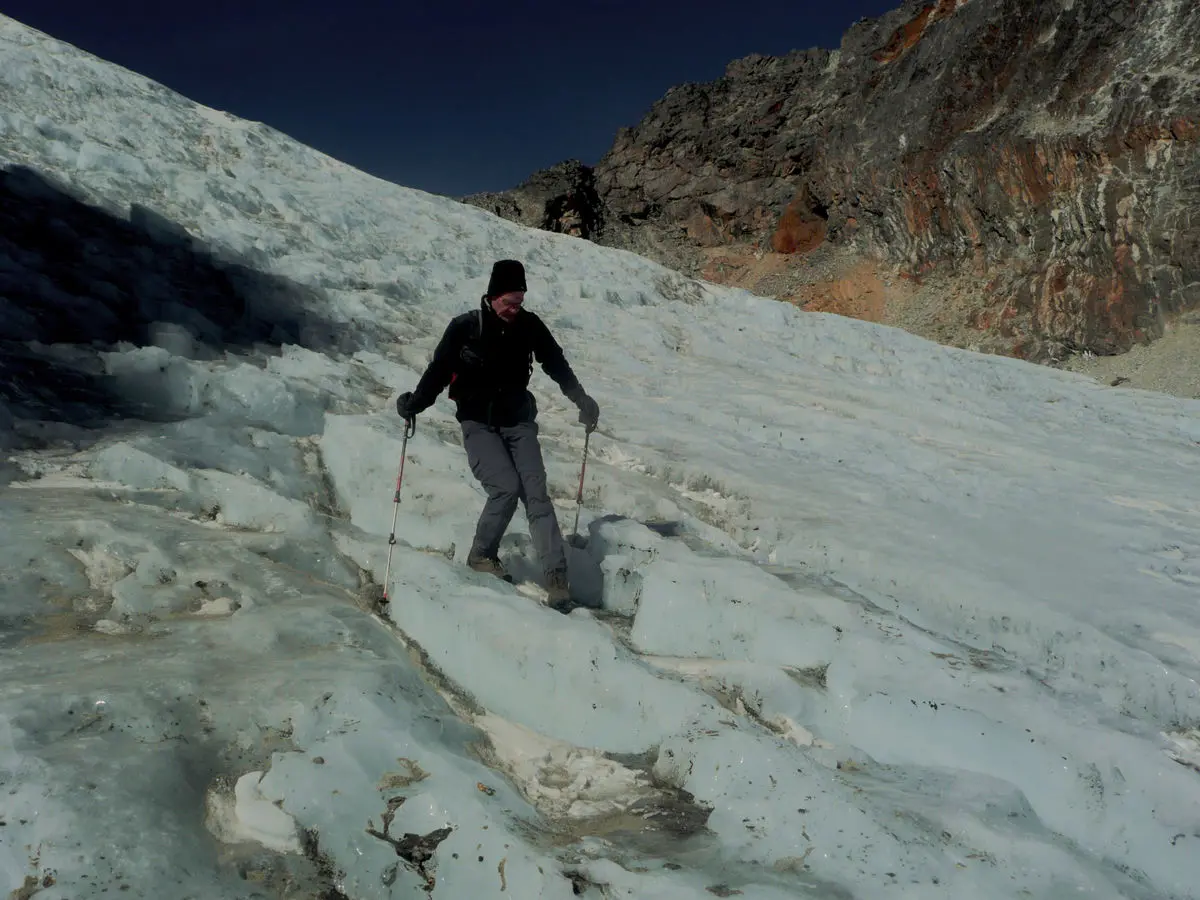
It's a hard day of the trip. You need to start early in the morning to pass more ascents before the high heat of the sun in the valley. Also good to be on top by 8 am or before start windy at 9 or 10 am. You need to have portable spikes, which may be very helpful if there is high snow or ice around the pass. After high pass Chola 5368m, the trail leads way descends to the valley where easy trail in some parts and gravel, unstable rocky parts too. You need to have enough drinking water, an energy bar, and some light foods before you arrive at the Lodge at Dragnag for hot soups.

Max Altitude: 4700m
Meals: Breakfast, Lunch, Dinner
Duration: 7-8hrs
Distance: 15km
Accommodation: Lodge
Mode of transportation: Walk
Day 14

Dragnag - Gokyo Lake

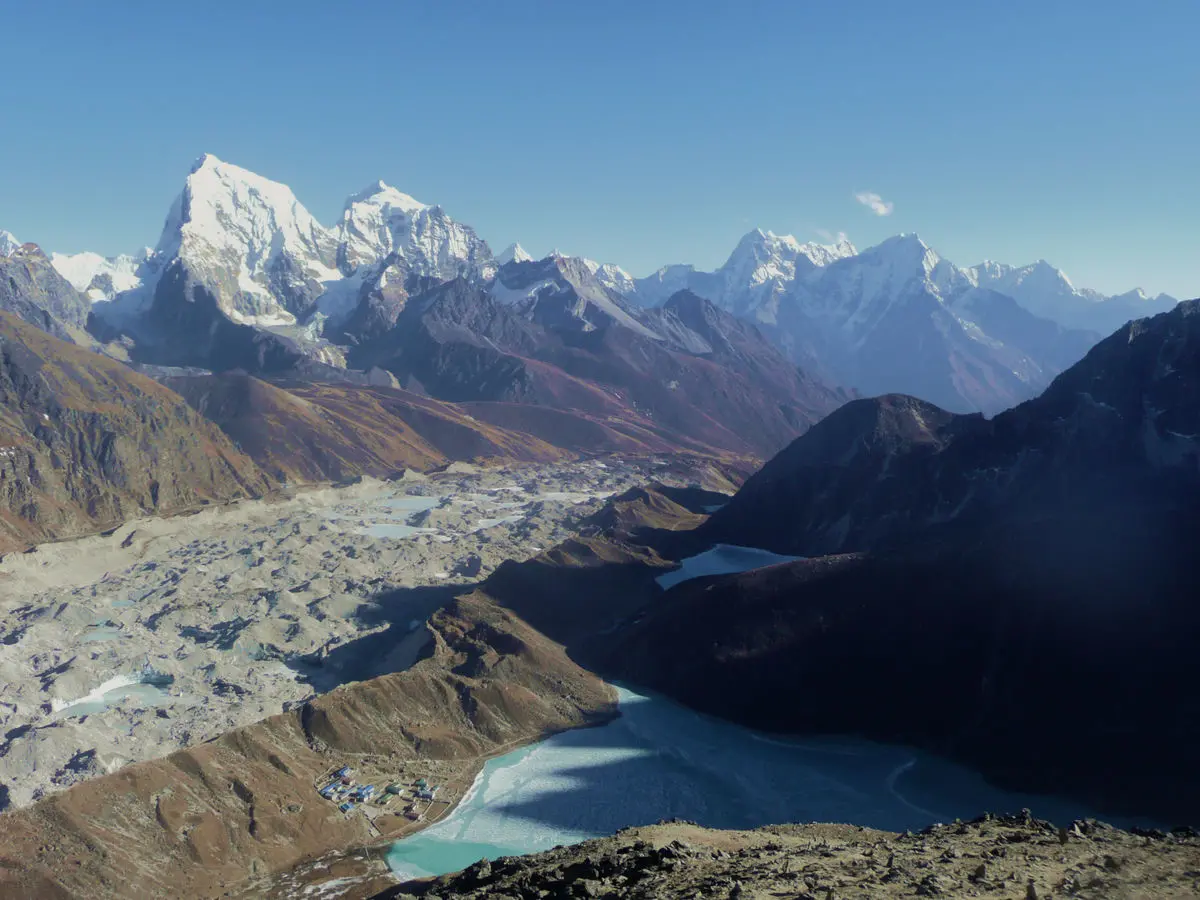
It's another short day to Gokyo from Drangnag. The trail leads to Ngozumba Glacier, which is a great opportunity to learn about Mountain river movement systems. The mt. Cho Oyu, over 8000m high, and many other snow-capped peaks make this trip more special. Depends 3 to 4 hours to Gokyo and continue to Gokyo Ri 5357m would be another activity if the weather looks good, to an evening hike for Sunset views from the top of the Gokyo Ri. You need to pack enough warm clothing, drinking water, and a headlamp.

Max Altitude: 4790m
Meals: Breakfast, Lunch, Dinner
Duration: 3-4hrs
Distance: 7km
Accommodation: Lodge
Mode of transportation: Walk
Day 15

Gokyo - Gokyo Ri - Dhole

It's a big day to Gokyo Ri 5357m early morning for sunrise view, then return to Gokyo hotel for breakfast and trek down to Machhermo for Lunch stop, then continue down to Dole for Overnight. The views from Gokyo Ri are mind-blowing. Beautiful Lakes, a long glacial valley, Mt. Cho Oyu with hanging glaciers, Mt. Everest, Mt. Makalu, Mt. Lhotse, and other peaks are major icons of Panoramic views.
Max Altitude: 4110m
Meals: Breakfast, Lunch, Dinner
Duration: 5-6hrs
Distance: 12km
Accommodation: Lodge
Mode of transportation: Walk
Day 16

Dhole - Namche Bazar

Dole to Namche Bazar is also another big day leading descending and ascending trail till Mani Danada view point, and then easy descent to Kyanjuma for lunch, and then continue to Namche Bazar to celebrate a cocktail evening. We avoid alcohol during upward climbs around high passes. We are not so strict with it in the valley or the return trip time.
The nature, wildlife, and cultural scenery are great during the day. This valley is all decorated by Rhododendron forest with many different colors during the April - May season.
Max Altitude: 3440m
Meals: Breakfast, Lunch, Dinner
Duration: 5-6hrs
Distance: 12km
Accommodation: Lodge
Mode of transportation: Walk
Day 17

Namche Bazar - Phagding

It's an easy day to descend to Phagding. You can have a late breakfast at Namche Bazar, look around, and start to Manjo for lunch, and then to Phagding for overnight.
Max Altitude: 2610m
Meals: Breakfast , Lunch , Dinner
Duration: 4-5hrs
Distance: 11km
Accommodation: Lodge
Mode of transportation: Walk
Day 18

Phagding - Lukla

It's good to have breakfast as you prefer and start for Lukla for lunch in the camp. It is very nice to walk around Lukla Markets after lunch and prepare to celebrate a farewell dinner with the staff. It's the final day to say thanks to your porters and goodbye.

Max Altitude: 2840m
Meals: Breakfast , Lunch, Dinnere
Duration: 3 -4hrs
Distance: 10km
Accommodation: Lodge
Mode of transportation: Walk
Day 19

Lukla - Manthali - Kathmandu

It's days again depend on the season, flight from Lukla to Kathmandu or Manthali, and drive to Kathmandu. Either way, your overnight would be in Kathmandu. We organized the necessary transportation as the situation required.
Max Altitude: 1350m
Meals: Breakfast
Duration: 35min / 6-7hrs
Distance: 138km / 128km
Accommodation: Hotel
Mode of transportation: Flight / Drive
Day 20

Kathmandu free day

It's a free day in Kathmandu. It would depend on your choices to walk around Thamel or visit Bhaktapur Durbar Square and Patan Durbar Square for sightseeing. Both places are historical. We can arrange transportation and a city guide as you require.

Max Altitude: 1350m
Meals: Breakfast
Duration: 4-5hrs
Distance: 33km
Accommodation: Hotel
Mode of transportation: Car / Bus
Day 21

Departure to home

It's the final day, departure to home or another program. We organized the necessary transport to the international airport according to your departure time. We suggest 3 hours before to the airport, then your flight departure time.

Max Altitude: 1350m
Meals: Breakfast
Duration: 40min
Distance: 5-6km
Mode of transportation: Car / Bus
Are you still confuse from where to start? We have solutions for you.

Cost Details

Includes

  • 4 nights at 3-star level Hotel accommodation on a breakfast basis
  • Car or Bus to Kathmandu Valley sightseeing
  • Kathmandu - Lukla - Kathmandu for both ways domestic airfare
  • Hotel accommodation during the trek
  • Breakfast, Lunch, and Dinner with tea and coffee during the trek for the guest
  • Expenses for an experienced, English-speaking guide (salary, food, accommodation, and insurance)
  • One porter for two clients' backpacks (total combined load of 22 kilograms only)
  • Trekking permits (TIMS)
  • Sagarmatha National Park fee
  • Pasang Lhamu Village Development Fee 
  • Welcome or farewell dinner in a Nepali cultural restaurant
  • Trekking map, Sun Hat, and duffle bag, each per person
  • Medical assistance
  • Service fee, staff insurance, and equipment

Excludes

  • Clients' International flight costs
  • Lunch and dinner during the stay in Kathmandu
  • City Guide and sightseeing entrance fees,
  • Wi-Fi and battery charging fees during the trip
  • Upgraded hotel accommodation cost / Add-ons 
  • Heli rescue, or a Charter flight (if required during the trek)
  • Guide and porter tips
  • Arrival visa $30 for 15 days, $50 for 30 days, and $125 for 90 days

(Note: Bring exact change in USD cash for the arrival visa)

Equipment List

Download List
The Everest Base Camp - Cola Pass - Gokyo Lake Trek (21 days), you’ll need a carefully layered clothing system, sturdy footwear, and essential high-altitude gear. Nights can drop to −15°C or lower, so a down jacket and sleeping bag rated for extreme cold are non-negotiable.

Upper Body

  • Base layers: 2–3 moisture-wicking thermal tops (merino/synthetic).
  • Mid layers: Fleece or lightweight down jacket.
  • Insulation layer: Heavy down jacket (rentable in Kathmandu).
  • Shell layer: Waterproof/windproof jacket
 

Lower Body

  • Thermal bottoms: 2 sets for warmth.
  • Trekking pants: 2–3 pairs, quick-dry.
  • Waterproof over-trousers: For snow and wind protection.

Footwear & Accessories

  • Trekking boots: High-cut, waterproof, broken-in (never new).
  • Camp shoes/sandals: For evenings in teahouses.
  • Socks: 4–5 pairs (liner + insulated).

Head & Sun Protection

  • Warm hat: Insulated beanie for freezing mornings.
  • Sun hat: Wide-brimmed for UV protection.
  • Buff/neck gaiter: Shields against wind and dust.
  • Sunglasses: UV-protected, glacier glare is intense.
  • Headlamp: With spare batteries, essential for pre-dawn climbs.

Personal & Medical Kits

  • Sunscreen SPF 50+ and lip balm with SPF.
  • First aid kit + personal medications.
  • Diamox (consult doctor).
  • Hand sanitizer & wet wipes.

Travel Documents

  • Permits: Sagarmatha National Park & Khumbu Pasang Lhamu.
  • Cash: ATMs are unreliable beyond Namche Bazaar.
  • Energy snacks: Nuts, chocolate, energy bars.

Miscellaneous

  • Sleeping bag: Comfort rating −10°C to −15°C (rentable in Thamel).
  • Trekking poles: Save knees on descents.
  • Daypack: 25–35L for layers, water, valuables.
  • Duffel bag: For porter load (50–65L).
  • Water purification: Tablets, SteriPen, or filter.
  • Power bank: Charging costs rise with altitude.

NOTE: Sleeping bag, down jacket, and duffel bag can be provided by Advent Himalaya Treks if you do not have your own. Also, free excess luggage storage at the Advent Himalaya Treks store is available for the duration of the trek.

Essential Information

21 Day Everest Base Camp - Chola Pass - Gokyo Lake Trek Cost 2026/2027

Pricing for the 21-day Everest Base Camp - Chola Pass - Gokyo Lake Trek starts at US$2099 to US$ 2349, though the final cost depends on your group size as bigger groups usually bring the per-person cost down a bit. The pricing also differs if you decide to tweak the standard itinerary, and customize your own trek. Things like upgrading your Kathmandu hotel, adding extra nights in the city, adding optional add-ons, or skipping a porter, will bring your total cost up or down depending on what you choose.

Best Time for the Everest Base Camp - Chola Pass - Gokyo Lake Trek

If you want the Everest Base Camp - Chola Pass - Gokyo Lake trail at its best, spring (March to May) or autumn (September to November) is your ideal one as both gives you the most perfect weather for a trek like this.

Spring is when the lower route around Tengboche and Debuche turns into a trail full of red and pink, as the rhododendrons come into full bloom. Days are warm, though it can get cloudy during late afternoon, so starting your day early is best. You'll be able to catch the clearest mountain views in the morning and avoid most of the afternoon showers. 

Autumn, honestly, is when the trail for this trek is at its best. Skies stay crystal clear, visibility of the Everest range is absolutely surreal, trails are dry, and temperatures are comfortable for steady climbing day after day.

Regarding trekking the Everest Base Camp - Chola Pass - Gokyo Lake during winter, though it isn’t off the table, do note that heavy snow around the high passes in this season can turn the steep ridges slippery and genuinely tough to continue. Thus, it's a season that suits more experienced trekkers who know what they're getting into. If you are first timers, best to avoid this trail during winter.

Not sure which season fits your schedule or comfort level best? Happy to walk you through the trade-offs based on what you're looking for.

Travel Insurance for the Everest Base Camp - Chola Pass - Gokyo Lake Trek

Travel insurance is non-negotiable. Your policy must explicitly cover:

  • Trip cancellations, delays, and lost baggage.
  • Medical insurance, high-altitude trekking coverage up to 6,000m. Standard travel insurance often excludes trekking above certain elevations.
  • Emergency Evacuation. In case of altitude sickness or injury, evacuation from remote areas can be extremely costly without good insurance.
  • Accident & injury, protect against trekking - related accidents, includes hospitalization and treatment costs in Nepal or abroad.
  • Repatriation. Ensure safe return home in case of serious medical emergencies.

Key tips:

  • Check the Policy altitude limit for what it covers
  • Verify that the helicopter evacuation is included
  • Keep the insurance with you, and carry a printed copy of your insurance policy as well
  • Buy insurance before flying to Nepal

Logistics - Getting to Everest Base Camp - Chola Pass - Gokyo Lake Trek and Permits 2026/27

Kathmandu to Lukla: It is normally a 30-40 minute flight. But during peak season (mid-March to mid-May, and mid-September to mid-December), flights often get rerouted through Manthali Airport in Ramechhap instead of Kathmandu, because of runway congestion. This means a 4-6 hour drive to Ramechhap first, then a shorter 20-minute flight up to Lukla. 

End of trek: you'll fly back from Lukla to Kathmandu (or Manthali, followed by the drive back). 

Two permits and TIMS card are required: 

  • TIMS Card: A Trekkers' Information Management System (TIMS) card in Nepal costs NPR 2,000 (roughly $15 USD) per person for individual foreign trekkers and NPR 1,000 for those trekking in an organized group. SAARC nationals pay NPR 600 (solo) and NPR 300 (group).
  • Sagarmatha National Park Entry Permit: around NPR 3,000 per person
  • Khumbu Pasang Lhamu Rural Municipality Permit:  around NPR 2,000 per person

We handle both the permits. You just provide us with a scanned passport copy so that we can take care of the paperwork. Your guide carries the original permits and shows them at the Sagarmatha National Park checkpoint just past Monjo, you can just enjoy the view with zero hassle.

Once again the Lukla flight is weather dependent, and can be delayed. So it is always safe to have 2-3 buffer days after your Everest Base Camp - Chola Pass - Gokyo Lake trek. If a flight does get delayed, we sort the rebooking immediately, but if it drags on, a shared helicopter is available as a backup, at extra cost

Altitude Sickness - What to Know for Everest Base Camp - Chola Pass - Gokyo Lake Trek

Everest Base Camp - Chola Pass - Gokyo Lake is a genuine high-altitude trek. You'll climb from Lukla (2,860m) all the way up to Kalapatthar (5,550m), cross Chola Pass (5,368m), and stand at the top of Gokyo Ri (5,357m). At these heights, altitude sickness is a real risk no matter how fit or fast a hiker you are.

Mild symptoms of altitude sickness can start hitting once you're roughly above 2,500m-3,000m, which is right around Namche Bazaar. The more serious altitude sickness such as AMS, HAPE, HACE is rarer,but can show up above 4,000m sometimes. This is exactly why our itinerary has acclimatization days built into it, and they're non-negotiable. You cannot skip it just because you're feeling strong and energetic during your early days. It’s always better to be safe than sorry.

Remember to always keep an eye out for headaches (usually the earliest warning sign), nausea, not wanting to eat, restless sleep, dizziness, or feeling unusually tired. Though a mild headache up at such altitude is totally normal and common, it is always best to take precautions fast before it starts getting worse, or shows up alongside vomiting, or trouble walking in a straight line. This immediately calls for a descent as your health always comes before finishing the trek. 

Our guides always carry a pulse oximeter on every trip and check each trekker daily starting from Namche, specifically to catch early signs before they turn into something worse. If your guide calls for a descent, that's final, and we tell every trekker this on Day 1; it's non-negotiable.

A number of trekkers carry Diamox as a preventive measure, but it is always best to consult with your doctor regarding your health situation and prescriptions you can take before you leave home; it’s not something to figure out mid-trek. 

Additionally for emergencies, helicopter evacuation is available from several points along the route. This is exactly why travel insurance covering high-altitude trekking and evacuation is important and isn't something worth cutting corners on. Having solid travel insurance ensures that your emergency expenses are covered and you get proper service.

Accommodation on the Everest Base Camp - Chola Pass - Gokyo Lake Trek

On this 21-Day Everest Base Camp - Chola Pass - Gokyo Lake trek, you'll stay in teahouses/lodges throughout the trekking trail and in a 3-star hotel in Kathmandu for your stay in Kathmandu.

Teahouses / Guesthouses (Most Common)

This is what the majority of trekkers trekking through the Khumbu valley use, and this honestly is the most real and local part of the experience; simple twin-bed rooms, shared bathrooms, and a dining hall with a wood stove where everyone ends up gathered by evening.

Facilities: Twin beds, shared bathrooms, dining halls warmed by a wood stove.

Cost: Roughly $5-$25 a night, and it climbs a bit the higher up you go.

Lodges (Mid-range)

In bigger villages like Namche Bazaar, Tengboche, and Dingboche, you'll find a step up in comfort. These areas have been a trading hub since decades and are the most developed areas due to increasing tourism in the valley. Therefore, you’ll be able to find more advanced facilities in these villages, though do not expect the facilities you get in western countries or city areas of Nepal (like in Kathmandu).

Facilities: Private rooms, and attached bathrooms; these get rare once you're above 4,000m.

Cost: Around $20-$40 a night.

Luxury Lodges (Limited)

Available in a handful of spots such as Lukla, Phakding, Namche Bazaar, and Pangboche for those seeking a bit more comfort and luxury along the way.

Facilities: Hot showers, WiFi, proper bedding, and meals a notch above the usual dal bhat.

Cost: $100-$300 a night.

Camping (Rare on This Route)

The trail for Everest Base Camp - Chola Pass - Gokyo Lake trek follows along the Khumbu valley, which has been the most popular region for trekking in Nepal, and thus is more developed compared to Manasalu or Dolpo. Due to early development from tourism, the accommodation facilities in this route are well established and don't require camping. 

Though most trekkers stick to teahouses, the camping option is available if you're going with an organized expedition. A camping trek just means bringing porters, a cook team, and the full logistics setup along with you, which is more costly than staying in teahouses or lodges.

A Few Practical Things Worth Knowing

Heating: Only the dining halls are heated, your room will be cold once you're in for the night, so pack accordingly.

Showers: Hot showers are easy to find in lower villages, but they get rare the higher you climb. (costs roughly $3-$5, more as you climb the gas has to be carried up by hand)

Electricity & WiFi: Available in Namche and a few other villages, but it's pricier and less reliable the further up you go. (daily charge of USD$2-3)

Booking ahead: During peak season (Oct-Nov, Mar-Apr), lodges fill up fast. Thus, it's worth arriving early in the day or pre-booking, especially around Namche.

Cash only: Carry Nepali rupees with you; ATMs only exist in Lukla and Namche, and even those aren't always dependable. Best if you calculate your expense and exchange your money in Kathmandu.

Food and Meals on the Everest Base Camp - Chola Pass - Gokyo Lake Trek

Dal Bhat is the trekking staple; rice, lentil soup, vegetable curry, and pickles, and most teahouses will happily refill your plate.  Our guides and porters eat it themselves almost every day on the trail. They are true to a famous Nepali saying “Dal Bhat Power, 24 hour”.

Noodles and pasta show up a lot too; chow mein, thukpa (the Tibetan noodle soup perfect for a cold weather), and the occasional plate of spaghetti.

Potatoes and bread are everywhere. You can get a variety of potato dishes; fried, boiled, alongside Tibetan bread or chapati as the Khumbu region harvests one of the tastiest potatoes throughout Nepal.

Soups are a trekker favorite, especially garlic soup, which locals recommend for tackling altitude sickness symptoms along with mushroom and vegetable versions available.

Breakfast

For the days you’ll be staying in Kathmandu, breakfast will be provided in the hotel early in the morning.

Once you hop on the trail, expect porridge, muesli, pancakes, and eggs cooked the way you prefer; fried, boiled, or as an omelet along with toast and jam, honey, or peanut butter if you want something sweet. For drinking, there's black tea, ginger tea, lemon tea, coffee, and hot chocolate available at most of the teahouses to warm up your body with before heading out for your day.

Protein, Momos, and the Occasional Treat

Meat of chicken, yak, buffalo is available at the lower villages, but we always suggest our guests to avoid meat above Namche or above 3,500m, mainly because of how it's stored and transported at that point. Most teahouses this high up don't have a reliable refrigerator, and the meat could be a few days old. So, to avoid any kind of sickness, it’s best to look out for your meal choice. On the flip side, momo (Nepali dumplings), pizza, and yak cheese are genuinely popular in villages like Namche Bazaar, and worth trying while you're there.

Staying Hydrated

Stick to boiled water, bottled water (though it gets pricier the higher you go), or water you've purified yourself with tablets or a filter. It's best to skip alcohol while walking and go easy on caffeine at altitude as it can make dehydration and acclimatization harder than they need to be.

A Few Food Tips Worth Knowing

  • Menus look pretty similar from teahouse to teahouse, but the menu option does shrink the higher you go.
  • Pack a few snacks of your own; energy bars, nuts, chocolate for the longer trekking days that gives you energy.
  • Stick to freshly cooked food to avoid stomach trouble on the trail.
  • Garlic soup and ginger tea are the go-to natural remedies trekkers for altitude discomfort.

Why Trek Everest Base Camp - Chola Pass - Gokyo Lake with Advent Himalaya Treks?

Anyone can get you to Everest Base Camp - Chola Pass - Gokyo Lake. What we think actually matters is who you're doing it with, and what happens around, before and after the trek.

  • We're a family-run business, not a franchise. Advent Himalaya Treks was started by Babu with his family by his side and is still run day-to-day by the same family. When you email us or message on WhatsApp before you book, you're talking to Babu who actually knows about the trek you are asking about, not a chatbot or AI.
  • Your guide has more than a decade of experience. The guide from our team who you will trek with will be an experienced guide who has completed this specific trek at least 9-10 times, and has been the main guide for at least 5 times. Also, an assistant guide with 2-3 years of experience will be on the trek with you if you have a large group.
  • Come learn to make momo with our family. Before or after your trek, you're invited into our family's kitchen for a hands-on momo-making session either for lunch or dinner; anything that works with you. You will get to learn the recipe that has been in our family for decades, taste the actual local and authentic momo; the one we actually cook at our home. It's a small thing, but it's the experience our guests bring up for a long time. Also, if you want to learn to make any other dishes, our family is ready to share the recipe and cook it together with you.
  • Our guides and porters are basically part of the family. Many of our guides and porters have been with us since the beginning, climbing each step alongside. Dawa has been with us for 19 years, and is there on almost every trek.
  • Private airport pickup/dropoff. Either Babu, Meera or both of them will be there with a private vehicle to welcome you at the airport as well as to drop you off for your flight back home.
  • We handle the behind the scene stuff so you don't have to worry about it. Permits, Lukla flight rerouting, weather delays, gear rental if you need it; we sort it in the background so your energy goes toward the trek, not logistics. 
  • A real, in-person briefing before you fly to Lukla. You'll sit down with Babu or your assigned guide at our office or in the hotel you are staying at, walk through the route, the altitude plan, a gear check, and ask anything that's on your mind. Most of our guests tell us that the trip starts feeling real to them after this briefing.
  • No gear? We've got you covered. Advent Himalaya Treks can provide you with a sleeping bag and down jacket if you don’t have one. And if you require any other gears such as poles, gloves, a headlamp, crampons our team will help you purchase it at Thamel or take you to a rental place if you just want to rent it.
  • Personalized support. You will be provided with personalized support throughout your time in Nepal. If you or your group are sensitive to new food or have specific allergies, a cook guide will be assigned to you and your team during the trek to ensure that your meal is properly taken care of.
Price Per Person
US$2349
  • 2 - 4 Pax US$2349
  • 5 - 10 Pax US$2099
Speak to an Expert
Our Packages specialists are here to assist you with booking and customization.
Babu Gurung
Babu Gurung +977 9851191662