Annapurna Base Camp Trek (ABC Trek) - 14 Days

The Annapurna Base Camp Trek is one of Nepal's most popular trekking routes. In this 14-day journey, including arrival and departure dates, you traverse deep into the Annapurna Sanctuary, a breathtaking natural amphitheater cradled by towering Himalayan giants. The trek continues through rhododendron forests and terraced farmlands, stopping in charming Gurung villages. Arriving at the base of Annapurna I (8,091m) is the ultimate pinnacle of your journey, where you witness a panorama that very few places on Earth can match.

At a Glance
Duration
Duration
14 Days
Trip Grade
Trip Grade
Moderate
Country
Country
Nepal
Maximum Altitude
Maximum Altitude
4,130 meters (13,549 feet)
Starts
Starts
Kathmandu / Ghandruk
Ends
Ends
Jinodanda / Kathmandu
Group Size
Group Size
Up to 12 Pax (Standard)
Activities
Activities
Trekking
Best Time
Best Time
Spring (March to May) and Autumn (September to November)

Overview - What is the 14 Day Annapurna Base Camp Trek (ABC Trek) like?

The first time you step into the Annapurna Sanctuary and the whole range of white peaks circle you, this genuinely stops you right in your tracks. This is when you feel the accomplishment, a sense of achievement after continuous walk of days.

Each and everyone of our guide and those who we have led to the Annapurna Base Camp has the same opinion that once they see the beauty of nature from base camp, each and every step taken from leaving home, landing in Nepal and the days of walking actually feels worth it.

This journey takes you across the diverse Himalayan terrain, from vibrant green forests to rocky trails. You will walk through mossy rhododendron forests, rich in local flora and fauna. Moreover, you’ll witness the Himalayan langurs swing from branches and explore narrow stone-paved alleys of Ghandruk, a picturesque village with rich Gurung heritage.

As you climb higher, the air gets thinner, and the “Himalayan knees” challenge begins. The trail takes you to the thousands of stone stairs that eventually leads you to the sanctuary. That being said, this is a moderate-difficulty trek, with maximum elevation at 4,130 meters, so if you're worried about the kind of altitude concerns that come with the Everest side, this one's a lot more forgiving. It's a solid pick if this is your first big Himalayan trek.

We (Advent Himalaya Treks) are a team of local guides who've walked this trail more times than they can count and know the terrain, the history, the villages inside out like the back of our hand. 

14 Day Annapurna Base Camp Trek (ABC Trek) Highlights

Here's what actually sticks with you after this trek. These are the stuff you'll end up telling everyone about once you're back:

  • Standing right in the middle of the Annapurna Sanctuary, in a box of a natural 360-degree wall of mountains. Note that you really have to be there to get why people call it an arena surrounded by mountains.
  • Getting to see the "Golden Hour" sunrise hit the face of Annapurna I (8,091m); the rock genuinely does turn gold for a few minutes. 
  • Getting a real feel of the Gurung culture and the stone-house architecture in Ghandruk village. This is less "sightseeing" and more about wandering through someone's actual home/village.
  • Soaking your sore legs from all the walking in the riverside Jhinu Danda hot springs, this one's non-negotiable after the descent; a must do one.
  • Walking through completely different worlds in the same trek; from thick bamboo and rhododendron forest at the start to glacial moraine by the end.
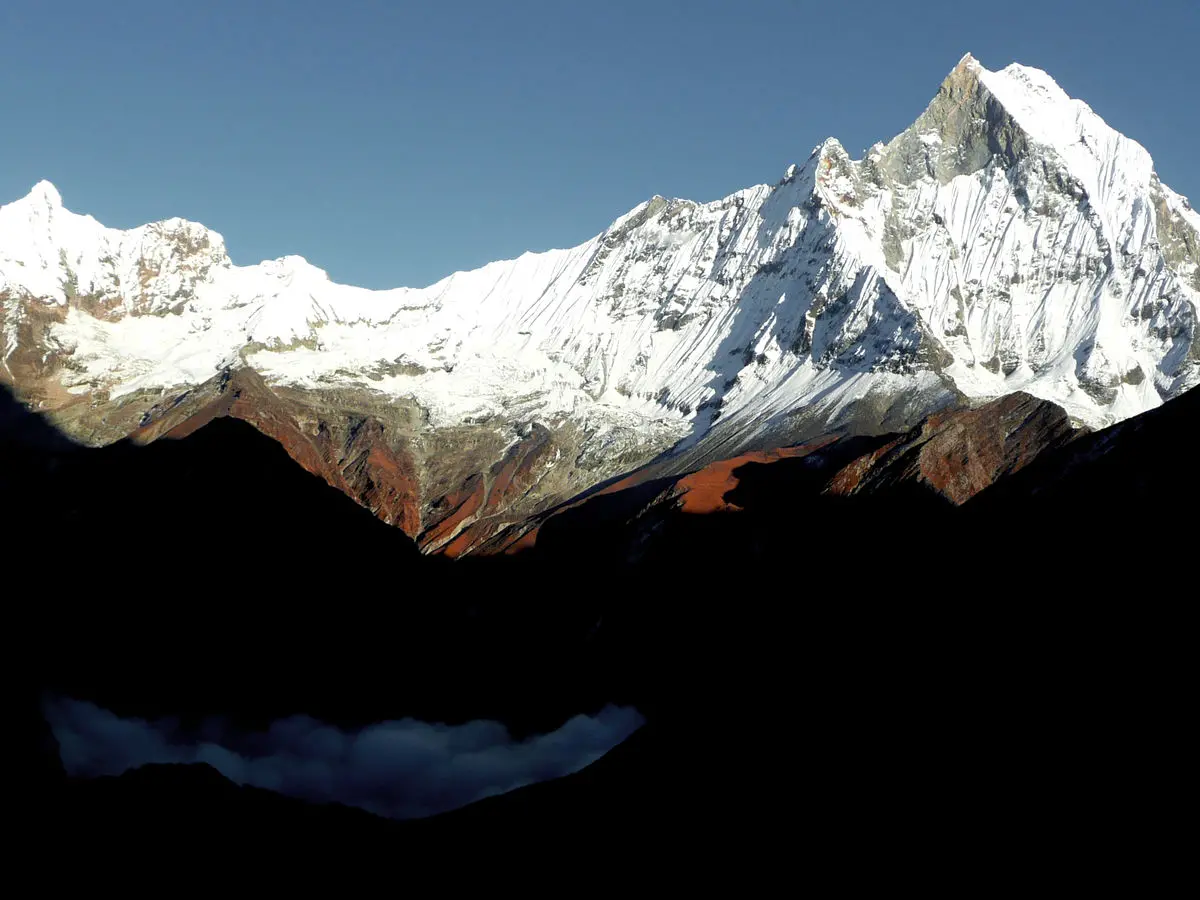
  • Getting that iconic view of Mt. Machhapuchhre (Fishtail) which is considered a sacred, unclimbed, and honestly one of the most photogenic peaks in Nepal.
  • Crossing suspension bridges and walking the high ridgelines above the Modi Khola valley, while the river runs loud below you the whole way.
 

Difficulty - Who Can Do the Annapurna Base Camp Trek (ABC Trek)/Age?

Honestly, the Annapurna Base Camp Trek sits in the moderate range; it’s not as easy as a simple stroll, but is also nowhere near as tough as people assume. If you've got decent fitness and the right mindset going in, you'll get through it just fine.

Age is just a number, and people from any age can do the Annapurna Base Camp trek. As long as your health is with you and you have the willingness to do the trek, age is not a restricting factor. If the trek speaks with you, is calling you out, just go for it.

The 14-day Annapurna Base Camp Trek is a good fit for:

  • Active travelers with solid cardiovascular fitness who can comfortably hike 5 to 7 hours a day across changing Himalayan terrain; think stone steps, forest trails, and steady climbs.
  • Seasoned trekkers and even ambitious first-timers, as long as you've got the mental resilience to push through the tougher, tiring days.
  • Anyone in good health with no major respiratory issues and a few weeks of pre-trek training (stairs, cardio, long walks with a loaded pack); this goes a long way here.

Customized Annapurna Base Camp Trek

This 14-day ABC trek is designed for a balanced pace, but we understand that every traveler has different needs. Advent Himalaya Treks offers fully customizable itineraries.
Whether you want to add a detour to Poon Hill for more sunrise views, extend your stay in Pokhara for paragliding, or skip the long bus ride with a 25-minute flight from Pokhara to Kathmandu, we can adjust the schedule to fit your timeline and comfort level.

Annapurna Base Camp Trek (ABC Trek) - 14 Days Itinerary

Your 13-day Annapurna Base Camp Trek begins upon arriving in Nepal. In the Tribhuvan International Airport, our representatives will welcome and help transfer you to your hotel. Spend your evening organizing any last-minute gear or exploring the vibrant tourist hub of Thamel.

Day 1

Kathmandu arrival

Your 14-day Annapurna Base Camp Trek begins upon arriving in Nepal. At Tribhuvan International Airport, our representatives will welcome and help transfer you to your hotel. Spend your evening organizing any last-minute gear or exploring the vibrant tourist hub of Thamel.

Max Altitude: 1350m
Meals: Breakfast
Duration: 30min
Distance: 6km
Accommodation: Hotel
Mode of transportation: Tourist Bus / Car
Day 2

Kathmandu Sightseeing

It's Kathmandu sightseeing day. The Shyambhunath, Baudhanath, Pashupatinath, Kathmandu Durbar Square, and the living God's Kumari Ghar. It's all the historic places of the Valley. It's also a trip preparation day, rest to reduce jet lag, and then join for dinner at the Nepali cultural live restaurant in the evening.

Max Altitude: 1350m
Meals: Breakfast
Duration: 4-5hrs
Distance: km
Accommodation: Hotel
Mode of transportation: Privet Car / Tourist Bus
Day 3

Kathmandu drive to Pokhara

It's the day scenic drive along the Trishuli River takes you to the lake city of Pokhara. On this 6-7 hour drive, you will witness the quaint highway lifestyle. As you approach Pokhara, the majestic Annapurna range and Machhapuchhre appear right in front of your eyes, serving as a teaser for thad and stay at hotel with breakfast basis at Lake Side. 
Max Altitude: 820m
Meals: Breakfast
Duration: 6-7hrs
Distance: 200km
Accommodation: Hotel
Mode of transportation: Drive
Day 4

Pokhara drive to Nayapul/Kimche, Trek to Chuile Phedi

It's day 57km drive to Ghandruk Gurung village, which takes 2 to 3 hours, and walk / Trek to Chuile Phedi, which takes approximately 6 hours. It is scenic views around we see from the highway and the beautiful valley along the Modi khola after Birethanti. Ghandruk is a big village of Gurung people which provides cultural sightseeing and views of Mt. Machhaapuchaare, Hiu Chuli and Mt. Annapurna South.

Max Altitude: 1850m
Meals: Breakfast-Lunch-Dinner
Duration: 5-6 hrs
Distance: 57km/ 8km
Accommodation: Tea House / Lodge
Mode of transportation: By Drive / Walk
Day 5

Chile Phedi - Sinuwa

Today features the knee-wrecking Chhomrong stairs. The journey begins with a descent to the river before a grueling ascent to Chhomrong village, the gateway to the Annapurna Sanctuary. Continue your journey along the well-marked trails to Sinuwa, where you will spend the night.
Max Altitude: 2920m
Meals: Breakfast-Lunch-Dinner
Duration: 6-7hrs
Distance: 12-13km
Accommodation: Tea house / Lodge
Mode of transportation: Walk
Day 6

Sinuwa - Himalaya

From Sinuwa, you will enter a deep forest of bamboo and rhododendron. Here, the air starts to cool significantly. You will stop for lunch at Dobhan to fuel for the steady climb to your teahouse in the Himalaya.

Max Altitude: 4130m
Meals: Breakfast - Lunch - Dinner
Duration: 6-7hrs
Distance: 10km
Accommodation: Tea House / Lodge
Mode of transportation: Walk
Day 7

Himalaya - Annapurna Base Camp

You have reached the pinnacle of your trek. The journey passes through Deurali and across a narrow, avalanche-prone stretch before reaching Machhapuchhre Base Camp. From here, it’s a gradual, awe-inspiring walk into the Annapurna Base Camp. Find yourself surrounded by a natural amphitheater of ice and snow as you embrace the rewarding sight from your high-altitude destination.
 
Max Altitude: 2310m
Meals: Breakfast-Lunch-Dinner
Duration: 6 -7hrs
Distance: 15km
Accommodation: Tea House / Lodge
Mode of transportation: Walk
Day 8

Annapuran Base Camp - Bamboo

The day in the Annapurna Base Camp begins early. Head to a high point for a mesmerizing sunrise view from the ABC bowl. You will enjoy your breakfast with a view of the Annapurna South before you begin the long descent.
The descent is easier on the lungs, but mind your steps on the downward stone stairs to avoid injury.
Max Altitude: 1780m
Meals: Breakfast - Lunch - Dinner
Duration: 6-7hrs
Distance: 12km
Accommodation: Teahouse / Lodge
Mode of transportation: Walk
Day 9

Bamboo - Jhino Danda (Hot Spring)

Today, you will retrace your steps through Chhomrong. Upon reaching Jhinu Danda, you will head down to the Modi Khola to soak in the natural thermal pools. This is the perfect way to end your Himalayan adventures.

Max Altitude: 800m
Meals: Breakfast
Duration: 1hr-3hrs
Distance: 60km
Accommodation: Hotel
Mode of transportation: Walk / Drive
Day 10

Jhino Danda (Hot spring) - Pokhara

A final short walk across a long suspension bridge takes you to the road head, where a local vehicle or private jeep awaits you. You will take on a thrilling ride along the Himalayan roads back to the lake city of Pokhara.

Max Altitude: 820m
Meals: Breakfast
Duration: 3-4hrs
Distance: 8km
Accommodation: Hotel
Mode of transportation: Walk
Day 11

Pokhara sightseeing

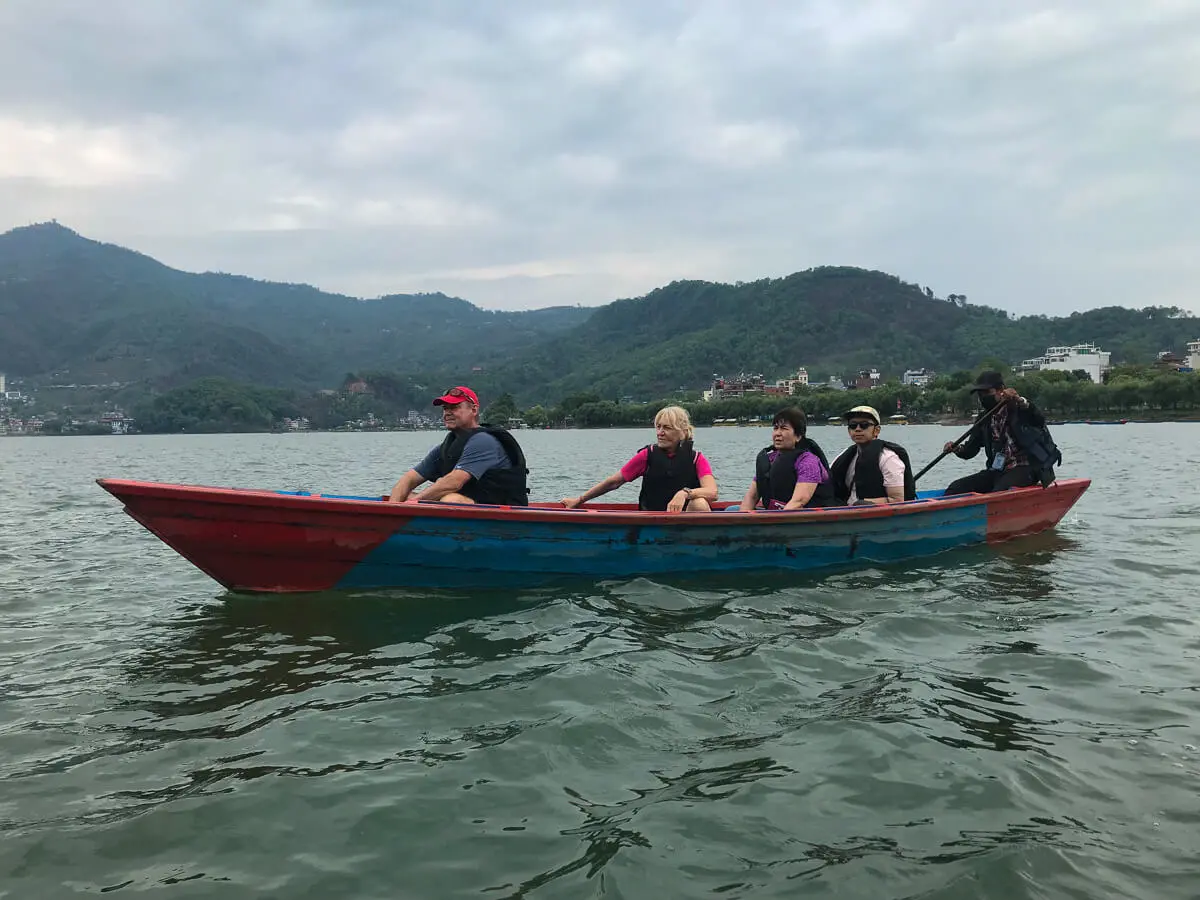
Today is a rest day in Pokhara. The day begins with a late breakfast in your tourist standard hotel. Later in the day, you will join your guide on an immersive tour of the city of lakes. You can visit the World Peace Pagoda, or take a boat out on Fewa Lak

Max Altitude: 1350m
Meals: Breakfast
Duration: 30min
Distance: 146m
Accommodation: Hotel
Mode of transportation: Flight
Day 12

Pokhara - Kathmandu

You head back to the bustling capital of Kathmandu by flight. The journey takes you back along the tourist bus park, Pokhara Domestic Airport, continues to Ambarsing Chok to Pokhara International Airport, takes approximately 30 minutes and 20 to 25 minutes, a short flight to Kathmandu, and drives to the hotel around late afternoon. It’s nice to have a good and easy morning around Pokhara Lake side till a mild day as final shopping around and flight to Kathmandu. In the evening, head to a local pub to celebrate your successful ABC journey.

Max Altitude: 1350m
Meals: Breakfast
Duration: 1hr / 5hrs
Accommodation: Hotel
Day 13

Kathmandu free day

It's free day, you also can plan to visit Bhaktpur Durbar squire, Patan Durbar squire etc.

Max Altitude: 1350m
Meals: Breakfast
Accommodation: Hotel
Day 14

Departure to home

It's departure day as your international flight time.

Max Altitude: 1350m
Meals: Breakfast
Duration: 40min
Distance: 5-6km
Mode of transportation: Car / Bus
Are you still confuse from where to start? We have solutions for you.

Cost Details

Includes

  • Airport pickup and drop-off for both arrival and departure
  • All necessary ground transportation (Kathmandu-Pokhara-Kathmandu).
  • Pokhara to Kathmandu one-way domestic airfare
  • 4 nights Kathmandu and 3 nights Pokhara hotel accommodation (B&B-Bread and Breakfast).
  • Accommodation during the trek.
  • All meals (Breakfast, Lunch, Dinner with tea and coffee) during the trekking days.
  • Government-licensed English-speaking guide and their insurance/salary.
  • A carrier (Porter) between two guests, 11 +11 kg p.p.
  • Trekking permits (TIMS) 
  • Annapurna Conservation Area (ACAP) fees
  • Trekking map, Sun Hat, and duffle bag.
  • Welcome or farewell dinner in a Nepali cultural restaurant
  • Trekking map, Sun Hat, and duffle bag, each per person
  • Medical assistance
  • Service fee, staff insurance, and equipment

Excludes

  • Clients' International flight costs
  • Lunch and dinner during the stay in Kathmandu and Pokhara
  • City Guide and sightseeing entrance fees
  • Wi-Fi, hot showers, and battery charging fees during the trip
  • Upgraded hotel accommodation cost / Add-ons 
  • Heli rescue or a Charter flight (if required during the trek)
  • Guide and porter tips
  • Arrival visa: $30 for 15 days, $50 for 30 days, and $125 for 90 days

(Note: Bring exact change in USD cash for the arrival visa)

Dates & Availability

The Annapurna Base Camp Trek can depart on any date and day you prefer. We have a dedicated crew available throughout the main trekking season, giving you complete flexibility to customize your itinerary. You can shorten or extend the trip according to your preferences, beyond the original program.

Select your preferred date

Equipment List

Download List
Annapurna Base Camp Trek Equipment 
Prepare for safety and comfort during the Nepal Trek to tackle diverse climatic conditions and alpine terrain.

Upper Body

  • Body Clothing
  • Moisture-wicking Base Layers
  • Fleece or Down Mid-Layers
  • Waterproof and Windproof Outer Layer Shell
  • Waterproof and Insulated Down Jacket
  • Thin Inner Gloves
  • Waterproof and Insulated Outer Glove
 

Lower Body

  • Lower Body and Footwear
  • Wool or Synthetic Hiking Socks and Thicker Thermal Socks
  • Stiff-soled, waterproof trekking boots
  • Comfortable Shoes or Sandals for camp
 

Footwear & Accessories

  • Wool or Synthetic Hiking Socks and Thicker Thermal Socks
  • Stiff-soled, waterproof trekking boots
  • Comfortable Shoes or Sandals for camp

Head & Sun Protection

  • High SPF Sunscreen and Lip Balm with SPF
  • UV Protection Sunglasses
  • Sun Hat and Woolen Beanie
  • Buff or Neck Gaiter


Personal & Medical Kits

  • Large Duffel Bag (Company provides) and Good Daypack
  • Sleeping Bag rated to -10°C
  • Trekking Poles
  • Headlamp with extra batteries
  • Water Bottle or Hydration Bladder (1 to 2 liters) with purification tablets or filter
  • Personal First-Aid Kit (Diamox, blister bandages, pain relievers)
  • Toiletries (Toothbrush, toothpaste, biodegradable soap, quick-dry towel, toilet paper, sanitizer, wet wipes)
  • Power Bank and Portable Charger (Batteries drain much faster in the cold air at High Camp, so keep your power bank wrapped in a spare sock inside your pack)
  • Light spikes that attach to your boots to give traction on ice or hard-packed snow.

Travel Documents

  • Passport: Valid for at least 6 months beyond your travel dates.
  • Visa: Nepal entry visa (can be obtained on arrival at Tribhuvan International Airport or in advance from embassies).
  • Permits: Trekking permits such as the TIMS card (Trekkers’ Information Management System) and restricted area permits (for Mustang, Annapurna, etc.).
  • Insurance papers: Proof of travel insurance covering high-altitude trekking and emergency evacuation.
  • Flight tickets: International and domestic flight confirmations.
  • Other IDs: Sometimes a government-issued ID (like a driver’s license) is useful as backup.


Miscellaneous

  • Personal spending money for souvenirs, snacks, and beverages not included in the package
  • Optional donations at monasteries, temples, or local community projects along the route
  • Extra batteries or a power bank for electronic devices (charging facilities may be limited)
  • Lightweight reading material, journal, or cards for leisure during rest days
  • Small first aid kit for personal use (the company provides a group kit, but personal items are recommended)

NOTE: Sleeping bag, down jacket, and duffel bag can be provided by Advent Himalaya Treks if you do not have your own. Also, free excess luggage storage at the Advent Himalaya Treks store is available for the duration of the trek.

Essential Information

14 Day Annapurna Base Camp Trek (ABC Trek) Cost 2026/2027

The total cost of the 14-Day Annapurna Base Camp (ABC) Trek starts at USD 1100 and varies with your group size. Variations in the price can also result when you customize your own itinerary, making changes such as hotel upgrades, add-ons, extra nights in Kathmandu, or no porter required for the trek, which can increase or decrease the overall cost.

Best Time for the Annapurna Base Camp Trek (ABC Trek)

If you want the best shot at clear views on the Annapurna Base Camp trail, spring (March to May) or autumn (September to November) are two seasons that just give you the most reliable weather, and are your best bet.

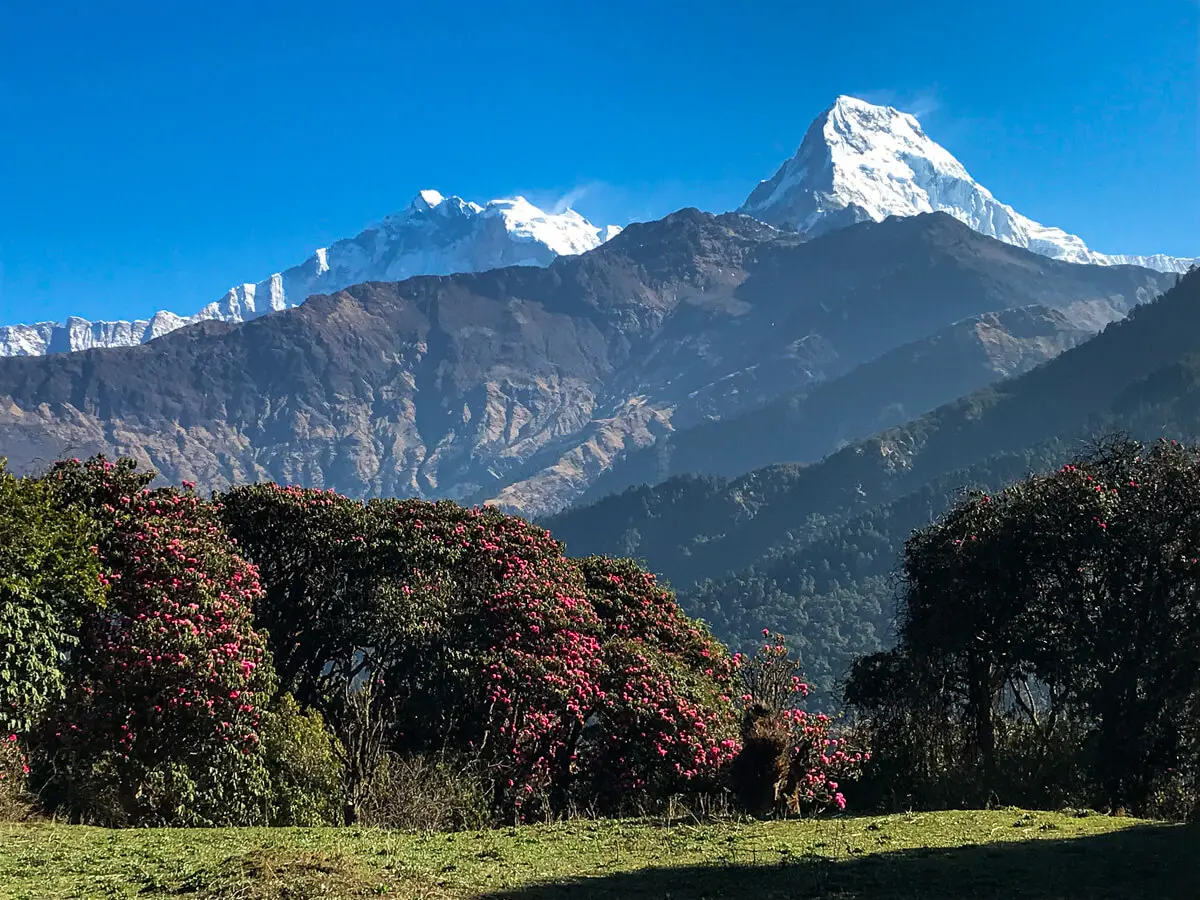
Spring is when the lower sections around Ghorepani turn into a wash of red and pink as the rhododendrons bloom, which is genuinely one of the best times to catch this trek visually. The weather's warm and pleasant, though clouds tend to build up by afternoon. Starting early each day is the key move here to be able to catch the sharpest mountain views before any clouds roll in.

Autumn is really the gold standard for this trek. Skies are about as clear as they get, visibility on the Annapurna range is hard to beat, trails are dry, and the temperatures sit in that sweet spot for steady climbing days.

The drawback of Spring and Autumn season is that the trail tends to get a bit busier and there are more foots compared to winter season or during the off-season (monsoon).

Winter treks are technically doable, but heavy snow near base camp can make the higher, steeper sections slippery and a lot more demanding. This is worth knowing before you commit to a winter date so that you know what actually you are getting.

Travel Insurance for the Annapurna Base Camp Trek (ABC Trek)

Travel insurance is one thing people tend to underestimate and realize its importance too late. Therefore, it is always the best to get this sorted before you land in Nepal, not after.

Here's what your travel policy explicitly and actually needs to cover:

  • Trip cancellations, delays, and lost baggage. This is nice to have, and honestly saves a lot of stress if your flight into Pokhara or Kathmandu gets pushed.
  • Medical coverage with high-altitude trekking clauses up to 6,000m; this is the big one. A lot of standard travel insurance quietly excludes trekking above a certain elevation, and people only find out when it's too late.
  • Emergency evacuation if altitude sickness or an injury hits you somewhere remote on the trail. Note that getting evacuated isn't cheap, and without the right coverage you're looking at a genuinely huge bill.
  • Accident and injury cover protects you against trekking-related accidents, including hospitalization and treatment, whether that's in Nepal or back home.
  • Repatriation covers getting you home safely in case of a serious medical emergency.

Key Tips

  • Check the Policy altitude limit for what cover
  • Verify Helicopter Evacuation is included
  • Keep on pockets, carry a printed copy of your insurance policy
  • Buy insurance before flying to Nepal

Logistics - Getting to Annapurna Base Camp Trek (ABC Trek) and Permits 2026/27

Kathmandu to Pokhara: This is normally a 6-7 hour drive to Pokhara. From Pokhara, it's about a 1.5-2 hour drive to Nayapul, where the trail actually begins on foot. If you prefer a short journey, then a domestic flight of 25 min from Pokhara to Kathmandu is the way to go.

End of trek: You’ll fly back from Pokhara to Kathmandu.

Permits You'll Need: 

  • ACAP (Annapurna Conservation Area Permit): This is the one that actually matters now. It costs NPR 3,000 (roughly USD 25) for foreign nationals, and covers your entry into the entire Annapurna Conservation Area for the whole trek, no time limit attached.
  • TIMS Card is traditionally required alongside ACAP, and is issued as a safety-tracking measure. Though TIMS is no longer being actively checked at Annapurna checkpoints, it's still worth having one with you.

NOTE: Licensed Guide has been mandatory since 2023, and is strictly enforced now. Solo trekking isn't permitted inside the conservation area anymore, so you'll need to be trekking with a registered guide either way.


Altitude Sickness - What to Know for Annapurna Base Camp Trek (ABC Trek)

ABC tops out at 4,130 meters, and while that's nowhere near the altitude of the Everest Base Camp, it's still high enough where altitude sickness (AMS) is a real possibility if you rush.

Mild symptoms of AMS such as headache, some nausea, dizziness or the feeling of tiredness usually show up around Deurali or the final push into base camp, and it usually passes with rest and hydration. 

What you actually have to watch out for is a headache that won’t go away with rest or medication, vomiting, trouble walking straight, or breathlessness even at rest. If any of these start showing up, it’s an immediate descent. Note that reaching the summit or completing the trek is less important than your health. Once your guide says descend, you’ll have to descend.

Why ABC Is Actually Lower Risk Than People Assume

Compared to the treks like in the Everest region, ABC's ascent profile is gentler and the max altitude is lower, which is why it's a popular pick for first-time high-altitude trekkers. That said, "lower risk" doesn't mean "no risk". People still get caught with altitude sickness out here, which usually is a result from climbing too fast on the final day into base camp or rushing to complete the trek in a shorter itinerary.

How to Actually Prevent Altitude Sickness in ABC

  • Go slow, especially on the last stretch, the climb from Himalaya or Deurali up to ABC gains altitude quickly, and this is where most people get altitude sickness.
  • Hydrate constantly
  • Avoid alcohol and sleeping pills at high altitude as it messes with your breathing overnight.
  • Talk to a doctor before your trip about altitude medication that can help with acclimatization. Be sure that dosage and suitability of the medicine depend on your health history, this isn't something to self-prescribe off a blog post.
  • Listen to your guide; this is exactly why experienced local guides matter on this trek. They've seen AMS before and know when someone needs to turn back, even if the trekker insists they're fine.

The Golden Rule 

If in doubt, descend. No summit, viewpoint, or itinerary is worth pushing through serious symptoms. This is also why we build gradual acclimatization into our ABC itinerary rather than rushing the ascent.

Worried about how your body will handle the altitude? Chat with us before you book your trek. We can walk you through exactly what to expect and how we manage it on the trail.

Accommodation on the Annapurna Base Camp Trek (ABC Trek)

For your stay in Kathmandu and Pokhara, you’ll be staying at a 3-star tourist standard hotel, and during your time in the trek most of the accommodations are local teahouses or lodges.

Do not expect any kind of luxury out here on the trail, but do know that this lack of luxury is what truly makes this trip special. You'll be staying in teahouses the whole way, and here's what it actually looks like:

The Rooms

Rooms in the teahouses are basic, twin-share setups mostly with a bed, a blanket (best to bring your own sleeping bag), and not much else. Bathrooms are usually shared down the hall rather than attached to your room, so a headlamp for late-night trips is worth packing.

The Dining Hall

This is where you socially connect with your guides, porters, or other travellers. Every teahouse has a communal dining hall, usually with a wood or gas stove in the middle, which is surrounded by everyone once the sun goes down. It's where you end up sharing stories with trekkers from completely different countries, comparing blisters, and getting to know about tomorrow's trail conditions from your guide.

Electricity, Wifi and Shower

Most teahouses offer charging points and wifi, though usually for a small extra fee (roughly USD$3-$5), and both get patchier the higher you climb. Don't count on the internet past Chhomrong as you get almost no signal, but the view from this no signal area is the best.

Hot showers are usually available in the trail for some small charge of USD$2-5. Make sure that you carry cash in Nepali Rupees for these Wifi, charging and showers as the teahouses don't really accept cards or USD$.

Although the accommodation during the time on the trail is basic, it is really cozy. There's something about a warm dining hall after a long day of climbing that makes even strangers feel like old friends fast. The flip side is, rooms that don't have heating and are cold at night, especially higher up. So a good sleeping bag (rated for sub-zero) isn't optional, it's essential. But the best part is you’ll rarely feel the cold as you will pass out as soon as you rest your head because of all the walking you have done.

Food and Meals on the Annapurna Base Camp Trek (ABC Trek)

Food is not really a problem in this ABC trek as the teahouses menus are surprisingly long, and food ends up being one of the small daily highlights after a hard day of walking.

Typical Meals

Dal Bhat is the trail staple; rice, lentil soup, and a rotation of curries, and most places will refill your plate for free, which makes it the best value (and honestly the most filling) meal on the mountain. We, your guides and porters mostly only have Dal Bhat and are a big fan of this Nepali saying; “Dal Bhat Pawer, 24 hour”.

Beyond that, you'll also find a solid range of foods such as noodles, pasta, soups, breads, pancakes, eggs, and potatoes cooked pretty much every way possible (boiled, fried, in soup). The food is not of fine dining standard, but is equally tasty and fulfilling after the long hours of walk.

Snacks and Drinks

For drinks, you've got tea, coffee, hot lemon, and soft drinks at basically every stop. Hot lemon with honey and ginger is a favorite of the region, especially if you're feeling the cold or the altitude a bit.

Also, after leading and organizing so many trips here, we have found that the ultimate favourite drink of trekkers is Masala Chai. We have even had guests who tried making it back at home after their trek, but said that didn't taste the same. Then they returned almost after a year again and learned to make it in our family kitchen and have been following the recipe.

For snacks, chocolate bars, biscuits, and instant noodles are easy to grab along the trail if you need a quick energy boost between meals. Our guide and previous trekkers always recommend carrying some energy bars, chocolates, and energy drinks from Kathmandu itself as it is generally cheaper than buying at the trail and can save on your expense. 

A Few Practical Notes

  • Garlic soup is something you'll hear your guides recommend often at higher altitudes as there's a local belief it helps with acclimatization, and whether or not that's fully backed by science, it's warm, tasty, and doesn't hurt.
  • Prices for food and drinks increase gradually with altitude; it makes sense once you see everything being carried up by porters or mules.
  • If you've got dietary restrictions, let your guide know early so that the teahouses can accommodate, but options get more limited the higher you go.

NOTE: You can add a cook guide to come along the trek to ensure that your dietary restrictions are kept in mind while preparing any meal for you. They will personally prepare your meal according to your requirement throughout the trek.

Why Trek Annapurna Base Camp (ABC) with Advent Himalaya Treks?

Anyone can get you to Annapurna Base Camp (ABC). What we think actually matters is who you're doing it with, and what happens around the trek.

  • We're a family-run business, not a franchise. Advent Himalaya Treks was started by Babu with his family by his side and is still run day-to-day by the same family. When you email us or message on WhatsApp before you book, you're talking to Babu who actually knows about the trek you are asking about, not a chatbot or AI.
  • Come learn to make momo with our family. Before or after your trek, you're invited into our family's kitchen for a hands-on momo-making session either for lunch or dinner; anything that works with you. You will get to learn the recipe that has been in our family for decades, taste the actual local and authentic momo; the one we actually cook at our home. It's a small thing, but it's the experience our guests bring up for a long time. Also, if you want to learn to make any other dishes, our family is ready to share the recipe and cook it together with you.
  • Our guides and porters are basically part of the family. Many of our guides and porters have been with us since the beginning, climbing each step alongside. Dawa has been with us for 19 years, and is there on almost every trek.
  • Your guide has more than a decade of experience. The guide from our team who you will trek with will be an experienced guide who has completed this specific trek at least 9-10 times, and has been the main guide for at least 5 times. Also, an assistant guide with 2-3 years of experience will be on the trek with you if you have a large group.
  • Private airport pickup/dropoff. Either Babu, Meera or both of them will be there with a private vehicle to welcome you at the airport as well as to drop you off for your flight back home.
  • Tailor made itineraries. This package you see is a standard structure of how the journey looks like. Each and everything seen in this package can be changed and accommodated as per your or your groups’ preference. 
  • We handle the behind the scene stuff so you don't have to worry about it. Permits, flight rerouting, weather delays, gear rental if you need it; we sort it in the background so your energy goes toward the trek, not logistics. 
  • A real, in-person briefing before you hop on the trail. You'll sit down with Babu or your assigned guide at our office or in the hotel you are staying at, walk through the route, the altitude plan, a gear check, and ask anything that's on your mind. Most of our guests tell us that the trip starts feeling real to them after this briefing.
  • No gear? We've got you covered. Advent Himalaya Treks can provide you with a sleeping bag and down jacket if you don’t have one. And if you require any other gears such as poles, gloves, a headlamp, crampons our team will help you purchase it at Thamel or take you to a rental place if you just want to rent it.
  • Personalized support. You will be provided with personalized support throughout your time in Nepal. If you or your group are sensitive to new food or have specific allergies, a cook guide will be assigned to you and your team during the trek to ensure that your meal is properly taken care of.
Price Per Person
US$1100
  • 2 - 4 Pax US$1200
  • 5 - 10 Pax US$1100
Speak to an Expert
Our Packages specialists are here to assist you with booking and customization.
Babu Gurung
Babu Gurung +977 9851191662