









Overview - What is the 16 Day Ghorepani Mardi Himal Circuit Trek like?
The Ghorepani and Mardi Himal Trek is a hike into two drastically different ecosystems connected by a strenuous valley crossing. While the early morning stair climb to the Poon Hill vantage point is a short, well-trodden warm-up, let’s be honest about what follows. As guides who walk this route constantly, we can guarantee that the descent to the Modi River, the ascent to Forest Camp, and the crossing of Ulleri’s stone steps are heavy on the knees. This is a little price you pay to avoid the touristy crowd.
Once you climb into the ridges of Mardi, bakeries are replaced by timber lodges and narrow paths. Because it’s a ridge walk, natural streams do not exist past Forest Camp. Pack high-capacity bottles and purification tablets to safely fill up at lodges every morning, avoiding expensive boiled water.
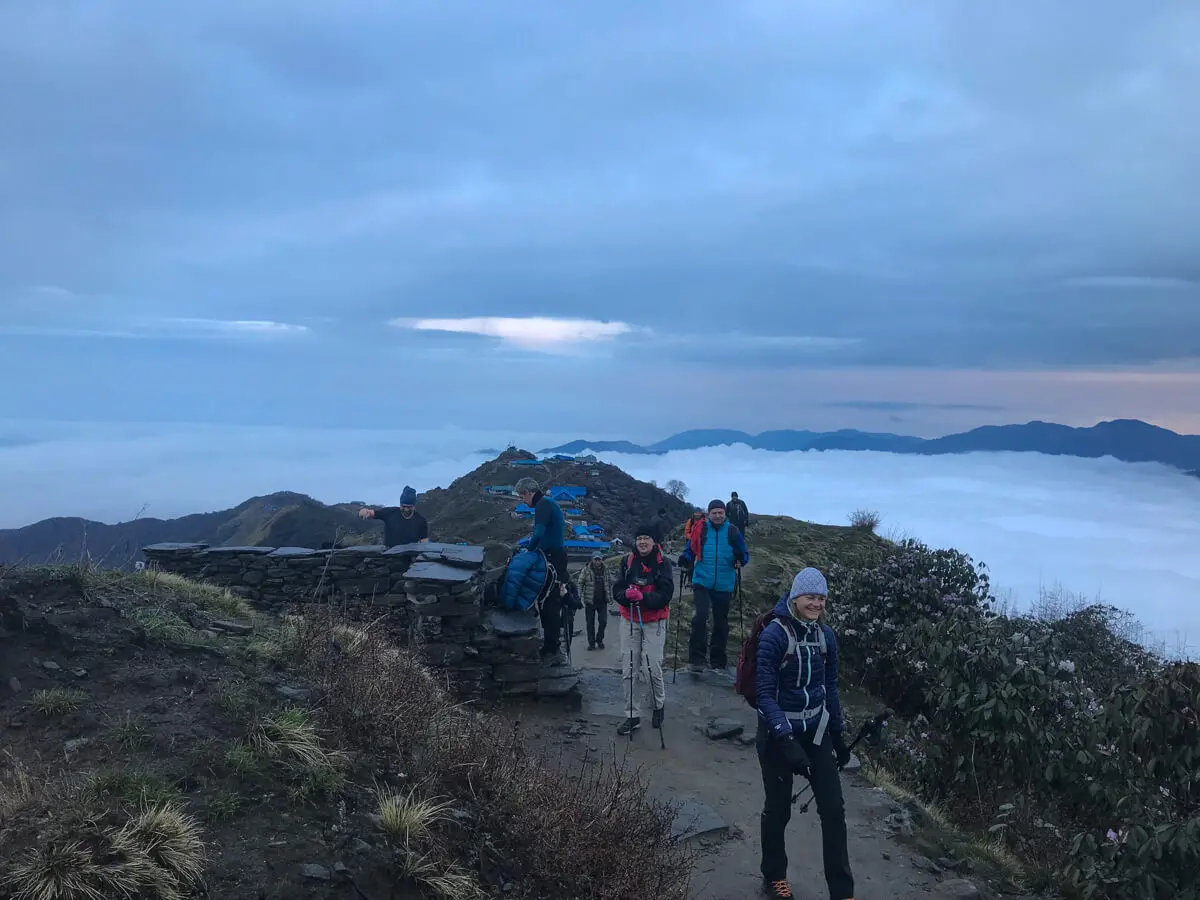
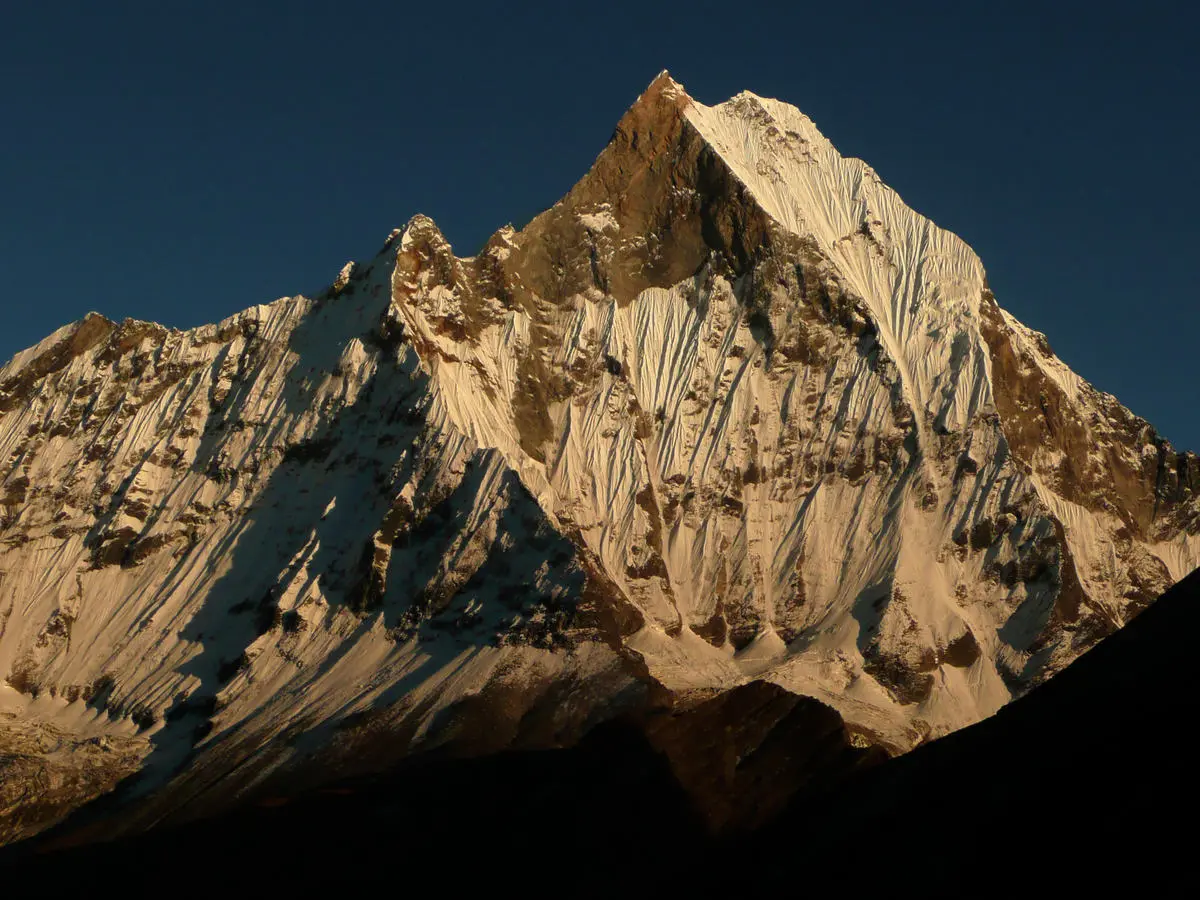
The ultimate challenge is the 3:30 AM push to the 4,500-meter Mardi Viewpoint. This is a raw experience where the wind cuts sharply, and you will stand in the dark waiting for sunrise to hit Mount Machhapuchhre. Ask the kitchen to fill a vacuum thermos with hot ginger tea the night before. It makes the freezing wait manageable.
At Advent Himalaya Treks, we plan a safe and unforgettable Ghorepani and Mardi Himal adventure. Let’s get your boots on the trail. Book your 2026/2027 trip now!
Why Go on the Ghorepani and Mardi Himal Trek in Nepal?
The Ghorepani and Mardi Himal Trek is a smart way to acclimatize in the Annapurna region. By introducing the stairs of Ghorepani Circuit first, you can take on the steep Mardi ridge as your lungs are fully prepared to face the 4,500-meter push to Mardi viewpoint.
Here are the top reasons to go on the Ghorepani and Mardi Himal Trek in Nepal:
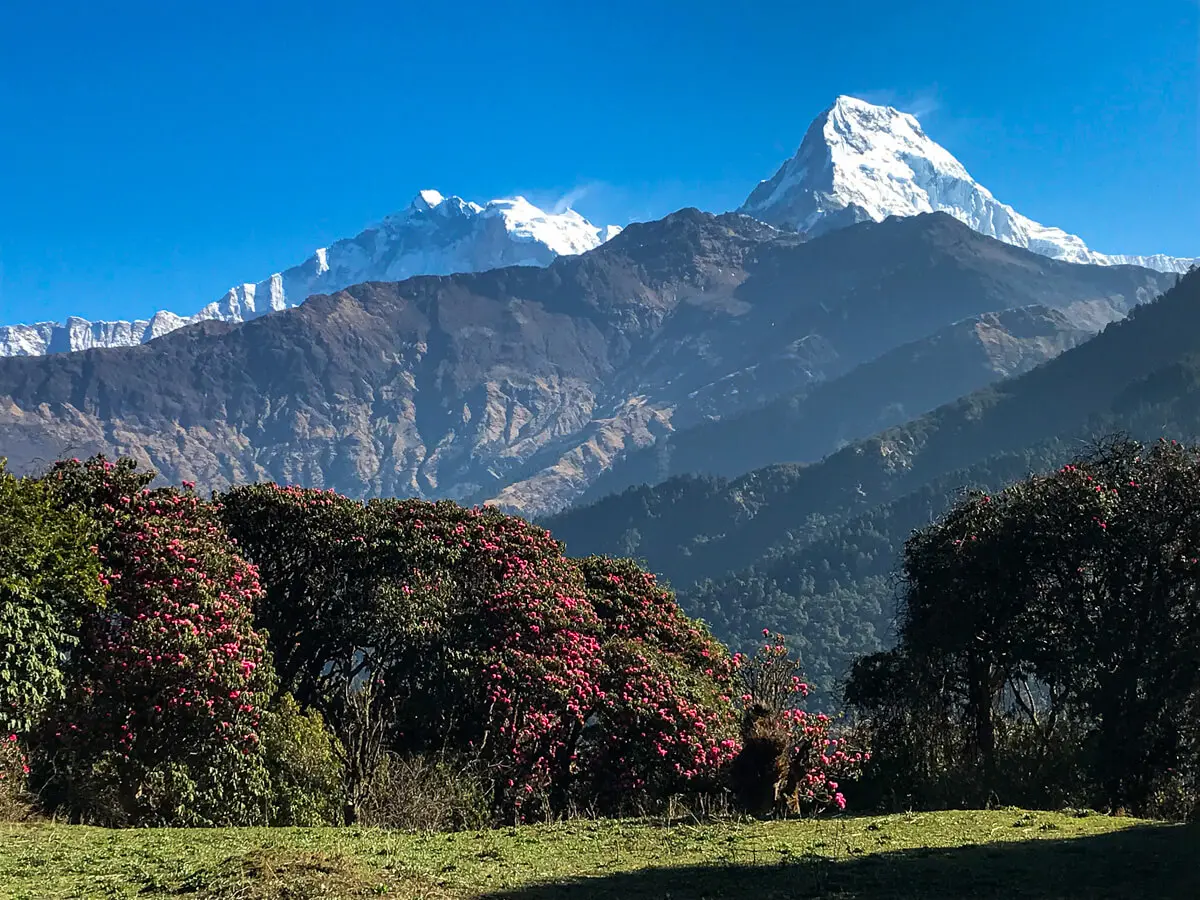
- Dual Sunrise: The Ghorepani and Mardi Himal Trek offers two of the most famous Himalayan sunrises, but requires different strategies. While Poon Hill gives you a sweeping panorama of the Dhaulagiri range, you stand right under the face of Machhapuchhre (Fishtail) from the Mardi Viewpoint.
- Authentic Luwang Homestay Experience: This trek bypasses the commercial circuit entirely and takes you into authentic rural communities, including Luwang. In Luwang, you can immerse into the traditional Gurung culture and lifestyle, away from the concrete lodges. Here, you will eat dal bhat cooked over a wood fire right in the family kitchen. The village operates one of the only organic tea gardens in the region. Buy a few bags to support the local economy.
- Riverside Hot Springs: The descent from the Ghorepani side down to Jhinu Danda is a knee-crunching hike. After long hours of trek, the hot springs on the banks of the glacial Modi River provide perfect therapeutic bliss. We recommend avoiding the morning plunge as it can get incredibly crowded. Head down before dinner as the sun sets for a more personal experience.
- Drastic Landscape Shifts: The trek takes you across diverse terrain and landscapes. You will transition from dense, humid rhododendron forests of the lower valleys to the barren Mardi ridges. Once you pass Badal Danda, you’ll have left the tree line behind and walk into the upper regions where weather dynamics change instantly.
A Typical Day during the Ghorepani and Mardi Himal Trek 2026/2027
Mornings on the trails do not start with a gentle, romanticized wake-up. Your teahouse trek ritual begins with the lodge owner pumping a kerosene stove around 5:00 AM. If you order breakfast the night before, you will get served early, allowing you to hit the trails by 6:30 AM. This early start is crucial to beat the midday clouds that roll over the Mardi ridge.
On the trail, you will walk across the “Nepali flat,” a local term for constant ups and downs. During the crossover from Ghorepani to Mardi, you will go through massive elevation changes. Use your trekking poles on the steep descents toward the Modi Khola to save your knees. You stop for lunch at around noon. Dal Bhat is your best option. An unlimited supply of rice and lentil soups is provided by the kitchen, giving you the slow-burning calories for the afternoon climbs.
Your goal is to reach your overnight destination by 3:00 PM. Here, you can rest, unwind, and engage in active recovery. For those planning to use the shower, head to the washroom immediately before the overhead pipes cool down. At night, bring your water bottle to the dining hall. Ask the kitchen staff to fill it with boiling water and toss it into your sleeping bag to survive the alpine nights.
16 Day Ghorepani Mardi Himal Circuit Trek Highlights
- Conquer two legendary routes in one seamless 15-day adventure.
- Catch the breathtaking sunrise over Mount Dhaulagiri from the iconic Poon Hill (3,210 meters).
- Relax your muscles in the natural riverside hot spring pools at Jhinu Danda.
- Hike along the dramatic, exposed ridges of Mardi Himal directly toward Mount Machhapuchhre.
- Stand at the incredible Mardi Viewpoint (4,500m) for an up-close, panoramic mountain spectacle.
- Experience genuine local hospitality and farm-to-table meals at the Luwang village homestay.
- Enjoy a quick and scenic domestic flight from Kathmandu to Pokhara to kickstart the journey.
Difficulty - Who Can Do the Ghorepani Mardi Himal Circuit Trek/Age?
The Ghorepani and Mardi Himal Trek is a moderate trek. If you have good physical fitness and good morale, this journey can be completed with ease. Nonetheless, preparing adequately is crucial to make your adventure memorable.
Regarding age, it really isn’t a major factor that restricts you. Trekkers of any age with good physical and mental fitness can do this trek. Ideally, an age of 16-65 is recommended by most as it is considered the perfect age range, but even if you don’t fall under this, until you have the will, you are good to go.
The 15-day Ghorepani and Mardi Himal Trek is suitable for:
- Active travelers with a solid level of cardiovascular fitness who can hike between five and seven hours daily across the diverse Himalayan terrain.
- Seasoned mountain enthusiasts and ambitious beginners with strong mental resilience.
- Adventure seekers with good health and no major respiratory issues, with a few weeks of pre-trek training.