Kanchenjunga North - South Base Camp Trek- 27Days

The Kanchenjunga North - South Base Camp Trek is a 27‑day adventure from Kathmandu that explores both the North and South Base Camps of the world’s third‑highest peak. Beginning with a scenic flight to Bhadrapur and a tea farm visit in Ilam, the journey continues with drives to Taplejung and trekking through Mitlung, Chhirwa, and Sekathum along the Ghunsa Khola valley. Crossing the high Sele La Pass, trekkers reach the remote South Base Camp, experiencing diverse landscapes, rich culture, and breathtaking Himalayan views throughout the circuit.
At a Glance
Duration
Duration
27 Days
Country
Country
Nepal
Maximum Altitude
Maximum Altitude
5143m
Starts
Starts
Kathmandu / Taplejung
Ends
Ends
Tharpu / Bhadrapur / Kathmandu
Group Size
Group Size
Up to 07 pax
Activities
Activities
Trekking
Best Time
Best Time
October - November / April - May

Overview - What is the 27 Day Kanchenjunga North - South Base Camp Trek like?

The Kanchenjunga North - South Base Camp Trek is a proper 27-day adventure that takes you all the way from Kathmandu to both the North and South Base Camps of Kanchenjunga; the world's third-highest mountain. 

It starts off with a short flight to Bhadrapur, where you will honestly be glued to the window the whole time, followed by a relaxed drive to Ilam for the night. Ilam is best known for its tea gardens and you can walk through it after having a short rest at your hotel. This is a nice, easy way to ease into the trip before the real trekking begins. 

From there, it's a drive to Taplejung, where the real starting point of the trek is, and then you're off on your feet through villages like Mitlung, Chhirwa, Sukethum, and Ghunsa Khola, before crossing the Selele Pass which leads to some genuinely remote Himalayan places.

Along the trail, you get front-row views of Kanchenjunga from angles most trekkers never get to see. This  Kanchenjunga North - South Base Camp Trek is one of those far east Nepal treks that still feels wonderful yet untouched.

Honestly, this is considered one of Nepal's most epic long treks and it's for people who've done a few treks already and are ready for something longer, wilder, less crowded, and wants to explore off-the-beaten paths.  

27 Day Kanchenjunga North - South Base Camp Trek Highlights

  • Dual Base Camp Experience- It’s rare to be able to stand at both the North Base Camp (Pangpema) and the South Base Camp (Oktang) of Kanchenjunga or any other tail on the same trip and very few treks in Nepal actually offer this chance. 
  • A proper 27-day adventure- This isn't a quick weekend trek; it's a long, immersive journey that really gets you into the Himalayan life without rushing. 
  • Scenic diversity from start to finish as you go from the tea gardens of Ilam, to lush forests and river valleys, and all the way up to high alpine landscapes near the base camps. Not many treks are able to provide this kind of variation.
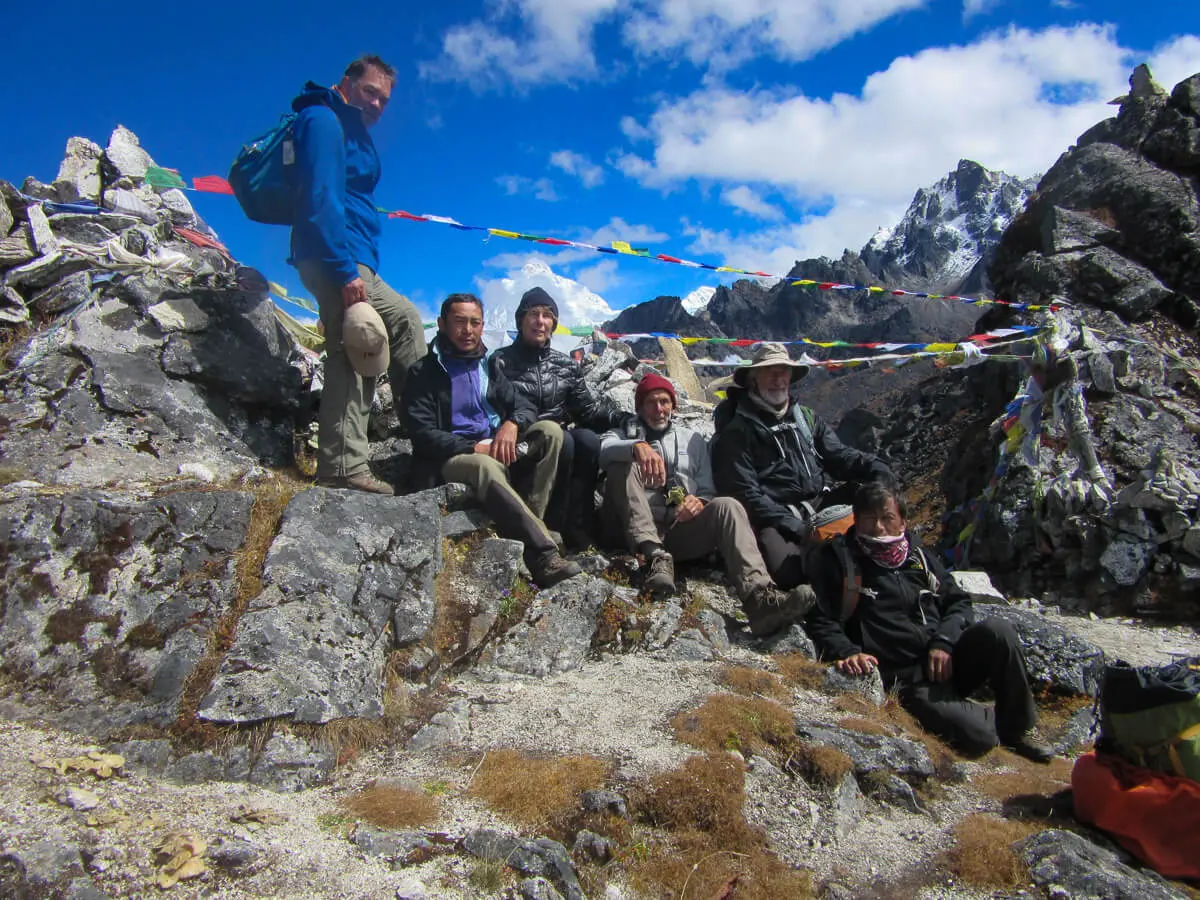
  • Panoramic mountain views- You get to see the panoramic view of Kanchenjunga, along with neighboring peaks, especially from high view points like Selele Pass and Sinion La.
  • Authentic, off-the-beaten-path adventure- This region sees a fraction of the trekkers that Everest or Annapurna do, so the trails feel wild and the villages feel real, not built up for tourism.
  • Cultural encounters along the way- You'll pass through Limbu and Rai communities, with chances for genuine interactions with locals by staying at local homestays and having local meals. 
  • Wildlife and nature in the Kanchenjunga Conservation Area- Keep an eye out for red pandas, snow leopards (rare, but possible), and a variety of birdlife as you move through different ecological zones. This region is like a gold mine for those who love wildlife.
  • High-altitude pass crossings- tackling the Selele Pass and other high passes adds a real sense of challenge and achievement to the trek, making this a great next adventure for trekkers looking to level up themselves by completing a more difficult trek .

Difficulty - Who Can Do the Kanchenjunga North - South Base Camp Trek/Age?

The Kanchenjunga North - South Base Camp Trek is rated as one of Nepal's toughest treks, being between strenuous and very strenuous. This isn’t the one for you if you are deciding on your first Himalayan Experience. 

By looking at this trek, you're looking at the long trekking days, several high passes (including Selele and Sinion La), and walking on remote trails where teahouses are basic and far apart. Additionally, this is a 27 days long trek, demanding fitness more than just willingness.

What you'll need:

  • Excellent physical fitness- You need to have months of prior training(hiking, cardio, strength training), and this will make a real difference, especially on the long uphill near the passes. 
  • Prior high-altitude trekking experience- Having done something like the Everest Base Camp or Annapurna Circuit trek helps you know how your body handles altitude before attempting something this demanding.
  • Strong mental resilience- This trek requires nearly four weeks on the trail, unpredictable weather, and long isolated routes. Having the right mindset matters just as much as fitness.

Age considerations

There's no age restrictions, but realistically, this trek is built for trekkers who are in good health, are young to middle-aged, and free of any lung, or joint conditions that altitude and long walking days could affect. Older trekkers with strong trekking backgrounds have completed it too, but it's worth consulting with your doctor and your guide before committing. 

If you're unsure whether you're ready for something at this level, it's worth talking with a experienced trekker first as they can help you identify your level of fitness and the trek's demands and suggest a good pre trek plan or a slightly easier alternative if needed.

Kanchenjunga North - South Base Camp Trek- 27Days Itinerary

Day 1

Kathmandu Arrival

It's Kathmandu arrival day, with a transfer to the hotel from Tribhuvan International Airport. We arrange the necessary transportation from the airport to the hotel. Your Hotel would be in Thamel or nearby, 3-star, with breakfast daily.
Max Altitude: 1350m
Meals: Breakfast
Duration: 40min
Distance: 5-6km
Accommodation: Hotel
Mode of transportation: Car / Bus
Day 2

Kathmandu sightseeing

It's a free day in Kathmandu. It is also a day to prepare for a trip or sightseeing of Kathmandu's world heritage sights. The sights are Swayambhu Nath, Boudha Nath, Pasupatinath, and Kathmandu Durbar Square. A nice evening dinner at a traditional Nepali restaurant as a welcome dinner.

Max Altitude: 1350m
Meals: Breakfast
Duration: 4-5hrs
Accommodation: Hotel
Mode of transportation: Car / Bus
Day 3

Kathmandu - Bhadrapur - Ilaam

For the Kanchenjunga Trek, the journey begins with a flight from Kathmandu to Bhadrapur in eastern Nepal. From Bhadrapur, trekkers take a short drive to Ilam, a beautiful hill town known for its tea gardens, where the first overnight stay is usually arranged.

Max Altitude: 91m / 1570m
Meals: Breakfast, Lunch, Dinner
Duration: 3hrs
Distance: 295km Air distances /50km Jeep Road
Accommodation: Hotel
Mode of transportation: Flight / Jeep
Day 4

Ilaam - Taplejung

It's a day's drive to Taplejung, which is 152km far from Ilam. It's the headquarters of Taplejung District. It's a day walk around the market to prepare for the trek the next morning. It's famous because of the Pathibhara Temple above the hill for pilgrims. Good lodes are in the market.
Max Altitude: 1820m
Meals: Breakfast, Lunch, Dinner
Duration: 4-5hrs
Distance: 152km
Accommodation: Hotel
Mode of transportation: Jeep
Day 5

Taplejung - Mitlung

The first stage of the Kanchenjunga North - South Base Camp trek begins from Taplejung market. It descends through lush hillsides and terraced fields via Gurung and Limbu villages. It's approximately 909m high, 11 km away, and takes 4-5 hours on foot from Taplejung. Normal teahouse, homestay available here.

Max Altitude: 909m
Meals: Breakfast, Lunch, Dinner
Duration: 4-5hrs
Distance: 11km
Accommodation: Teahouse / Home stay
Mode of transportation: Walk
Day 6

Mitlung - Chhirwa

The trek from Mitlung to Chhirwa is the second day of the Kanchenjunga circuit trek. It's approximately 10- 11 km away and a 5-6 hour walk along the Tamur River. Sinwa, Tawa, Thiwa are the villages where possible to get tea, coffee, lunch, etc. Chhirwa is a small settlement. Normal teahouses are available.

Max Altitude: 1246m
Meals: Breakfast, Lunch, Dinner
Duration: 5-6hrs
Distance: 11km
Accommodation: Teahouse
Mode of transportation: Walk
Day 7

Chhirwa - Sukethum

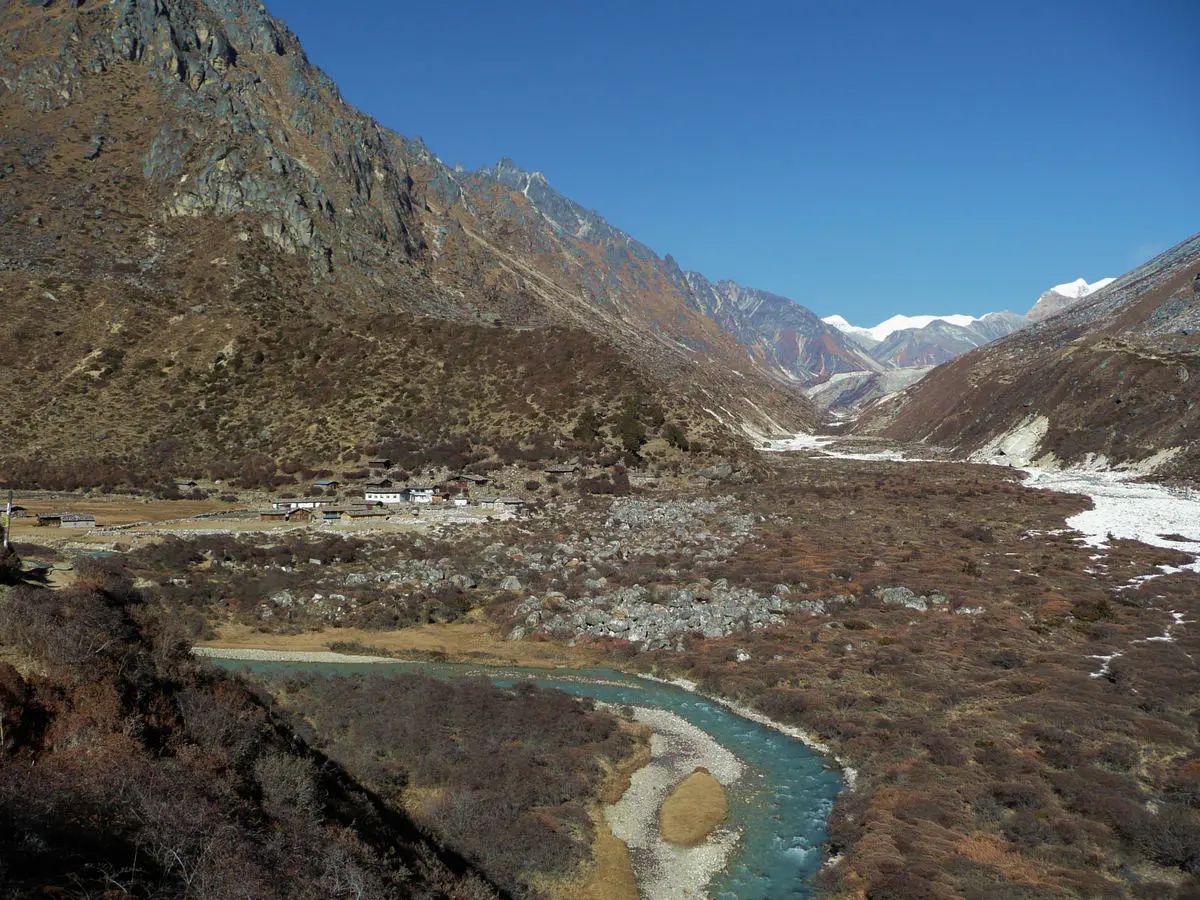
The trek from Chhirwa to Sukethum is the third day of the Kanchenjunga circuit trek. It's an easy ascending walk along the Tamur River. Taplethok and Temewa villages are good places to have tea, coffee, and lunch. Three different trails are here near Sukethum. Trail the left side to Lelep, which leads to Lumba Sumba Pass Trek. The trail of right hand side that leads to Hellok across the Tamor River, whose valley goes all the way up to Kanchenjunga South Base Camp directly. The middle one is the right destination for the day. It's approximately 13 km, which takes 6-7 hours on foot. A small place is Sukethum, which is 1585m high, near the Ghunsa Khola. A very nice campsite is here also possible to get rooms in tea houses.

Max Altitude: 1585m
Meals: Breakfast, Lunch, Dinner
Duration: 6-7hrs
Distance: 13km
Accommodation: Teahouse
Mode of transportation: Walk
Day 8

Sukethum - Amjilosa

The trek from Sukethum to Amjilosa is one of the tougher early stages of the Kanchenjunga North- South Base Camp. It's around 11km and 6-7 hours on foot. It follows the Ghunsa Khola from 1580 to 2310m, which is 730 meters higher. Small teahouses are in several places along the Ghunsa Khola, which can provide tea, coffee, and lunch. Good settlement at Amjilosa offring warm welcome.
Max Altitude: 2310m
Meals: Breakfast, Lunch, Dinner
Duration: 6-7hrs
Distance: 11km
Accommodation: Teahouse
Mode of transportation: Walk
Day 9

Amjilosa - Gyabla

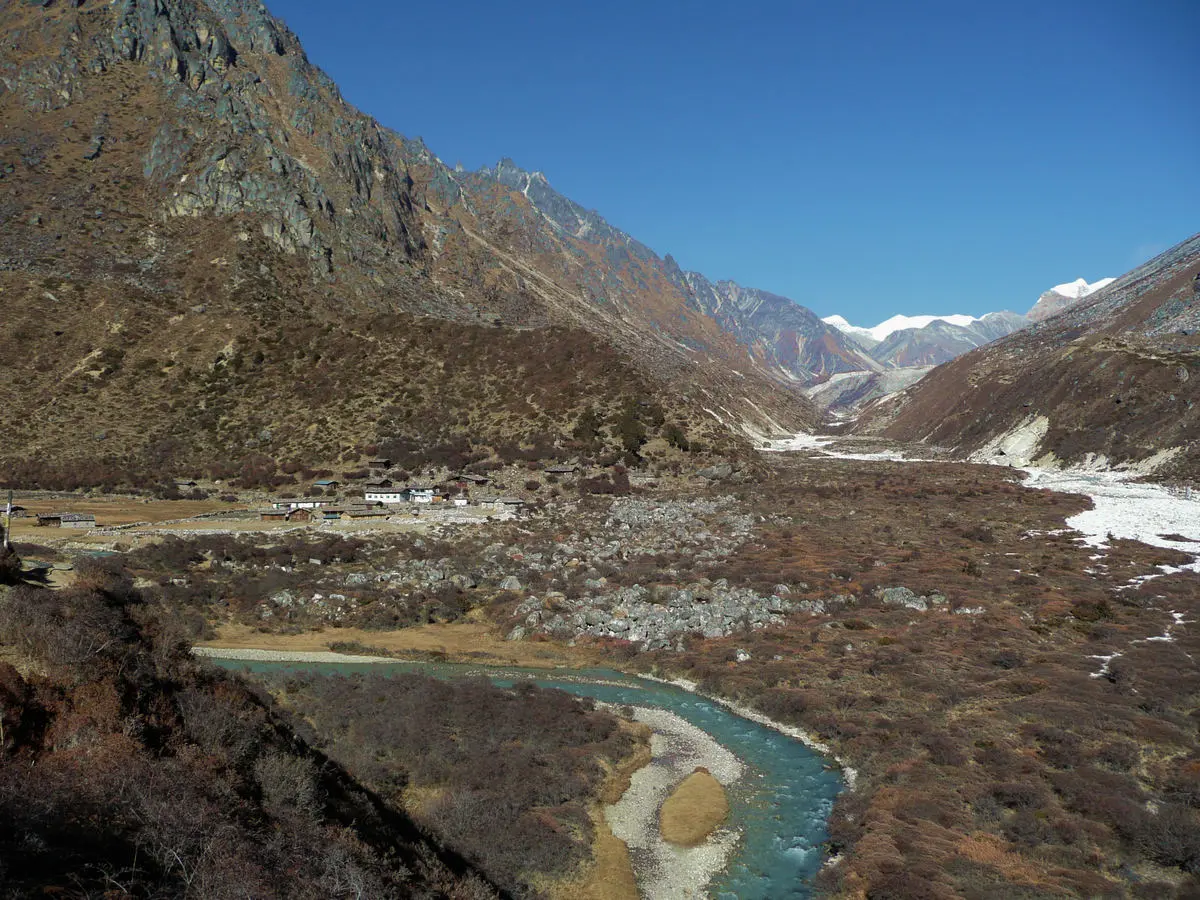
The trek from Amjilosa to Gyabla is a demanding stage, as the trail climbs steadily to a higher altitude. The landscape begins to open into a wider valley. It's approximately 10 km, takes 5-6 hours to trek. Dense forests of Bamboo, rhododendron, and oak make the trail cool. Gyabla is a Tibetan-influenced village, offering a glimpse into local culture and traditions, situated at 2730m high.
Max Altitude: 2730m
Meals: Breakfast, Lunch, Dinner
Duration: 5-6hrs
Distance: 11km
Accommodation: Teahouse
Mode of transportation: Walk
Day 10

Gyabla - Ghunsa

 
The trek from Gyabla to Ghunsa is the main door of the Kanchenjunga North Base Camp Trek. The trail begins with a gradual ascent through a forest of pine and rhododendron. Phale is a village (settlement) of Tibetan refugees. The trail continues along the Ghunsa Khola with wider paths to the Sherpa village (Ghunsa), which is 3427m high. It's around 11km and takes 5-6 hours to walk.
Max Altitude: 3427m
Meals: Breakfast, Lunch, Dinner
Duration: 5-6hrs
Distance: 11km
Accommodation: Lodge
Mode of transportation: Walk
Day 11

Ghunsa free day

It's a day for acclimatization at Ghunsa. The best idea is to do short hikes up to nearby ridges to gain elevation as a principle, hike higher, and sleep low. It's also a day to walk around Sherpa village, see, and learn about their culture, traditions, and many different activities.
Max Altitude: 3427m
Meals: Breakfast, Lunch, Dinner
Accommodation: Lodge
Mode of transportation: Day Hike
Day 12

Ghunsa - Khangpachen

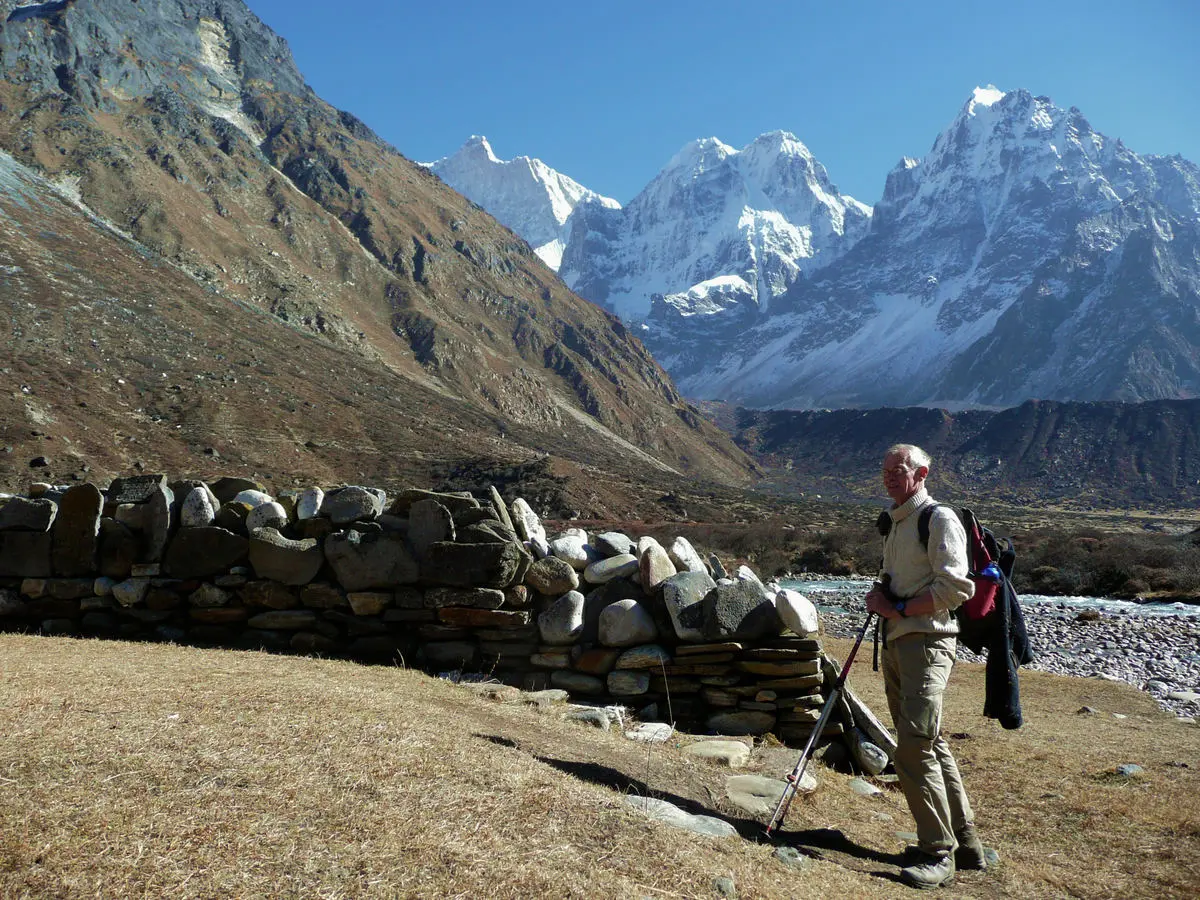
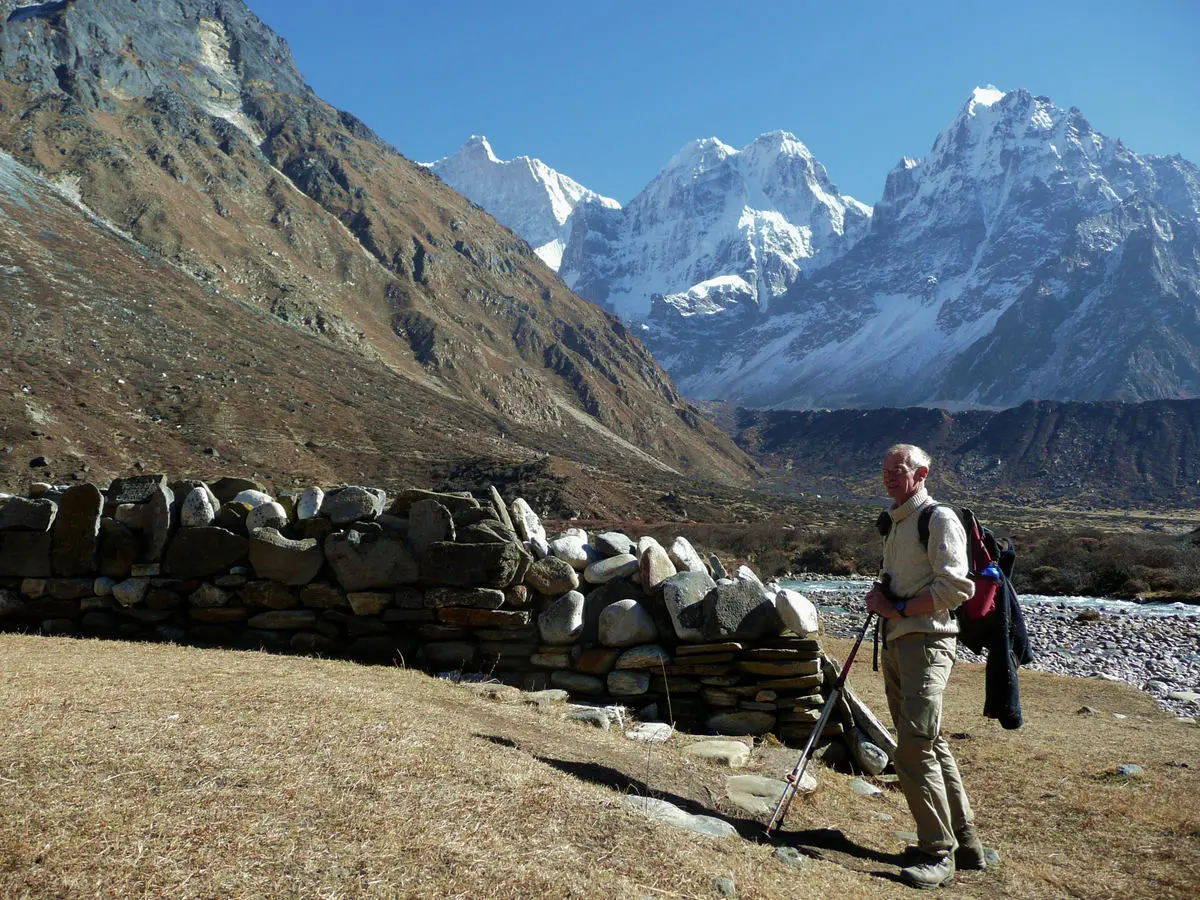
The trek from Ghunsa to Khangpachen along the Ghunsa Khola is one of the most spectacular stages of the Kanchenjunga North to Circuit trek. It's also a day to start walking and stay overnight above treelines. Khangpachen is a beautiful place which is situated at 4050m high. It's around 13km and takes 5-6 hours to walk on foot from Ghunsa. So many alternative destinations for acclimatization around Khangpachen. Normally, people take a rest day at Gunsa, which is good to have a rest after an ascent. But Khangpachen is a better place to have acclimatization because of many different hiking destinations, including the best views of Mt. Jannu (Kumbhakarna) 7710m and other snow-capped peaks. Good accommodation with food is available.
Max Altitude: 4050m
Meals: Breakfast, Lunch, Dinner
Duration: 5-6hrs
Distance: 13km
Accommodation: Lodges
Mode of transportation: Walk
Day 13

Khangpachen - Lhonak

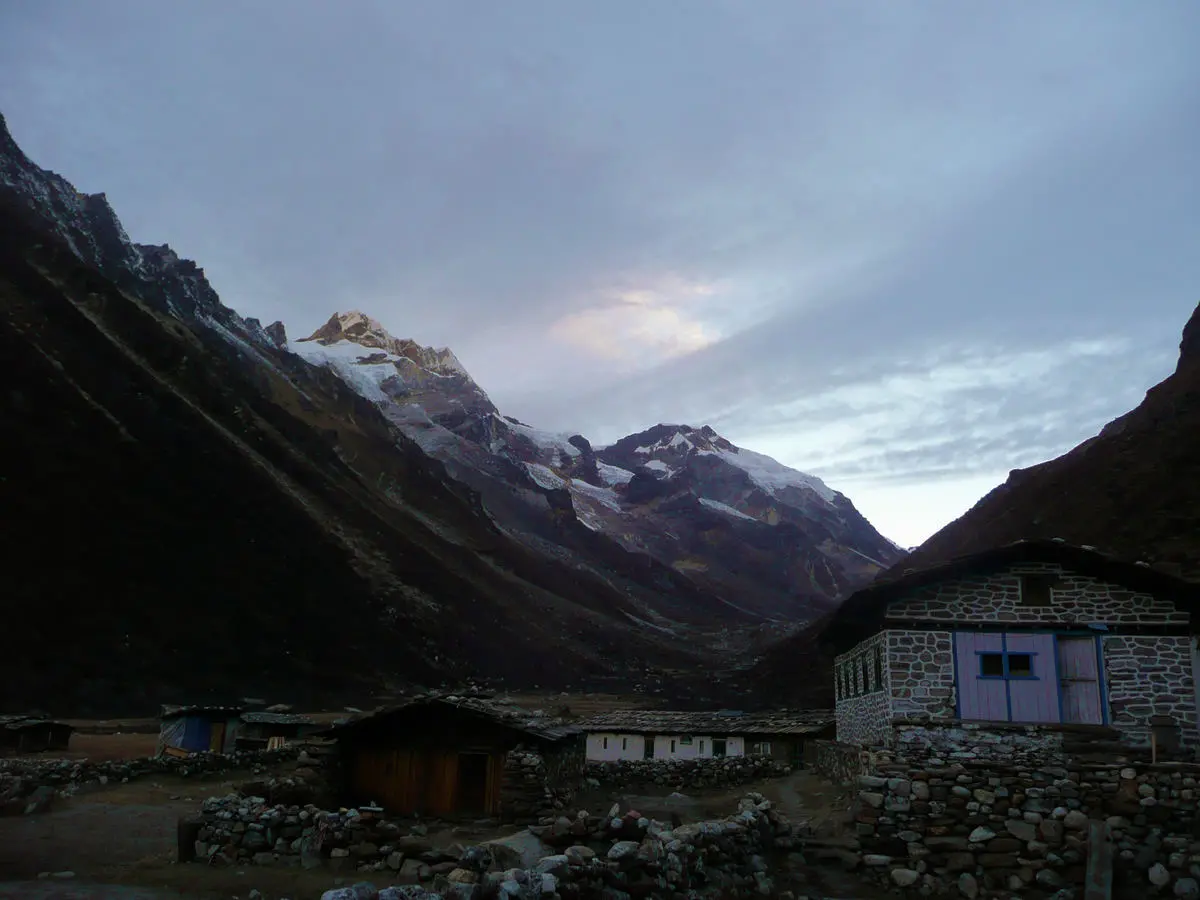
The trek from Khangpachen to Lhonak is beautiful. It's high alpine wilderness with dramatic scenery in the thin air. It's roughly 12km and a 5-6 hour walk. Lhonak is 4780m high, where food and accommodation are available. The trail is exposed, with little vegetation, and can be windy. Also, require careful footing in sections where the trail crosses loose rock. The views of Jannu(Kumbhakarna), alpine landscapes, glaciers, barren high-altitude terrain, and wide open valley are so spectacular, fabulous.

Max Altitude: 4780m
Meals: Breakfast, Lunch, Dinner
Duration: 5-6hrs
Distance: 12km
Accommodation: Lodge
Mode of transportation: Walk
Day 14

Lhonak - Pangpema (North Base Camp) - Lhonak

Lhonak-Pangpema ( Kanchenjunga North Base Camp 5143m) - Lhonak is usually done as a day hike, since there are no proper teahouses at Pangpema. The trekkers go up in the morning, walk around Base Camp, and return to Lhonak for the night. It's around 17- 18 km for a round trip. You need to pack a good enough packed lunch, drinking water, and high-elevation required equipment.

Max Altitude: 4780m / 5143m
Meals: Breakfast, Lunch, Dinner
Duration: 7-9 hrs
Distance: 18km Round trip
Accommodation: Lodge
Mode of transportation: Day Hike
Day 15

Lhonak - Khangpachen

The trek from Lhonak to Khangpachen retraces the same trail you took upward, but the descent is easier and faster too.

Max Altitude: 4780m
Meals: Breakfast, Lunch, Dinner
Duration: 4-5hrs
Distance: 12km
Accommodation: Lodge
Mode of transportation: Walk
Day 16

Khangpachen - Ghunsa

The trek to Ghunsa from Khangpachen retraces the same route you took on the way up. It's an easy descent, which makes you faster to Ghunsa to have good enough rest for the Selele high passes in a few days.
Max Altitude: 3427m
Meals: Breakfast, Lunch, Dinner
Duration: 4-5hrs
Distance: 13km
Accommodation: Lodge
Mode of transportation: Walk
Day 17

Ghunsa - Selele High Camp

The trek from Ghunsa to Selele high camp, which is 4200m. The trail goes through the lush forest of pain and the rhododendron. It's all the ascending, which is 6km and takes 4-5 hours to walk. Some simple teahouses are at high camp and are mostly closed during the off-season or when there is heavy snow around high passes. The views are marvellous.
Max Altitude: 4200m
Meals: Breakfast, Lunch, Dinner
Duration: 4-5hrs
Distance: 6km
Accommodation: Teahouse
Mode of transportation: Walk
Day 18

Selele high Camp - Selele pass - Cheram

It's the big day due to the high passes trek. Selele over 4480m and Sinion La 4646m high passes offer such beautiful panoramic views of Mt.Makalu, Mt. Jannu, and many other snow-capped peaks. It's quite an adventure during high snowfall time and local clods fuggy sometime. It's a long ascent to Selele, a gradual walk for a while, and an ascent to Sinion la and a long, steep descent to Chairam for overnight. It's about 12km and takes 7-9 hrs to walk.
Max Altitude: 3870m
Meals: Breakfast, Lunch, Dinner
Duration: 7-9hrs
Distance: 12km
Accommodation: Teahouse
Mode of transportation: Walk
Day 19

Cheram - Ramche - Oktang - Ramche

The trek from Ramche to Oktang viewpoint to see ( Kanchenjunga South Base Camp) is one of the most scenic side trips in this valley. It's approximately 10km starting from Chairam and then up to Oktang viewpoints and returning to Ramche. It takes 6-7 hours in total. The Mt. Kanchenjunga, Mt. Kanchenjunga north, center, south, Talug, Kabru, Rathong, and Kokthang peaks are iconic views of the region. The border of Sikkim makes our trip a little more exciting and fun.
Max Altitude: 4580m
Meals: Breakfast, Lunch, Dinner
Duration: 6-7hrs
Distance: 10km
Accommodation: Teahouse
Mode of transportation: Walk
Day 20

Ramche - Tortong

The trek from Ramche to Tortong is around 17-18km easy downhill walk-through rhododendron and pine forests. It takes 7-8 hours. The Simbuwa Khola leads the trail the whole day from the starting point, Ramche. The place called Anda Phedi is nice for a lunch stop. Teahouses are available at Tortong with good local food.

Max Altitude: 2995m
Meals: Breakfast, Lunch, Dinner
Duration: 7-8hrs
Distance: 17-18km
Accommodation: Teahouse
Mode of transportation: Walk
Day 21

Tortong - Yamphudin

Max Altitude: 2080m
Meals: Breakfast, Lunch, Dinner
Duration: 7-8 hrs
Distance: 9km
Accommodation: Teahouse
Mode of transportation: Walk
Day 22

Yamphudin - Khebang

The trek from Yamphudin to Kabeli Khola is downward. Kabeli Khola to Khebang is mixed, ascending and descending wards. It's approxmetly 12-13km long day walk on foot, which takes 6-7 hours. Limbu community and their culture are rich around here.

 
Max Altitude: 1915m
Meals: Breakfast, Lunch, Dinner
Duration: 6-7hrs
Distance: 12-13km
Accommodation: Teahouse
Mode of transportation: Walk
Day 23

Khebang Jeep drive to Tharpu

The Jeep drive from Khebang to Tharpu is the final road section of the Kanchenjunga South Base Camp Trek. It's about 52km depending on road conditions and the route taken. It can take 3 to 5 hours by Jeep. Tharpu is a market of the region where there is more access to get in and out.

Max Altitude: 1600m
Meals: Breakfast, Lunch, Dinner
Duration: 3-4hrs
Distance: 52km
Accommodation: Hotel
Mode of transportation: Jeep
Day 24

Tharpu bus drive to Birtamoda, Bhadrapur

The Jeep drive from Tharpu to Birtamode and onward to Bhadrapur is the final road section after completing the trek. Tharpu - Birtamode Bhadrapur is 270km far, which can take 7-8 hours drive

Max Altitude: 91m
Meals: Breakfast,Lunch, Dinner
Duration: 7-8hrs
Distance: 270km
Accommodation: Hotel
Mode of transportation: Jeep
Day 25

Bhadrapur - Fly return to Kathmandu

It's day fly return to Kathmandu and rest of time free.

Max Altitude: 1350m
Meals: Breakfast
Accommodation: Hotel
Mode of transportation: flight
Day 26

Kathmandu free day

Kathmandu free day

Max Altitude: 1350m
Meals: Breakfast
Accommodation: Hotel
Day 27

Departure to home

Departure to home according to your international flight time. We arrange necessary transportation to the Airport.

Max Altitude: 1350m
Meals: Breakfast
Accommodation: Hotel
Mode of transportation: Car / Bus
Are you still confuse from where to start? We have solutions for you.

Cost Details

Includes

  • All necessary Transportation
  • For 4 nights, 3-star level Hotel accommodation on a breakfast basis
  • Car or bus for Kathmandu Valley sightseeing
  • Kathmandu - Bhadrapur - Kathmandu domestic airfare
  • Hotel accommodation during trek 
  • Breakfast, Lunch, and Dinner with tea and coffee during the trek for the guest
  • Expenses for an experienced, English-speaking guide (salary, food, accommodation, and insurance)
  • One porter for two clients' backpacks (total load up to 22kilograms only)
  • Trekking permits (TIMS)
  • Kanchenjunga Conservation (KCAP) fee
  • Kanchenjunga Special permit fee
  • Welcome or farewell dinner in a Nepali cultural restaurant
  • Trekking map, Sun Hat, and duffle bag, each per person
  • Medical assistance
  • Service fee, staff insurance, and equipment

Excludes

  • Clients' International flight costs
  • Lunch/Dinner during the stay in Kathmandu
  • City Guide and sightseeing entrance fees,
  • Wi-Fi and battery charging fees during the trip
  • Luxury Hotel, if required on the trip, a Heli rescue, or a Charter flight/Add-ons
  • Guide and porter tips
  • Arrival visa $30 for 15 days, $50 for 30 days, and $125 for 90 days

(Note: Bring exact change in USD cash for the arrival visa)

Dates & Availability

Your departure date is completely flexible and depends on your preferred schedule and preparation. We are happy to arrange the trek at a time that is most convenient for you. This is a private trip, and we can accommodate your preferred group size while ensuring a comfortable and enjoyable trekking experience.

Select your preferred date

Equipment List

Download List

Kanchenunga North-South Base Camp Trek Equipment Description

Prepare for safety and comfort during the Nepal Trek to tackle diverse climatic conditions and alpine terrain.

Upper Body

  • Moisture-wicking Base Layers
  • Fleece or Down Mid-Layers
  • Waterproof and Windproof Outer Layer Shell
  • Waterproof and Insulated Down Jacket
  • Thin Inner Gloves
  • Waterproof and Insulated Outer Glove

Lower Body

  • Wool or Synthetic Hiking Socks and Thicker Thermal Socks
  • Stiff-soled, waterproof trekking boots
  • Comfortable Shoes or Sandals 

Footwear & Accessories

  • Wool or Synthetic Hiking Socks and Thicker Thermal Socks
  • Stiff-soled, waterproof trekking boots
  • Comfortable Shoes or Sandals for camp

Head & Sun Protection

  • High SPF Sunscreen and Lip Balm with SPF
  • UV Protection Sunglasses
  • Sun Hat and Woolen Beanie
  • Buff or Neck Gaiter

Personal & Medical Kits

  • Large Duffel Bag (Company provides) and Good Daypack
  • Sleeping Bag rated to -10°C
  • Trekking Poles
  • Headlamp with extra batteries
  • Water Bottle or Hydration Bladder (1 to 2 liters) with purification tablets or filter
  • Personal First-Aid Kit (Diamox, blister bandages, pain relievers)
  • Toiletries (Toothbrush, toothpaste, biodegradable soap, quick-dry towel, toilet paper, sanitizer, wet wipes)
  • Power Bank and Portable Charger (Batteries drain much faster in the cold air at High Camp, so keep your power bank wrapped in a spare sock inside your pack)
  • Light spikes that attach to your boots to give traction on ice or hard-packed snow.

Travel Documents

  • Passport: Valid for at least 6 months beyond your travel dates.
  • Visa: Nepal entry visa (can be obtained on arrival at Tribhuvan International Airport or in advance from embassies).
  • Permits: Trekking permits such as the TIMS card (Trekkers’ Information Management System) and restricted area permits (for Mustang, Annapurna, etc.).
  • Insurance papers: Proof of travel insurance covering high-altitude trekking and emergency evacuation.
  • Flight tickets: International and domestic flight confirmations.
  • Other IDs: Sometimes a government-issued ID (like a driver’s license) is useful as backup.

Miscellaneous

  • Personal spending money for souvenirs, snacks, and beverages not included in the package
  • Optional donations at monasteries, temples, or local community projects along the route
  • Extra batteries or a power bank for electronic devices (charging facilities may be limited)
  • Lightweight reading material, journal, or cards for leisure during rest days
  • Small first aid kit for personal use (the company provides a group kit, but personal items are recommended)

NOTE: Sleeping bag, down jacket, and duffel bag can be provided by Advent Himalaya Treks if you do not have your own. Also, free excess luggage storage at the Advent Himalaya Treks store is available for the duration of the trek.

Essential Information

27 Day Kanchenjunga North - South Base Camp Trek Cost 2026/2027

The total cost of the 27 Day Trek to the Kanchenjunga North - South Base Camp starts from US$2399 and varies according to your group size. Variations in the price can also result when you customize your own itinerary, making changes such as hotel upgrades, add-ons, extra nights in Kathmandu, or no porter required for the trek, which can increase or decrease the overall cost.

Best Time for the Kanchenjunga North - South Base Camp Trek

Spring (March to May) and autumn (September to November) offer the most reliable conditions as well as the best views. These two seasons are pretty much the sweet spot that can not go wrong for most treks in Nepal

Spring is when the lower sections around the Tamor - Tortong valley become vibrant with rhododendrons. It's honestly one of the prettiest times to be on this trail if you enjoy seeing the flowers bloom along with the mountains. The weather is also warm, and starting your day early gives you some unforgettable views.

If you're looking for the postcard-like clear mountain view, autumn is the ultimate season for Kanchenjunga. You'll find crystal-clear skies and some of the best visibility of the year for Mt. Kanchenjunga and other ranges around it. The trails are dry during autumn, and the comfortable temperature is like the cherry on top.

Winter treks are also possible, but the heavy snow near Selele La (4,480m) and Sinion La (4,646m) can make the steep trails slippery and a lot more challenging to cross. Well if you're set on a winter attempt, it's a good idea to go with an experienced guide and be prepared for possible delays or route changes. 

Travel Insurance for the Kanchenjunga North - South Base Camp Trek

Travel insurance is non-negotiable. Your policy must explicitly cover:

Trip cancellations, delays, and lost baggage.

  • Medical insurance, high-altitude trekking coverage up to 6,000m. Standard travel insurance often excludes trekking above certain elevations.
  • Emergency Evacuation. In case of altitude sickness or injury, evacuation from remote areas can be extremely costly without good insurance.
  • Accident & injury, protect against trekking - related accidents, includes hospitalization and treatment costs in Nepal or abroad.
  • Repatriation. Ensure safe return home in case of serious medical emergencies.

Key tips:

  • Check the Policy altitude limit for what it covers
  • Verify that the helicopter evacuation is included
  • Keep the insurance with you, and carry a printed copy of your insurance policy as well
  • Buy insurance before flying to Nepal

Logistics - Getting to Kanchenjunga North - South Base Camp Trek and Permits 2026/27

Kathmandu to Bharadpur: It is a short flight to Bharadpur from Kathmandu, and then to Ilam via a drive and to Taplejung, where the actual trek begins.

End of trek: Your days on legs will end in Taplejung, from where you'll take a local jeep drive back to Bhadrapur or Ilam and a final flight or drive to Kathmandu

Permits you'll need

Since Kanchenjunga is right on the border with Tibet and Sikkim, this trek is a restricted area trekking, which means the permit process is a bit more complex than that for Everest or Annapurna. As of 2026, you'll need two permits:

  • Kanchenjunga Restricted Area Permit (RAP) costs around USD 20 per person, per week for the first four weeks (rising to about USD 25/week beyond that). Given this trek runs close to a month, it will roughly cost you USD 80-100 per person for the RAP alone.
  • Kanchenjunga Conservation Area Permit (KCAP) requires a flat fee of around NPR 2,000 (about USD 15-16) per person, covering your entire time in the conservation area regardless of trip length.
  • Previously, the TIMS card was also required, but it is no longer necessary for this trek, since the RAP now covers that requirement.

One more update worth knowing is that, as of March 2026, solo trekkers can now do this trek with just a licensed guide, so you no longer need a minimum group of two to get permits sorted. 

Altitude Sickness - What to Know for Kanchenjunga North - South Base Camp Trek

Since this trek takes you above 5,000m at both base camps, altitude sickness (AMS) is something every trekker needs to prepare for and take seriously.  Common symptoms of the AMS include headache, nausea, vomiting, loss of appetite, fatigue, weakness, dizziness, trouble sleeping. 

HAPE (High-Altitude Pulmonary Edema) is a more serious condition and can shows up as:

  • Shortness of breath even at rest
  • Cough with frothy or pink sputum
  • Chest tightness or rattling in the lungs
  • Blue or gray lips/fingernails
  • Extreme fatigue

This altitude sickness results from rapid ascent, sleeping at a high altitude, alcohol consumption or trekking without proper acclimatization. Therefore, it is really important to keep all these in mind during your time on trail and take proper precautions.

If symptoms appear:

  • Stop ascending right away
  • Rest at the same altitude until symptoms improve
  • Descend 300-1000m if symptoms worsen or don't improve in 24 hours
  • Seek urgent medical help for severe signs (confusion, breathlessness at rest, coughing blood, blue lips)
  • Medication (acetazolamide, dexamethasone) or oxygen can help, but descent remains the most effective treatment

Our guides always carry a pulse oximeter with them and check every trekker. This is to identify any altitude sickness symptoms and prevent it from getting worse. Also, if your guide says to descend, descend immediately. We tell this to every trekker on Day 1, and it's non-negotiable.

Some trekkers use Diamox to prevent altitude sickness, and it is highly recommended to talk to your doctor about this before you travel, not on the trail. In a genuine emergency, helicopter evacuation is available from multiple points on the route. This is exactly why proper travel insurance covering high-altitude trekking and evacuation isn't something to skip

Accommodation on the Kanchenjunga North - South Base Camp Trek

Accommodation here in the Kanchenjunga trail looks quite different from what you'd find on more popular routes like Annapurna, Langtang, Everest, or Manaslu. This route runs through remote valleys and villages where tourism is less popular, resulting in minimal infrastructure development, so don't expect the same level of comfort or infrastructure that you would find on the busier trails.

As you climb higher, there will be more isolated valleys and you'll mostly be staying in basic teahouses with simple rooms, shared facilities, and fairly limited menus. As you move into the villages, things get a bit more comfortable as there are proper lodges offering better rooms and food options. 

Do remember that most teahouses offer charging points and wifi, though usually for a small extra fee (roughly USD$3-$5), and both get patchier the higher you climb. Don't count on the internet as you go higher because you almost get no signal, but the view from this no signal area is the best.

Hot showers are usually available in the trail for some small charge of USD$2-5. Make sure that you carry cash in Nepali Rupees for these Wifi, charging and showers as the teahouses don't really accept cards or USD$.

Food and Meals on the Kanchenjunga North - South Base Camp Trek

Food on this trek is simple, local, and most of all, really delicious. Expect the Nepali staple Dal Bhat most days as this is what you will never not find, and your guides and porter eat this everyday. Meat (chicken or goat) shows up occasionally, though not daily. 

As you step into the more remote sections, where teahouses thin out, meals are often prepared through camping, so you can adjust your menu beforehand with our cook team, and they will prepare it. But do note that not all varieties can be prepared as the resources would be limited and our team cannot possibly carry everything with them as it would go stale or would not be possible to cook in those areas.

There are few local drinks that you must try at least once on this trek.

  • Tongba is a warm, traditional millet beer, served in bamboo, wood, or aluminum containers. Drinking this is also a great way to warm up after a cold trekking day, and most locals drink this before their dinner to relax after working all day. 
  • Yak butter tea is the traditional Sherpa drink, made with tea, salt, butter, and milk.This is the famous drink on almost every high altitude trail in Nepal, and really keeps you warm.

NOTE: You can add a cook guide to come along the trek to ensure that your dietary restrictions are kept in mind while preparing any meal for you. They will personally prepare your meal according to your requirement throughout the trek.

Why Trek Kanchenjunga North - South Base Camp with Advent Himalaya Treks?

Anyone can get you to Kanchenjunga North - South Base Camp. What we think actually matters is who you're doing it with, and what happens around the trek.

  • We're a family-run business, not a franchise. Advent Himalaya Treks was started by Babu with his family by his side and is still run day-to-day by the same family. When you email us or message on WhatsApp before you book, you're talking to Babu who actually knows about the trek you are asking about, not a chatbot or AI.
  • Come learn to make momo with our family. Before or after your trek, you're invited into our family's kitchen for a hands-on momo-making session either for lunch or dinner; anything that works with you. You will get to learn the recipe that has been in our family for decades, taste the actual local and authentic momo; the one we actually cook at our home. It's a small thing, but it's the experience our guests bring up for a long time. Also, if you want to learn to make any other dishes, our family is ready to share the recipe and cook it together with you.
  • Our guides and porters are basically part of the family. Many of our guides and porters have been with us since the beginning, climbing each step alongside. Dawa has been with us for 19 years, and is there on almost every trek.
  • Your guide has more than a decade of experience. The guide from our team who you will trek with will be an experienced guide who has completed this specific trek at least 9-10 times, and has been the main guide for at least 5 times. Also, an assistant guide with 2-3 years of experience will be on the trek with you if you have a large group.
  • Private airport pickup/dropoff. Either Babu, Meera or both of them will be there with a private vehicle to welcome you at the airport as well as to drop you off for your flight back home.
  • Tailor made itineraries. This package you see is a standard structure of how the journey looks like. Each and everything seen in this package can be changed and accommodated as per your or your groups’ preference. 
  • We handle the behind the scene stuff so you don't have to worry about it. Permits, flight rerouting, weather delays, gear rental if you need it; we sort it in the background so your energy goes toward the trek, not logistics. 
  • A real, in-person briefing before you hop on your trail. You'll sit down with Babu or your assigned guide at our office or in the hotel you are staying at, walk through the route, the altitude plan, a gear check, and ask anything that's on your mind. Most of our guests tell us that the trip starts feeling real to them after this briefing.
  • No gear? We've got you covered. Advent Himalaya Treks can provide you with a sleeping bag and down jacket if you don’t have one. And if you require any other gears such as poles, gloves, a headlamp, crampons our team will help you purchase it at Thamel or take you to a rental place if you just want to rent it.
  • Personalized support. You will be provided with personalized support throughout your time in Nepal. If you or your group are sensitive to new food or have specific allergies, a cook guide will be assigned to you and your team during the trek to ensure that your meal is properly taken care of.
Price Per Person
US$2399
  • 2 - 4 Pax US$2599
  • 5 - 7 Pax US$2399
Speak to an Expert
Our Packages specialists are here to assist you with booking and customization.
Babu Gurung
Babu Gurung +977 9851191662