Gokyo Lake - Renjola Pass Trek -16 Days

Gokyo Lake – Renjo La Pass Trek – 16 Days, Summary

The Gokyo Lake – Renjo La Pass Trek is one of the most scenic and naturally decorated adventure destinations. Trekkers never feel bored or demotivated throughout the journey. It begins in Kathmandu and continues all the way to the Himalayas before returning to Kathmandu for departure.

We include 4 nights in a 3-star hotel with breakfast in Kathmandu, a day of city sightseeing, and the full round trip covering Manthali – Lukla – Phakding, Namche Bazaar – Phortse Village, Dhole – Machhermo – Gokyo Lake – Gokyo Ri (5,357m) – Renjo La (5,360m) – Lungdhen – Thame villages.

The Manthali–Lukla flight is one of the most thrilling experiences, offering wide-ranging mountain and valley views. Panoramic vistas of Mt. Everest, Mt. Lhotse, Mt. Makalu, and Mt. Cho Oyu (all over 8,000m), along with many other snow-capped peaks, are truly breathtaking. Advent Himalaya Treks Pvt. Ltd. has designed this package to cover almost everything you need from arrival to departure, ensuring a complete and memorable trekking experience.

At a Glance
Duration
Duration
16 Days
Country
Country
Nepal
Maximum Altitude
Maximum Altitude
5360m
Starts
Starts
Kathmandu / Lukla
Ends
Ends
Lukla / Kathmandu
Group Size
Group Size
Up to 10 Pax
Activities
Activities
Trekking
Best Time
Best Time
October-November / April - May

Overview - What is the 16 Day Gokyo Lake - Renjola Pass Trek like?

The Gokyo Lake - Renjo La Pass Trek is honestly one of those trips where you will never get bored or lose motivation, because the scenery keeps changing and surprises you at every turn. It starts in Kathmandu, takes you deep into the Himalayas, and brings you right back to Kathmandu for your departure.

The round trip from Kathmandu to Manthali - Lukla - Phakding, Namche Bazaar - Phortse Village, Dhole - Machhermo - Gokyo Lake - Gokyo Ri (5,357m) - Renjo La (5,360m) - Lungdhen - Thame villages and finally to Kathmandu covers approximately 135km-160km across 16 Days.

The trek begins with a 35-minute mountain flight to one of the world’s most challenging airports; the Lukla Airport, which is also famously known as Tenzing-Hillary Airport and ends with a return flight to Kathmandu. During peak seasons, the flight to lukla doesn’t operate from Kathmandu, thus you will have to take an early ride to Manthali, Rammechap from Kathmandu and catch the flight.

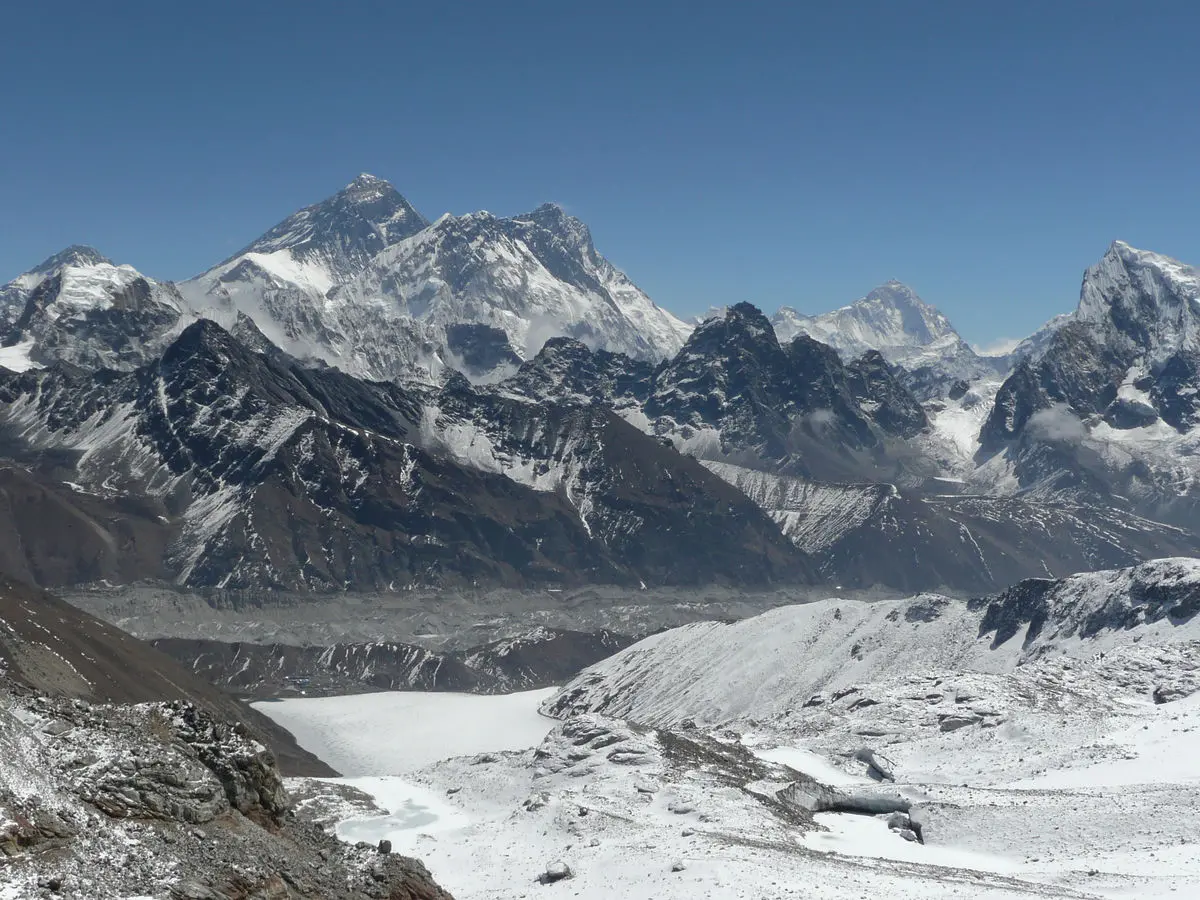
Once you step in the Khumbu valley, be prepared to see the panoramic views of Mt. Everest, Mt. Lhotse, Mt. Makalu, and Mt. Cho Oyu, all towering past 8,000m, along with a whole range of other snow-capped peaks that will make you stop in your tracks more than once.

What makes this trek special is that it takes you off the busier, classic Everest Base Camp trail and into the quieter, equally stunning Gokyo Valley, where you get to see the turquoise glacial lakes along with some of the world's highest peaks. Climbing up to Gokyo Ri and later crossing the Renjo La Pass gives you some of the best up-close views of Everest and its surrounding mountains without the crowds you'd typically encounter on the EBC route.

One thing we always recommend to trekkers is to have 2 to 3 buffer days at the end of Gokyo Lake - Renjola Pass Trek, before your departure to home. The lukla flight is highly affected by weather changes, and can be delayed or cancelled by a day or two. So, to ensure that you catch your international flight on time, it is highly recommended to keep some spare days in your itinerary.

Unlike most standard itineraries of 14 Day Gokyo Lake - Renjola Pass Trek, our 16 Day Gokyo Lake - Renjola Pass Trek includes buffer days, which covers potential Lukla flight delays and allows you to have a slow, safe, and comfortable journey.


17 Day Gokyo Lake - Renjola Pass Trek Highlights

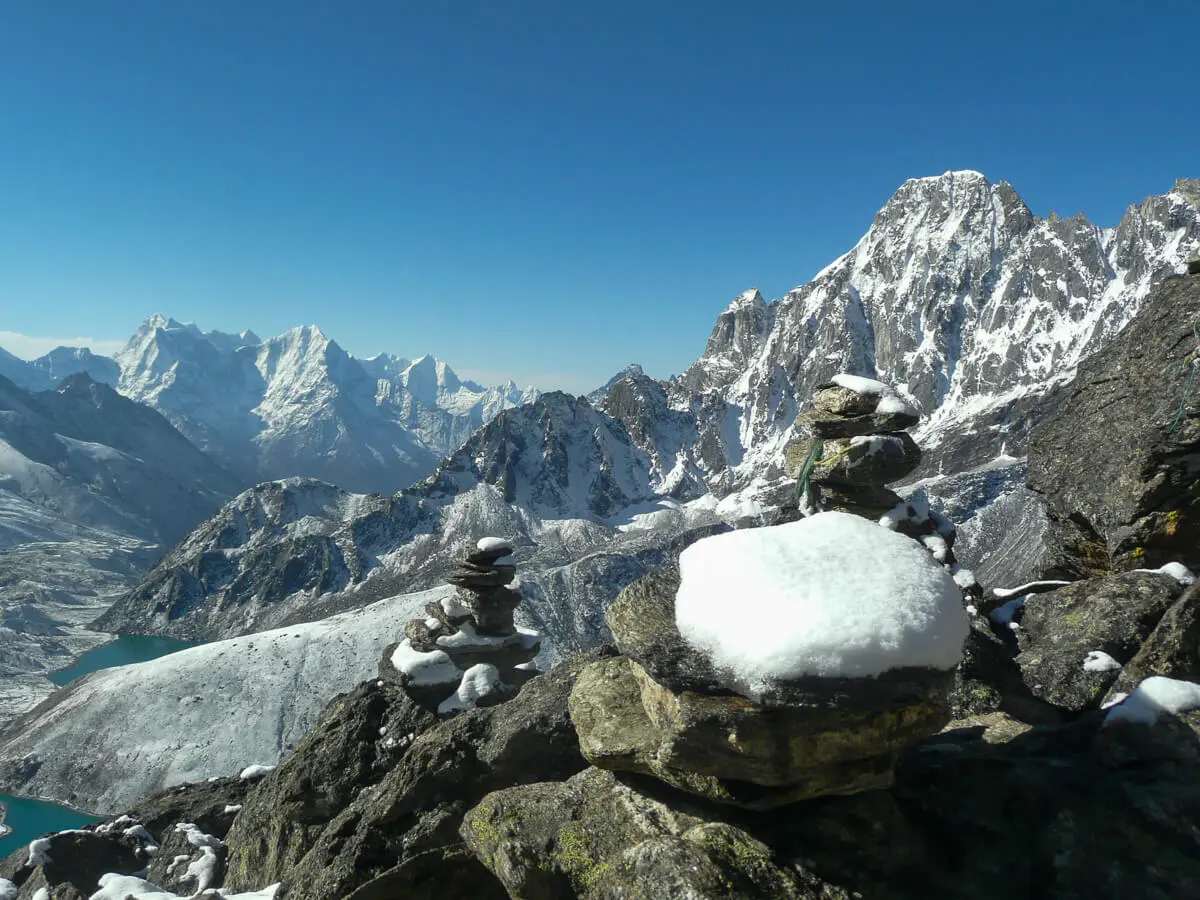
  • Cross Renjo La Pass (5,360m), one of the best high viewpoints in the Khumbu, where you stand almost eye-level with Everest, Lhotse, Makalu, and Cho Oyu all at once, with Tibet visible on the other side.
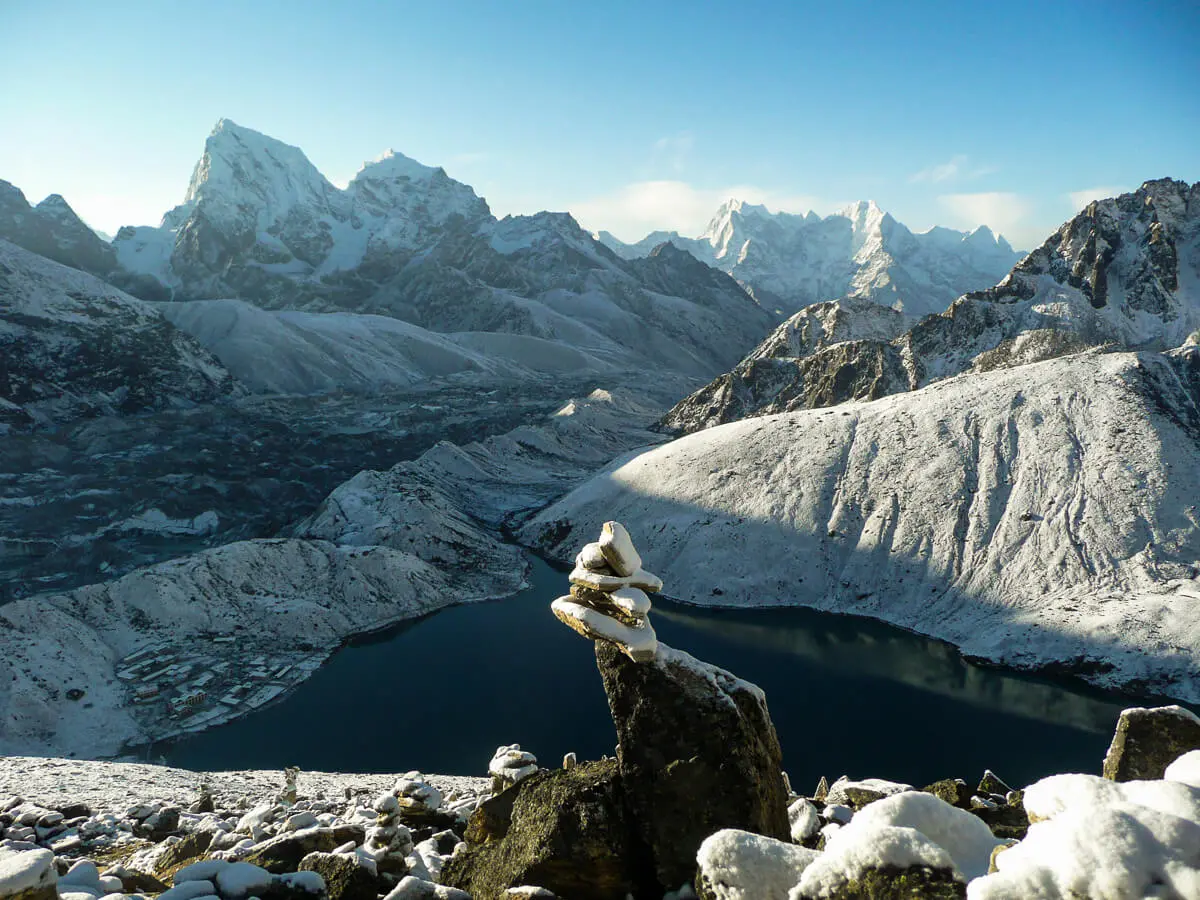
  • Summit Gokyo Ri (5,357m) at sunrise, watching the first light hit Everest's summit pyramid, one of the most rewarding viewpoints in the entire Everest region.
  • Walk alongside the turquoise Gokyo Lakes, a chain of glacial lakes fed by melting ice, including the sacred Dudh Pokhari beside Gokyo village.
  • Trek beside the Ngozumpa Glacier, the longest glacier in Nepal, close enough to hear it creak and shift as it moves.
  • Complete a full loop instead of an out-and-back, descending through Lungden and the Thame Valley, so you're covering fresh ground on most of the trail rather than retracing your steps.
  • Visit Thame village, the birthplace of Tenzing Norgay, and its centuries-old monastery, which sees far fewer visitors than busier stops like Tengboche.
  • Experience quieter trails and villages compared to the classic EBC route, since the Gokyo side of the Khumbu sees noticeably less foot traffic than the main Everest highway.
  • Get panoramic views of four 8,000m peaks (Everest, Lhotse, Makalu, Cho Oyu) from the top of Renjo La, a view many say rivals or beats the classic Kala Patthar shot.


Difficulty - Who Can Do the Gokyo Lake - Renjola Pass Trek/Age?

This is one of the most frequently asked questions to us as well as throughout the internet. Well there is no restriction to chasing your interest, and therefore no age limit to do the Gokyo Lake - Renjola Pass trekking as well. As long as you are in good health and have the willpower to do it, you are WELCOME on board with us !!

Age isn't the deciding factor for this trekking, your general fitness and how well you've prepared are. You don't need to be a mountaineer, or even a serious athlete, to do this trek. Trekking to the Gokyo Lake - Renjola Pass is ranked moderately difficult because it is not just a stroll, but doesn't demand extreme physical fitness either. Well it sure is a bit harder than the regular Everest Base Camp Trek.

One thing we've consistently noticed after guiding hundreds of trekkers through the Everest region is that altitude is what affects people the most, not physical fitness. The strongest or experienced hikers don't always have the easiest time, while those who walk at a steady pace, stay hydrated, and take acclimatization seriously often reach base camp feeling stronger than they expected. 

Here's what actually matters:

  • Fitness level: You'll be walking 5-7 hours a day on hilly, sometimes rocky terrain. If you can comfortably do that or are willing to prepare for it over a couple of months, you'll be fine throughout the trek. Regular walking, hiking, or cardio a few times a week beforehand is highly recommended makes a real difference during the trek.
  • Experience: None needed. No ropes, no crampons, no technical climbing; just steady walking at altitude. Most first-time trekkers make it to base camp every season with just general fitness, no prior experience, and willingness. 
  • Health conditions: If you have a heart, lung, or other chronic condition, please consult with your doctor before booking. Altitude puts extra strain on the body, even for people who are fit, and have done other treks prior to the Gokyo Lake - Renjola Pass trek. So it's worth getting the all-clear first rather than finding out on the trail. Better be safe than sorry
  • What actually matters most: Patience, a steady pace, a willingness to take the acclimatization days seriously instead of rushing, and the ability to take the instructions and recommendations of your guide seriously is what matters the most.

Therefore, if you're reasonably active, willing to prep a bit, ready to embrace the high altitude trekking, and genuinely curious about Sherpa culture and the Himalayas, then this Gokyo Lake - Renjola Pass Trek is built for you.

If you're still unsure whether you're fit enough for this one, feel free to reach out to us. We're happy to walk you through what to expect and help you figure out if this is the right trek for your fitness level and experience.

Gokyo Lake - Renjola Pass Trek -16 Days Itinerary

Day 1

Kathmandu arrival

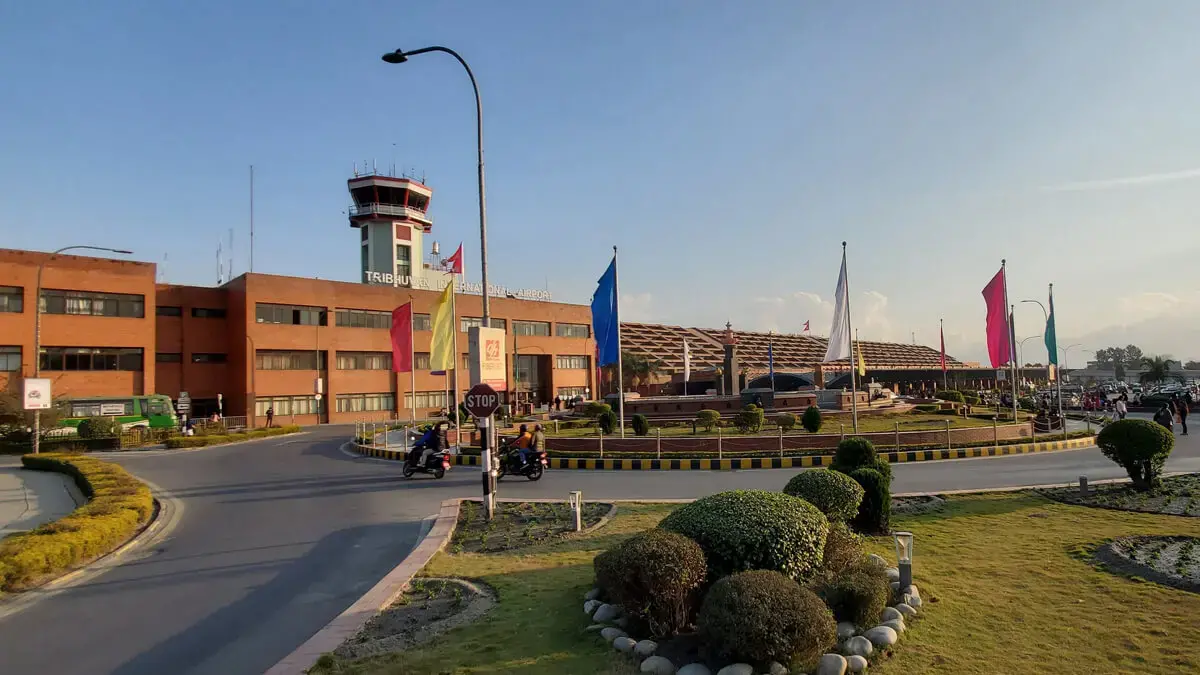
It's activities to welcome guests at Tribhuwan International Airport and transfer to Hotel with 3 stars level accommodation with breakfast. It's time to intrudece with guide and explain about the trip, to share necessary information.
Max Altitude: 1350m
Meals: Breakfast
Duration: 40min
Distance: 5-6km
Accommodation: 3 Stars Hotel
Mode of transportation: Car/Bus
Day 2

Kathmandu city sightseeing

It's Kathmandu valley sightseeing day around Swayambhunath, Bauddhanath, Pasupatinath, and Kathmandu Durbar Square, including the living God Kumari House. It takes 4 to 5 hours for sightseeing activities. We organize a city guide and the necessary transportation for the activities. The entrance fee would go separately to the participants. It's also a day for trip preparation and to join the welcome dinner party at the Nepali Traditional Restaurant in the evening.
Max Altitude: 1350m
Meals: Breakfast
Duration: 4-5hrs
Accommodation: 3stars Hotel
Mode of transportation: Car / Bus
Day 3

Kathmandu - Manthali - Lukla - Phagding

Depending on the season and flight availability, you may need to take an early-morning domestic flight from Kathmandu to Lukla. During the busy trekking seasons, when direct Kathmandu–Lukla flights are limited, flights may operate from Manthali Airport (Ramechhap) instead. In that case, you will need to leave Kathmandu very early in the morning and drive to Ramechhap Airport to catch your flight to Lukla. Your return flight from Lukla to Kathmandu may also operate through Ramechhap, depending on the seasonal flight schedule.
 
Flights to Lukla are highly dependent on weather conditions, and delays or changes are common. Therefore, travelers need to be flexible and prepared to start early and wait if necessary. Our team will manage the transportation, flight arrangements, and necessary coordination to help you reach Lukla as smoothly as possible.
 
After landing at Lukla, your trek begins through beautiful Sherpa villages and the green Himalayan landscape toward Phakding. The trail follows the Dudh Koshi River, with impressive views of Mount Numbur and Kusum Kanguru along the way. The walk is relatively short on this first trekking day, allowing you to enjoy the scenery, villages, monasteries, and local way of life.
We arrange comfortable accommodation and meals at selected hotels or lodges. The lodges along this route generally provide good food and have experienced staff familiar with serving trekkers.
 
If you have extra time and are interested in experiencing authentic Sherpa village life, our guide can also suggest a visit to Sano Gumela, a small Sherpa settlement located slightly above the main trail. Here, you can see traditional homestays, local gardens, and everyday village life. For small groups of around 2–6 people, an overnight homestay may also be possible, subject to availability. Staying with a local family provides a more personal cultural experience while also directly supporting the local community.
 
Your guide will explain the possibilities and help arrange a suitable experience during the trek.
Max Altitude: 2610m
Meals: Breakfast - Lunch - Dinner
Duration: 35min / 4-5hrs
Distance: 10km
Accommodation: Teahouse / Lodge
Mode of transportation: Flight / Walk
Day 4

Phagding to Namche Bazar

It's a day trek to Namche Bazar along the Dudh Koshi river after crossing more than 4 or 5 times by suspension bridges. It takes, depending on walking capacity, 5 - 6 hours. Jorsalle is the main entrance to Sagarmatha National Park. A big ascending path is above Namche Bazar from the riverside near the Hillary Bridge. Toktok, Bhyankar, Chhyuma, and Manjo are Sherpa villages that offer good homestays, lodges, hotels, and camping sites. Naturally and culturally great day is it.
Max Altitude: 3440m
Meals: Breakfast - Lunch - Dinner
Duration: 5-6hrs
Accommodation: Teahouse / Lodge
Mode of transportation: Walk
Day 5

Namche Bazar Acclimatize day

It is a free day in Namche Bazar. You can have breakfast at your preferred time and walk around View Point near Namche Bazar, or a little further up to Everest View Hotel and continue to Khumjung, Khunde village side walk, and return to Namche Bazar for a walk around. It's good for high-altitude acclimatization.
Max Altitude: 3440m
Meals: Breakfast - Lunch - Dinner
Duration: 4-5hrs
Accommodation: Teahouse / Lodge
Mode of transportation: Day Hike
Day 6

Namche Bazar - Phorche Village

It's a day trek to Phortse village along the Mani Danda, Phortse Thanga river side, and through the Rhododendron forest to the village of Phortse. It's an old village but all truning like a tourist hub city because of the nice hotel, lodges, and food available. Culturally rich village as well as naturally too. They have a school, a clinic, a monastery, and community climbing centers. Monk's deer and Himalayan pheasant are abundant in the area, which can fulfill our wildlife experience. We can visit the monastery, the climbing center, and the village for cultural experiences.
Max Altitude: 3810m
Meals: Breakfast - Lunch - Dinner
Duration: 5-6hrs
Distance: 12km
Accommodation: Teahouse/ Lodge
Mode of transportation: Walk
Day 7

Phorche village to Dhole

Max Altitude: 4110m
Meals: Breakfast - Lunch - Dinner
Duration: 3-4hrs
Distance: 5km
Accommodation: Teahouse / Lodge
Mode of transportation: Walk
Day 8

Dhole to Machhermo

Max Altitude: 4470m
Meals: Breakfast - Lunch - Dinner
Duration: 3-4hrs
Distance: 8km
Accommodation: Teahouse / Lodge
Mode of transportation: Walk
Day 9

Machhermo to Gokyo Lakes

Max Altitude: 4790m
Meals: Breakfast - Lunch - Dinner
Duration: 4-5hrs
Distance: 8km
Accommodation: Teahouse / Lodge
Mode of transportation: Walk
Day 10

Gokyo - Early Hike upto Gokyo Ri - Gokyo

Max Altitude: 4790
Meals: Breakfast - Lunch - Dinner
Duration: 3-4hrs
Distance: 3km
Accommodation: Teahouse / Lodge
Mode of transportation: Walk
Day 11

Gokyo Lake - Renjo La - Lungden

It's the third pass of three high passes. It's good to start early in the morning after a good breakfast. The trail is easy at the starting parts and slowly ascends to the glacier parts and steeply up to Renjola 5360m. It is approximately 13km to the top and to Lungden village from Gokyo Lake. It's a challenging but highly rewarding trek that takes 7 to 9 hours on foot.
Max Altitude: 4380m
Meals: Breakfast - Lunch - Dinner
Duration: 7-8hrs
Distance: 14km
Accommodation: Teahouse / Lodge
Mode of transportation: Walk
Day 12

Lungden - Thame - Namche Bazar

It's a long day, all the way easy descent to Thame along the Bhote Koshi Khola and many different villages of Sherpa people. It would be nice to have a downtown cocktail ceremony at Namche Bazar after almost the whole trip without alcohol due to the high passes trip. Many different villages are there to stop for lunch before continuing to Namche Bazar. It's easy and enjoyable. It takes 6-7 hours to walk.

Max Altitude: 3440m
Meals: Breakfast - Lunch - Dinner
Duration: 6-7 hrs
Distance: 21km
Accommodation: Teahouse / Lodge
Mode of transportation: Walk
Day 13

Namche Bazar - Lukla

Max Altitude: 2840m
Meals: Breakfast - Lunch - Dinner
Duration: 6-7hrs
Distance: 18km
Accommodation: Teahouse / Lodge
Mode of transportation: Walk
Day 14

Kathmandu - Manthali - Kahtmandu

It's days again depend on the season, flight from Lukla to Kathmandu or Manthali, and drive to Kathmandu. Either way, your overnight would be in Kathmandu. We organized the necessary transportation as the situation required.
Max Altitude: 1350m
Meals: Breakfast
Duration: 35min / 7hrs
Accommodation: 3stars Hotel
Mode of transportation: Flight / Drive
Day 15

Kathmandu full day free

It's a free day in Kathmandu. It would depend on your choices to walk around Thamel or visit Bhaktapur Durbar Square and Patan Durbar Square for sightseeing. Both places are historical. We can arrange transportation and a city guide as you require.
Max Altitude: 1350m
Meals: Breakfast
Accommodation: 3 stars Hotel
Day 16

Departure to home or other program

It's the final day, departure to home or another program. We organized the necessary transport to the international airport according to your departure time. We suggest 3 hours before to the airport, then your flight departure time.

Max Altitude: 1340m
Meals: Breakfast
Duration: 40 min
Distance: 5-6km
Mode of transportation: Car / Bus
Are you still confuse from where to start? We have solutions for you.

Cost Details

Includes

  • Airport pickup and drop-off for both arrival and departure
  • All necessary transportation throughout the trek
  • 4 nights at 3-star level Hotel accommodation on a breakfast basis
  • A Car or bus for Kathmandu Valley sightseeing
  • Kathmandu - Lukla - Kathmandu for both ways domestic airfare
  • Hotel accommodation during the trek
  • Breakfast, Lunch, and Dinner with tea and coffee during the trek for the guest
  • Expenses for an experienced, English-speaking guide (salary, food, accommodation, and insurance)
  • One porter for two clients' backpacks (total combined load of 22 kilograms only)
  • An extra helper guide for groups above 4 pax.
  • Trekking permits (TIMS)
  • Sagarmatha National Park fee
  • Pasang Lhamu Village Development Fee 
  • Welcome or farewell dinner in a Nepali cultural restaurant
  • Trekking map, Sun Hat, and duffle bag, each per person
  • Medical assistance
  • Service fee, staff insurance, and equipment


Excludes

  • Clients' International flight costs
  • Lunch and dinner during the stay in Kathmandu
  • Kathmandu City Guide and sightseeing entrance fees,
  • Wi-Fi and battery charging fees during the trip
  • Upgraded hotel accommodation cost / Add-ons 
  • Heli rescue, or a Charter flight (if required during the trek)
  • Guide and porter tips
  • Arrival visa $30 for 15 days, $50 for 30 days, and $125 for 90 days

(Note: Bring exact change in USD cash for the arrival visa)

Equipment List

Download List
The Gokyo Lake - Renjola Pass Trek (16 days), you’ll need a carefully layered clothing system, sturdy footwear, and essential high-altitude gear. Nights can drop to −10°C or lower, so a down jacket and sleeping bag rated for extreme cold are non-negotiable.

Upper Body

  • Body layers: 2–3 moisture-wicking thermal tops 
  • Mid layers: Fleece or lightweight down jacket.
  • Insulation layer: Heavy down jacket 
  • Shell layer: Waterproof/windproof jacket 

Lower Body

  • Thermal bottoms: 2 sets for warmth.
  • Trekking pants: 2–3 pairs, quick-dry.
  • Waterproof over-trousers: For snow and wind protection.
 

Footwear & Accessories

  • Trekking boots: High-cut, waterproof, broken-in (never new).
  • Camp shoes/sandals: For evenings in teahouses.
  • Socks: 4–5 pairs (liner + insulated).

Head & Sun Protection

  • Warm hat: Insulated beanie for freezing mornings.
  • Sun hat: Wide-brimmed for UV protection.
  • Buff/neck gaiter: Shields against wind and dust.
  • Sunglasses: UV-protected, glacier glare is intense.
  • Headlamp: With spare batteries, essential for pre-dawn climbs.

Personal & Medical Kits

  • Sunscreen SPF 50+ and lip balm with SPF.
  • First aid kit + personal medications.
  • Diamox (consult doctor).
  • Hand sanitizer & wet wipes.
 

Travel Documents

  • Permits: Sagarmatha National Park & Khumbu Pasang Lhamu.
  • Cash: ATMs are unreliable beyond Namche Bazaar.
  • Energy snacks: Nuts, chocolate, energy bars.

Miscellaneous

  • Sleeping bag: Comfort rating −10°C to −15°C (rentable in Thamel).
  • Trekking poles: Save your knees on descents.
  • Daypack: 25–35L for layers, water, valuables.
  • Duffel bag: For porter load (Company provides) 
  • Water purification: Tablets, SteriPen, or filter.
  • Power bank: Charging costs rise with altitude.

NOTE: Sleeping bag, down jacket, and duffel bag can be provided by Advent Himalaya Treks if you do not have your own. Also, free excess luggage storage at the Advent Himalaya Treks store is available for the duration of the trek.

Essential Information

16 Day Gokyo Lake - Renjola Pass Trek Cost 2026/2027

The total cost of the 16 Day Trek to Gokyo Lake - Renjola Pass starts from US $1699  per person and varies according to your group size. Variations in the price can also result when you customize your own itinerary, making changes such as hotel upgrades, add-ons, extra nights at Kathmandu, or no porter required for the trek, which can increase or decrease the overall cost.

Best Time for the Gokyo Lake - Renjola Pass Trek

Honestly, if you can pick your dates, spring (March-May) or autumn (September-November) is the best time. Both give you good weather and most importantly clear mountain views, which is what you're out there for.

Gokyo Lake - Renjola Pass Trekking in Spring season ( March-May)

Spring is a lovely season if you enjoy colorful trails, and love to see the rhododendron forests burst into bloom. Daytime temperatures during spring usually range between 11-18°C, with nights dropping well below freezing as you climb higher toward Gokyo and Renjo La Pass.

The trails are generally dry and stable around this period, though afternoon can get foggy, so our guides always recommend early start in the morning for the clearest view. Also, spring is a peak season and the routes are often crowded, which means if you prefer a quiet trail spring might not be the best one for you. However, Gokyo Lake - Renjo la Pass trail is a bit less crowded compared to the EBC route.

Gokyo Lake - Renjola Pass Trekking in Autumn season (September-November)

This season is the one most people go for, and therefore is the most crowded one; even more than the Spring season. But there are reasons why this is the most popular one.

Daytime temperatures during autumn typically range between 7-14°C, with nights getting considerably colder near Gokyo and Renjo La Pass. By this point in the year the monsoon ends, leaving behind clear air and some of the best visibility you'll get all year, providing excellent views of Everest, Lhotse, Makalu, and Cho Oyu. 

Furthermore, October and November are the festive months here in Nepal. The festivals Dashain and Tihar are the biggest ones celebrated, and to experience these festive vibes most plan their trek around the autumn season. 

If your dates match the timeline of these festivals, you can experience it with our family. Most of our previous guests have been a part of our celebration and this has made us even closer, marking this season a special one for us.

Gokyo Lake - Renjola Pass Trekking in Winter season (December-February)

The winter season is not quite famous for the Gokyo Lake - Renjo la Pass Trek, but it is possible too and on top of that, genuinely beautiful. The air is clear and there are very few people on the trail, making it ideal for those avoiding big crowds. 

Daytime temperatures typically hover in the low single digits, while nights can fall to -15°C or colder near Gokyo Lake and the pass itself. Winter is very cold and with constant snow fall on the Renjo La Pass, navigation becomes much more challenging, so this season is better suited for and mostly recommended for experienced trekkers who are comfortable with snow and cold rather than first timers. 

Gokyo Lake - Renjola Pass Trek Trekking during off-season (June-August)

Summer or monsoon season is not an ideal time for the Gokyo Lake - Renjo la Pass Trek, but that said, it’s the quietest the Khumbu valley ever gets, and you even get to see the clear views if you’re flexible with timing.

Between June to August, the daytime temperatures are mild, but humid, with regular afternoon rain that turns lower trails muddy and many leeches are also seen at this time.

Therefore, the downside being muddy trails, leeches, and humid weather, if you prefer trekking during a quiet, less crowded time, June to August is ideal for you.


Travel Insurance for the Gokyo Lake - Renjola Pass Trek

Travel insurance is non-negotiable. Your policy must explicitly cover:

  • Trip cancellations, delays, and lost baggage.
  • Medical insurance, high-altitude trekking coverage up to 6,000m. Standard travel insurance often excludes trekking above certain elevations.
  • Emergency Evacuation. In case of altitude sickness or injury, evacuation from remote areas can be extremely costly without good insurance.
  • Accident & injury, protect against trekking - related accidents, includes hospitalization and treatment costs in Nepal or abroad.
  • Repatriation. Ensure safe return home in case of serious medical emergencies.

Key tips:

  • Check the Policy altitude limit for what it covers
  • Verify that the helicopter evacuation is included
  • Keep the insurance with you, and carry a printed copy of your insurance policy as well
  • Buy insurance before flying to Nepal


Logistics - Getting to Gokyo Lake - Renjola Pass Trek and Permits 2026/27

Kathmandu to Lukla: It is normally a 30-40 minute flight. But during peak season (mid-March to mid-May, and mid-September to mid-December), flights often get rerouted through Manthali Airport in Ramechhap instead of Kathmandu, because of runway congestion. This means a 4-6 hour drive to Ramechhap first, then a shorter 20-minute flight up to Lukla. 

End of trek: you'll fly back from Lukla to Kathmandu (or Manthali, followed by the drive back). 

Two permits are required: 

  • Sagarmatha National Park Entry Permit: around NPR 3,000 per person
  • Khumbu Pasang Lhamu Rural Municipality Permit:  around NPR 2,000 per person

We handle both the permits. You just provide us with a scanned passport copy so that we can take care of the paperwork. Your guide carries the original permits and shows them at the Sagarmatha National Park checkpoint just past Monjo, you can just enjoy the view with zero hassle.

Once again the Lukla flight is weather dependent, and can be delayed. So it is always safe to have 2-3 buffer days after your Everest Base Camp Trek. If a flight does get delayed, we sort the rebooking immediately, but if it drags on, a shared helicopter is available as a backup, at extra cost


Altitude Sickness - What to Know for Gokyo Lake - Renjola Pass Trek

The Gokyo Lake - Renjola Pass Trek is a real altitude trek. You'll go from Lukla at 2,860m to Renjo la at 5,360 meters where altitude sickness becomes a genuine concern, regardless of how physically fit or fast you are.

Mild symptoms can start showing up when you reach roughly above 2,500-3,000m, which is around Namche. Also, serious altitude sickness (AMS, HAPE, HACE) is less common but can occur above 4,000 m. This is exactly why acclimatization days are important and built in within our itinerary. These aren't optional, no matter how good or energetic you're feeling.

Watch for: headache (usually the first sign), nausea, loss of appetite, poor sleep, dizziness, unusual fatigue. A mild headache at altitude is normal and common. A headache that's getting worse, especially alongside vomiting, confusion, or trouble walking straight means descend immediately, no debate. Safety comes first, completion of trek is not as important as your health.

Our guides always carry a pulse oximeter with them and check every trekker from Namche onward. This is to identify any altitude sickness symptoms and prevent it from getting worse. Also, if your guide says to descend, we descend immediately. We tell this to every trekker on Day 1, and it's non-negotiable.

Some trekkers use Diamox to prevent altitude sickness, and it is highly recommended to talk to your doctor about this before you travel, not on the trail. In a genuine emergency, helicopter evacuation is available from multiple points on the route. This is exactly why proper travel insurance covering high-altitude trekking and evacuation isn't something to skip.


Accommodation on the Gokyo Lake - Renjola Pass Trek

On this 16-Day Gokyo Lake - Renjo La Pass Trek, you'll stay in teahouses/lodges for about 11-12 days and in a hotel in Kathmandu for the remaining nights.

Teahouses in the Khumbu region on this route are basic, family-run and that’s the charm of every trek here in this region as well throughout other parts of Nepal. You'll stay in twin-share rooms, thin mattresses, shared toilets (mostly squat-style the higher you climb), and no heating in the bedrooms themselves. The dining room, warmed by a wood or yak-dung stove, is where you'll actually spend your evenings talking about your day and discussing the plan with your guide for the next day. This is honestly the best part of most nights on this trek; getting to know about your guide, porters and other fellow trekkers in a warm room.

Hot showers are usually available at teahouses below about 4,000m for a small fee (roughly $3-$5, more as you climb the gas has to be carried up by hand). Above that, don't expect one, and do not take showers often, especially once you're heading toward Gokyo and over Renjo La to avoid getting cold at altitude.

Wi-Fi is available at most teahouses on the trail up to Gokyo for a small daily charge of USD$2-3, but it gets patchy to practically non-existent once you're past Gokyo and heading toward Renjo La and Lungden. And speaking of Lungden, it's worth mentioning that this is genuinely the most basic stop on the whole route, but after 8-10 hours crossing the pass, most trekkers are too exhausted to care, it's just part of the adventure at that point.Also, for charging your phone or camera, bring a power bank, because paying per charge at 5,000m adds up to your expense fast.

As this trek passes through some of the more popular villages like Namche Bazaar, Phakding, and Gokyo, you'll find slightly more comfortable teahouses here compared to the higher, more remote stops. If you're looking for an upgrade to luxury lodges,it is available in Lukla, Phakding, and Namche Bazaar, and can be added within this package as well but with an added cost.


Food and Meals on the Gokyo Lake - Renjola Pass Trek

Every meal is included across the trekking days, plus breakfast at your Kathmandu hotel.

Dal bhat (a plate of rice, lentil soup, vegetable curry, pickle) is the trek's staple and most reliable meal at every altitude, and it's usually all-you-can-eat. Our guides and porters eat it themselves almost every day on the trail. They are true to a famous Nepali saying “Dal Bhat Power, 24 hour”.

Below and in Namche, the menu has lots of options: eggs, pancakes, porridge, noodles, pasta, pizza, momos, Tibetan bread, soups. But once you're above 3,500m or so, this option narrows down a bit. Even though the menu shrinks, you must have your fill so that you are fit and energized to complete your trek.

One thing we always mention: avoid meat above Namche. Most teahouses this high up don't have a reliable refrigerator, and the meat could be a few days old. So, to avoid any kind of sickness, it’s best to look out for your meal choice.

Vegetarian trekkers or trekkers with any sort of allergies are advised to inform us when booking the trek, so that we can inform the tea houses about your condition beforehand to prevent any kind of mix up in your meals.

NOTE: You can add a cook guide to come along the trek to ensure that your dietary restrictions are kept in mind while preparing any meal for you. They will personally prepare your meal according to your requirement throughout the trek. 

Also, it is always a best option to bring snacks from Kathmandu if you can. Chocolate, nuts, energy bars are cheaper there, and very useful to grab a bite during your trek or on the Kala Patthar and base camp days when options are limited.


Why Trek Gokyo Lake - Renjola Pass with Advent Himalaya Treks?

Anyone can get you to Gokyo Lake and Renjola Pass. What we think actually matters is who you're doing it with, and what happens around, before and after the trek.

  • We're a family-run business, not a franchise. Advent Himalaya Treks was started by Babu with his family by his side and is still run day-to-day by the same family. When you email us or message on WhatsApp before you book, you're talking to Babu who actually knows about the trek you are asking about, not a chatbot or AI.
  • Come learn to make momo with our family. Before or after your trek, you're invited into our family's kitchen for a hands-on momo-making session either for lunch or dinner; anything that works with you. You will get to learn the recipe that has been in our family for decades, taste the actual local and authentic momo; the one we actually cook at our home. It's a small thing, but it's the experience our guests bring up for a long time. Also, if you want to learn to make any other dishes, our family is ready to share the recipe and cook it together with you.
  • Our guides and porters are basically part of the family. Many of our guides and porters have been with us since the beginning, climbing each step alongside. Dawa has been with us for 19 years, and is there on almost every trek.
  • Your guide has more than a decade of experience. The guide from our team who you will trek with will be an experienced guide who has completed this specific trek at least 9-10 times, and has been the main guide for at least 5 times. Also, an assistant guide with 2-3 years of experience will be on the trek with you if you have a large group.
  • Private airport pickup/dropoff. Either Babu, Meera or both of them will be there with a private vehicle to welcome you at the airport as well as to drop you off for your flight back home.
  • We handle the behind the scene stuff so you don't have to worry about it. Permits, Lukla flight rerouting, weather delays, gear rental if you need it; we sort it in the background so your energy goes toward the trek, not logistics. 
  • A real, in-person briefing before you fly to Lukla. You'll sit down with Babu or your assigned guide at our office or in the hotel you are staying at, walk through the route, the altitude plan, a gear check, and ask anything that's on your mind. Most of our guests tell us that the trip starts feeling real to them after this briefing.
  • No gear? We've got you covered. Advent Himalaya Treks can provide you with a sleeping bag and down jacket if you don’t have one. And if you require any other gears such as poles, gloves, a headlamp, crampons our team will help you purchase it at Thamel or take you to a rental place if you just want to rent it.
  • Personalized support. You will be provided with personalized support throughout your time in Nepal. If you or your group are sensitive to new food or have specific allergies, a cook guide will be assigned to you and your team during the trek to ensure that your meal is properly taken care of.
 

Price Per Person
US$1699
  • 2 - 4 Pax US$1899
  • 5 - 10 Pax US$1699
Speak to an Expert
Our Packages specialists are here to assist you with booking and customization.
Babu Gurung
Babu Gurung +977 9851191662